
Jacques Fath
French fashion designer
About Jacques Fath
Lived 1912 – 1954 (aged 42). Jacques Fath was a French grand couturier.
Jacques Fath (6 September 1912 – 13 November 1954) in ) was a French fashion designer who was one of the Big Four of post-war haute couture, the others being Christian Dior, Pierre Balmain and Jean Dessès.
Early life and education Fath was the son of André Fath, an Alsatian-Flemish insurance agent, and Béatrix Maurin, a painter. His paternal great-grandmother, Caroline Fath, was a fashion illustrator. His great-grandfather Georges Fath, was a playwright and his paternal grandfather, Rene-Maurice Fath, was a landscape painter.
Career In 1937, with the backing of the socialite Nevarte Essayan Gulbenkian, Fath established the House of Fath in a two-room salon on the Rue La Boétie; that year, he held his first show. In 1939, he was drafted into the French Army as a second-class gunner and, as France fell, was captured and held prisoner. He was released after a month and, in August 1940, discharged. He received the Croix de Guerre and the Légion d'honneur. and hired Hubert de Givenchy, Valentino Garavani and Guy Laroche as assistants. Among his models were "the original supermodel" Lisa Fonssagrives and Lucie Daouphars, who would become the muse of Christian Dior.
Fath's business was dramatically changed in 1945, when he hired a model named Simone Graziani. In keeping with his somewhat eccentric personality, Fath declared that he already had a model named Simone and changed Graziani's name to Bettina. Fath was a disorganized person and Graziani, an aspiring fashion designer, was tireless, resourceful and efficient. She worked for Fath full-time, not only as a model, but as the organizer and promoter of his fashion shows, and as his public relations and marketing person. Bettina Graziani, eventually nicknamed "Queen Bettina", would become Givenchy's muse and one of the most famous models in the world.
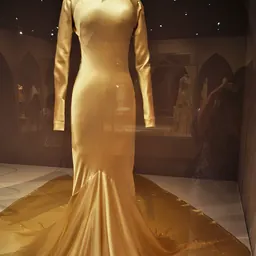
In 1945, Fath created four designs for Théâtre de la Mode, a traveling exhibition of fashion dolls intended to promote French fashion. The American connection led him to Hollywood, where he was hired as the costume designer for the massively successful film The Red Shoes, after which his work was much in demand by other directors. He designed elaborate accessories, such as silk stockings with jeweled garters. He also went into the fragrance business, releasing Chasuble (1945), Iris Gris (1946), Green Water (1947), Canasta (1950) and Fath de Fath (1953). In 1953, he launched "Jacques Fath Université", a ready-to-wear line that included scarves, hats, ties, and hosiery. In wartime, he'd had to get creative with scarce materials and, throughout his career, used the unconventional, including hemp, upholstery cord, bugle beads, crystals, and sequins made of walnut and almond shells. His style was marked by undulating lines, asymmetry, pleating, and volume. He perfected a clean and tailored hourglass shape, enhancing it with plunging necklines, padded bras, sharp pocket details, dramatic pleats and daring color combinations. Voluminous skirts, for day and evening, cascaded from constricted waistlines, or appeared as explosions of fabric under large coats and jackets.
Personal life and death While in acting school, Fath he met the director Léonide Moguy, who cast Fath in his first film. The two were lovers and companions until c. 1938. The two became the power couple of Paris. They were seen everywhere and became known for hosting lavish parties, including themed balls for as many as 800 people, at the Château de Corbeville, their grand home in Orsay. He was buried on the grounds of the Château de Corbeville.
The House of Fath post-1954 Geneviéve ran the Fath house after her husband's death. He had not stopped working after his cancer diagnosis and left behind many designs. In 1955, with the help of designers Catherine Brivet and Pierre Matthey, and fabric expert Suzanne Renoult, The House of Fath presented these designs in a well-regarded collection titled Symphony in Gray. Geneviéve then closed the haute couture division and, from 1957, the house produced perfumes, gloves, hosiery, and other accessories. Altus bought back the Fath fragrance licenses, which had been held by L'Oréal from 1964. Green Water and Fath de Fath were re-launched. By 1994, the brand's sales rose to USD$10 million, with $3.2 million from fragrances and sales divided almost equally between France, the USA, Japan and the rest of Europe. Lingen was replaced by Elena Nazaroff, whose three-year contract was terminated after five months—her one collection, which was mostly of synthetic fabrics, was dubbed "prostitute chic" by the French press and did not attract retail attention. Nazaroff was replaced by Octavio Pizarro, who continued with haute couture and accessories until 2002. In 1998, the fragrances license had been sold to Star Fragrance International. L'Oréal had released Fath's Love (1968) and Expression (1977); in 1998, Star added Fath Pour L'Homme and, in 1999, Yin and Yang.
In 2001, Groupe Emmanuelle Khanh became the France Luxury Group, which included Emmanuelle Khanh, Jean-Louis Scherrer, Harel Paris and Jacques Fath. Lizzy Disney was appointed as the chief designer of Jacques Fath. In December 2002, France Luxury Group was acquired by investment banker Alain Duménil and Disney left two months later. Fath became dormant until 2007 when Duménil, which had named his company the Alliance Designers Group, re-launched Fath as an accessories line under the creative direction of his daughter, Laurence Duménil. The new line was introduced in 2010 but soon closed.
In 2008 the Panouge Group acquired the Fath perfume license. In 2025 a Jacques Fath Parfums boutique opened on Paris' Avenue Victor-Hugo. As of 2026, there are 47 fragrances marketed under the Fath name.
In 2026, Maison Jacques Fath embarked on a new creative direction. On 11 May 2026, the couture house resumed operations at Rue Saint-Honoré.
Film and television
As costume designer Jenny Lamour (Quai des Orfèvres), for Simone Renant, 1947 The Red Shoes, for Moira Shearer, 1948 Between Eleven and Midnight, for Madeleine Robinson, 1948 The Barton Mystery (Le mystère Barton), for Françoise Rosay and Madeleine Robinson, 1949 Portrait of a Killer, aka Portrait of an Assassin, for Maria Montez and Arletty, 1949 Here Is the Beauty (La belle que voilà), for Michèle Morgan, 1950 The Moment of Truth (La minute de vérité), for Michèle Morgan 1952 La vierge du Rhin, for Elina Labourdette 1953 Death of a Cyclist (Muerte de un ciclista), for Lucia Bosè 1955 Abdullah the Great, aka Abdullah's Harem, for Kay Kendall and Marina Berti 1955
Other Fath had a minor role in Léonide Moguy's 1938 film Prison sans barreaux, for which he also designed costumes. Fath appeared as a character in the 1949 film Scandal on the Champs-Élysées, directed by Roger Blanc. That year, he was also twice interviewed on The Faye Emerson Show. In 1951, in an episode titled "Jacques Fath Fashion Girls", Fath's models appeared on The James Melton Show. In 1952, he was featured in Reflets de Cannes, the first show about the Cannes Film Festival. Fath was the subject of a 1993 documentary by Pascal Franck called Les Folies de Fath. In 2007, Fath appeared in an episode of the Netflix series L'invité.
Gallery
Images Jacques Fath Collection, Victoria & Albert Museum.
Don’t just read it —
keep it.
Full-length biographies made to live with: read them, listen on the way to work, watch them tonight.
- E-book
- Audio
- Video
Instant download · yours to keep · every purchase keeps this site free
Important facts
People in Jacques Fath's life
Named in this biography and alive at the same time




Related people
Same field, nearest in time



Contemporaries
People whose lives overlapped Jacques Fath's





Frequently asked questions
Who was Jacques Fath?
French fashion designer (1912–1954)
When was Jacques Fath born?
Jacques Fath was born on 6 September 1912 in Maisons-Laffitte.
When did Jacques Fath die?
Jacques Fath died on 13 November 1954 in Paris.
What was Jacques Fath's occupation?
Jacques Fath was a grand couturier.
What nationality was Jacques Fath?
Jacques Fath was French.
Sources & further reading
Cite this page
APA: Biography.guide. (2026). Jacques Fath. https://biography.guide/jacques-fath/
MLA: "Jacques Fath." Biography.guide, https://biography.guide/jacques-fath/.
Chicago: "Jacques Fath." Biography.guide. https://biography.guide/jacques-fath/.
Data last updated: 2026-09-27 · Spot an error? Report a correction.
Page generated 2026-09-27 05:17 UTC