
About Christian Dior
Lived 1905 – 1957 (aged 52). Christian Dior was a French grand couturier, businessperson, fashion designer and costume designer.
Christian Ernest Dior (; 21 January 1905 – 24 October 1957) was a French fashion designer and founder of one of the world's top fashion houses, Christian Dior SE. He was one of the Big Four of 1950s haute couture, the others being Jacques Fath, Pierre Balmain and Jean Dessès. Dior believed that fashion was more than clothing; that it was an art form and a continuation of French cultural heritage. His "New Look" revolutionized women's dress, and re-established Paris as the centre of the fashion world after World War II.
Early life and education Dior was born in Granville, a seaside town on the coast of Normandy, France. He was the second of five children born to Maurice Dior (1872-1946), head of his family's fertilizer and chemical firm Dior Frères, and his wife Madeleine Martin (1879-1931). In 1911, the family moved full-time to a new home in Paris, where Christian attended the Lycée Janson-de-Sailly, graduating in 1923. As his parents hoped he would become a diplomat, he enrolled at the Paris Institute of Political Studies but wasn't interested in his studies and dropped out in 1926.
Career In 1928, with his friend Jacques Bonjean, and funding from his father, Dior opened an art gallery at 34 rue La Boétie, the Galerie Jacques Bonjean, which exhibited works by, among others, Pablo Picasso, Georges Braque, and Henri Matisse. By now, Dior had contracted tuberculosis; he went to his family's smaller country home in Callian, where it took him a year to recover. While he was recovering, he started sketching fashion and sending the drawings to couture houses; his sketches were purchased by the House of Patou, the House of Worth, and Elsa Schiaparelli, Maggy Rouff, and Edward Molyneux. He was able to return to Paris, where he worked as a sketch artist for Le Figaro and Le Jardin des Modes.
In 1938, Dior was hired by Robert Piguet, who gave him the opportunity to design for three collections. It was Piguet who brought Dior into the world of haute couture, and Dior would later say: "Robert Piguet taught me that a garment is about fabric, colors, shapes, and the woman living inside it—and that fittings are what truly matter. He taught me the virtues of simplicity through which true elegance must come." With the outbreak of the war in 1939, Dior left Piguet to complete his compulsory military service, spending two years in the army's 47th Infantry Division. He returned to Occupied Paris, where he was hired by Lucien Lelong. As head of the Chambre Syndicale de la Couture, Lelong had skillfully convinced the Germans to allow the fashion houses to stay open, saving 28,000 jobs in the process. Like Piguet, Lelong did not design as much as supervise and mentor the designers who worked for him, and Dior spent the war learning from Lelong and working with Balmain and Hubert de Givenchy, among others. He also began designing costumes for films, beginning with Le lit à colonnes in 1942.
The House of Dior In late 1946, Marcel Boussac, a textile manufacturer and one of the wealthiest men in France, invited Dior to help resurrect the house of Philippe et Gaston. Dior declined; he wanted his own house. On 12 February 1947, the House of Dior presented its first collection, "Corolla", which was 90 garments displayed in ensembles. Dior's designs caused a sensation, in part because it was a time of austerity and he was presenting luxurious clothing in cambric-lined silk and satin. Dior explained: "We came from an epoch of war and uniforms, with women like soldiers with boxers' shoulders. I designed flower women, soft shoulders, full busts, waists as narrow as lianas and skirts as corollas." The house employed Pierre Cardin as head of tailoring for its first three years; it was he who designed one of the most popular Corolla ensembles, the "Bar Suit", which was purchased by buyers worldwide. Dior's fall 1947 collection, the Figure of Eight, continued with longer, more bell-shaped skirts, more bust emphasis, bulkier coats, and an alternate narrow silhouette with small shoulders and waists. To achieve the look, however, women needed a complicated selection of undergarments which, in itself, caused enough of a stir that Pathé News made a short film about it. Each season thereafter, Dior would feature a new "line": the Envol and Cloche lines in 1948, the Pockets and Blused lines in 1949, the Vertical and Oblique lines in 1950, the Oval and Long lines in 1951, the Sinueuse and Profilėe lines in 1952, the Tulipe and Vivante/Cupola lines in 1953, the Muguet/Lily of the Valley and H-Line of 1954, the A-Line and Y-Line in 1955, the Aimant/Magnet line in 1956, and the Libre/Free and Fuseau/Spindle lines of 1957.
Dior's 1954 H-line was met with controversy because it had the effect of binding the torso from the neckline to the hips, and flattened the bust. His intention was to give an impression of youth by freeing the waist and lifting the bust, The move toward ease could be seen in several of Dior's collections, and his spring 1952 Sinueuse line comprised soft blouses, cardigans, and skirts. All Dior collections from 1955 onward were less confining, although he, and almost all 1950s designers, presented hobbling sheath skirts throughout the decade. His fall 1956 Aimant line contained a handful of day skirts that dropped the hemline almost to the ankle, another startling move to some observers. From here, he provided his products to department stores throughout the US and Canada. He was not the first to do so; couturiers such as Fath and Marcelle Dormoy had been licensing their designs to American clothing manufacturers for some time, and Dessès and Balmain would soon follow. However, with his profitability and Boussac's deep pockets, he was able to offer ready-to-wear clothing, and at a much larger scale. By the one-year anniversary of the store's opening, Dior's products accounted for 75% of French fashion exports and 5% of France’s annual export revenue.
In 1953, Dior entered into a collaborative relationship with the American shoe manufacturer Herman Delman who, beginning in 1938, was the employer of the French shoe designer Roger Vivier. Dior had always worked with the most prominent footwear designer of the time, Andre Perugia; now he was co-designing shoes with Delman and Vivier. Until 1962, shoes contained the label 'Delman-Dior' or 'Dior-Delman'. The three men worked together; Dior might begin a dress design from a Vivier shoe design, and that design may have been created at the request, or inspiration of, Herman Delman. Delman and Dior established a made-to-order division in Paris, which continued well into the 1960s.
By the mid-1950s, the Dior empire included eight companies and 16 affiliates, and employed 1,700 people on five continents. By the time the house celebrated its tenth anniversary in 1957, it had sold 100,000 garments. After his death that year, the Christian Dior brand continued to grow in all areas; as of 2026, it was valued at over $20 billion (US).
Personal life and death Dior's sister Catherine (1917–2008), a member of the French Resistance, was captured by the Gestapo and spent the war in concentration camps. In 1947, Dior named his debut fragrance, Miss Dior, in tribute to her. The story of Dior’s life during WWII and the following few years is featured in the mini-series The New Look.
At the other end of the spectrum, Dior's niece Françoise Dior, daughter of this brother Raymond, was dubbed a "true Nazi" and caused an uproar when, in Coventry in 1963, she married the British Neo-Nazi politician Colin Jordan.
Dior was known for being superstitious. Before making important decisions, he consulted his fortune-teller, Madame Delahaye, and his collections frequently featured talismanic symbols. He also carried a cluster of lucky charms with him, believing they brought him good fortune.
Christian Dior owned two homes. In Paris, he lived in a townhouse at 7, boulevard Jules-Sandeau. He also satisfied his long-standing obsession with architecture by buying and renovating the 19th-century Château de La Colle Noire in Montauroux; the chateau now belongs to Parfums Christian Dior.
While on vacation in Montecatini Terme, Italy, where he was recuperating from his second heart attack, Dior died of a third attack, on 24 October 1957. He was in the company of his lover, a 23 year-old singer named Jacques Benita, aka Tony Sandro. An estimated 9,000 people attended his funeral at the Église Saint-Honoré d'Eylau. It was a national event. He was buried on the grounds of the Château de la Colle Noire; as his coffin passed through cities and towns en route to his home, it was met with lines of women bearing flowers.
Awards and honors In 1950, Dior was awarded the Légion d'honneur, France's highest civilian honor. In 1947, he received the Neiman Marcus Award for his first collection. In 1956, he received the Parsons School of Design Distinguished Achievement Award. On March 4, 1957, Dior became the first fashion designer to be featured on the cover of Time. In 1955, he was nominated for the 1955 Academy Award for Best Costume Design (Black and White) for the costumes designed for Jennifer Jones in the 1953 film Terminal Station.
Costume design
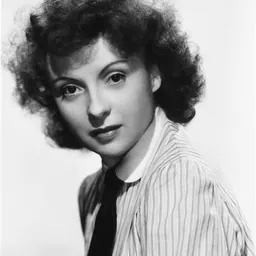
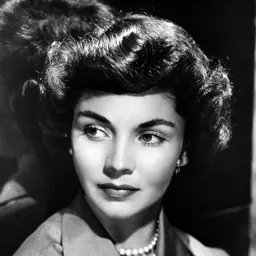
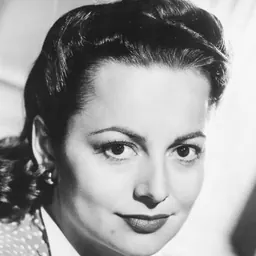
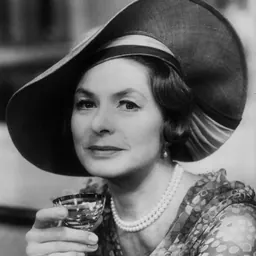
Le lit à colonnes, for Michèle Alfa & Odette Joyeux, 1942 Love Letters, for Odette Joyeux, 1942 Les Roquevillard, for Mila Parély, 1943 The Phantom Baron, for Odette Joyeux & Jany Holt, 1943 Sylvie and the Ghost, for Odette Joyeux, 1945 Pamela, for Renée Saint-Cyr & Yvette Lebon, 1945 Échec au roy, for Odette Joyeux & Gabrielle Dorziat, 1945 Man About Town, for Marcelle Derrien, 1947 Passionnelle, for Odette Joyeux, 1947 Days of Our Years, for Marie Daëms & Catherine Erard, 1950 Stage Fright, for Marlene Dietrich, 1950 Les Enfants terribles, for Nicole Stéphane, 1950 The Paris Waltz, for Yvonne Printemps & Noëlle Norman, 1950 Under the Sky of Paris, for Brigitte Auber, 1951 No Highway in the Sky, for Marlene Dietrich, 1951 It Happened in Paris, for Evelyn Keyes, 1952 Terminal Station, for Jennifer Jones, 1953 Daughters of Destiny: "Jeanne", for Michèle Morgan, 1954 Death of a Cyclist, for Lucía Bosé, 1955 Gentlemen Marry Brunettes, for Jane Russell & Jeanne Crain, 1955 Anything Goes, for Mitzi Gaynor, 1956 Loser Takes All, for Glynis Johns, 1956 The Ambassador's Daughter, for Olivia de Havilland, 1956 Paris, Palace Hotel, for Tilda Thamar, 1956 Le pays d'où je viens, for Françoise Arnoul, 1956 The Little Hut, for Rita Hayworth, 1957 A Kiss for a Killer, for Mylène Demongeot & Isa Miranda, 1957 Indiscreet, for Ingrid Bergman, 1958
Don’t just read it —
keep it.
Full-length biographies made to live with: read them, listen on the way to work, watch them tonight.
- E-book
- Audio
- Video
Instant download · yours to keep · every purchase keeps this site free
Important facts
People in Christian Dior's life
Named in this biography and alive at the same time



Related people
Same field, nearest in time


Contemporaries
People whose lives overlapped Christian Dior's

Frequently asked questions
Who was Christian Dior?
French fashion designer (1905–1957)
When was Christian Dior born?
Christian Dior was born on 21 January 1905 in Granville.
When did Christian Dior die?
Christian Dior died on 24 October 1957 in Montecatini Terme.
What was Christian Dior's occupation?
Christian Dior was a grand couturier, businessperson, fashion designer and costume designer.
What nationality was Christian Dior?
Christian Dior was French.
Sources & further reading
Cite this page
APA: Biography.guide. (2026). Christian Dior. https://biography.guide/christian-dior/
MLA: "Christian Dior." Biography.guide, https://biography.guide/christian-dior/.
Chicago: "Christian Dior." Biography.guide. https://biography.guide/christian-dior/.
Data last updated: 2026-09-20 · Spot an error? Report a correction.
Page generated 2026-09-27 05:17 UTC