
About Jean Dessès
Lived 1904 – 1970 (aged 65). Jean Dessès was an Egyptian dressmaker and costume designer.
Jean Dessès (6 August 1904 – 2 August 1970) was an Egyptian fashion designer, who was among the most prominent couturiers in Paris from the 1930s to 1960. Known for his lavishly draped gowns, he was one of the preferred designers among the international aristocracy and was one of the Big Four of 1950s haute couture, the others being Christian Dior, Pierre Balmain and Jacques Fath.
Early life and education Yanis Demetrios Salvago was born in Alexandria on August 6, 1904, to one of the wealthiest families in Egypt. Both of his parents descended from the aristocracy of the Greek island of Chios, who fled to Egypt after the 1822 Chios massacre. His maternal great-grandfather, Konstantinos Choremis (1796 - 1878), established a cotton trading business in Alexandria; his maternal grandfather, Emmanouil Benakis (1843-1929), did the same. In 1876, the two companies merged to form Choremi, Benachi & Co., which became the largest cotton exporter in Egypt and one of the largest exporters in the world. Financing the cotton trade was the Salvago family; Dessès' paternal grandfather, Constantine Salvago, co-founded the Bank of Alexandria and the National Bank of Egypt. The children of the families inter-married; in 1901, Desses' father, Constantin Michael Salvago (1876-1948) married Virginia (Arghyro, or Argine) Benaki (1883–1972), who used the original spelling of her family's name and added 'Dessès' ('of the'), becoming known as Virginia Benaki-Dessès Salvago. In 1913, the couple built the grand Salvago Villa, designed by the French architect Jean Walter, where they raised their three children: Constantin 'Mike' (1902-1963), Yanis, and Julia ('Lila') (1906-2008).
Virginia was a cultured woman from a cultured family—her sister was the writer Penelope Delta; her brother was the art collector Antonis Benakis. She was known as one of the "Uncrowned Queens of Egypt", "one of Europe’s most beautiful women" and the Grande Dame of Alexandrian society. She too was an art collector, particularly of antique Persian jewellery and Ottoman textiles; most of her collection is now in the Benaki Museum in Athens, which was founded by Antonis. Virginia had been raised by French governesses and was the "toast of Paris" in her youth.
Jean was smart and outgoing, with a winning personality. His family wanted him to become a diplomat. He was sent to the Lycée Français d'Alexandrie to study politics and economics, and then to the University of Paris Faculty of Law. He had no interest in his studies and spent most of his time sketching clothes. One of his friends showed his sketches to a dressmaker, now known only as Madame Jane Francois, who sought out Jean and offered him a job. Jean, then age 21, quit school and, for an annual salary of 150,000 francs, became the designer at Maison Jane. He styled himself 'Jean Dessès' and stayed at Maison Jane for ten years. The salon's decor, by designer André Mercier, was white curtains, satin-covered purple and gray chairs, and white walls decorated with palm trees, palm leaf moldings, and palm leaf sconces. which shows Dessès quickly 'making' a dress, although that is deceptive because Dessès' garments were complicated.
Dessès was known for his innovative cutting technique and mastery of draping. His gowns, usually of silk jersey, featured his signature: voluminous swags and draping and double- or triple-tiered hems. Sashes and bodices were intricately twisted over a boned base. Colors were pale pastels, often with varying shades of the same hue. He was fond of asymmetry and, instead of surface decoration, his ornamentation came from the structure of the gown, e.g. the closure of a dress would be covered with a gold and emerald clasp—most of his jewellery was designed by him and created by Mauboussin. He was particularly fond of creating 'transformation garments', which had layers or panels that folded out, or in, to turn a piece into something completely different.
During the war, the Greek royal family was living in exile in Egypt and was well-acquainted with Dessès' family. In 1946, the royal family returned to Greece and, while Dessès was in Athens, Queen Frederica was preparing to attend the wedding of Princess Elizabeth. She commissioned Dessès to make the wardrobe for her trip and, for the rest of his life, Dessès was the (unofficial) couturier to the Queen of Greece, and the women in her family. Between that, and his fabulous film wardrobe for Dietrich, Dessès garments were suddenly in demand by a much larger group of women, which included such style setters as the Duchess of Windsor, Tina Onassis, the Maharani of Jaipur and Jacqueline de Ribes, who became his muse.
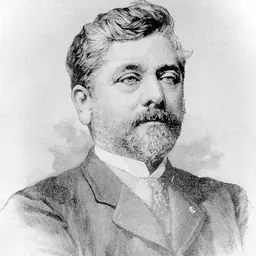
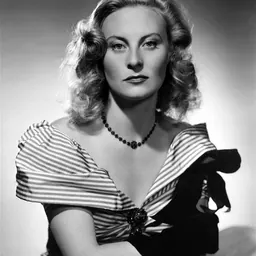
Expansion When Dessès returned to Paris in 1947, he executed a major expansion of the House of Dessès. First, the salon was moved to No. 1 rue Rabelais, a grand building that was the former home of Gustave Eiffel. Lucien Lelong had abruptly closed his business, leaving hundreds of people unemployed; Dessès was able to hire most of them. The mansion centered around a large courtyard which became a venue for fashion shows, and it was next door to the ultra-exclusive Jockey Club, which supplied a steady stream of wealthy husbands. The décor, by Christian Dior’s decorator Victor Grandpierre, was peach and champagne; the walls were covered with Shantung and mirrors, and the lighting technique was the same as that recently installed at the Louvre. He was the special guest of Stanley Marcus at a luncheon in Dallas, and received a full feature in the Christian Science Monitor. Dessès told the media that he was only in the USA to acquaint himself with the market but, when he returned to Paris, he had sales contracts with Nieman Marcus, Marshall Field’s and Garfinckel's, and he had licensed negligee designs to the loungewear manufacturer Raymodes becoming, as Women's Wear Daily reported, the first Paris couturier to design negligées for Americans. blouses for the Alper Blouse Co., and gloves for Ireland Bros. All of this was marketed under the name Jean Dessès Diffusion and everything was affordable, with a coat selling for $69 to $150. In 1952, Desses, who was now facing stiff competition in the US from Dior, declared that the "short jacket has become so wide-spread that it has outlived its popularity", and that "the average woman wants something new". Women’s Wear Daily described Dessès' Bagedonow high-waisted wool coats as "Empire in inspiration" and his suits, of gabardine and mohair, were unconventional, with loose jackets and wide sleeves. The American licensing deals were extremely lucrative. In Paris, this allowed Desses to expand again. In 1950, the couturière Marcelle Dormoy closed her house; she moved to Maison Dessès as production manager, bringing with her a highly experienced staff and a long list of devoted clients. Also in 1950, Desses hired a new apprentice, the 18 year-old Valentino Garavini, who would stay with him for five years. but most of his designs were in Wedgewood blue, old rose, pastel green, pale brown, dove gray, and shades of pink. The technical complexity never waned; some of his gowns used as much as 50 yards of chiffon over a boned construction which took weeks to complete. became two of his most loyal customers, for on- and off-stage clothing, as did the actresses Claudette Colbert, Michèle Morgan and Danielle Darrieux. But socialites and royalty remained his core clientele. In 1960, Desses told the New York Times that he had designed the trousseau for Princess Margaret’s wedding, and revealed that he had been, "for some time", secretly dressing her, the Duchess of Kent, and Princess Alexandra. In 1962, he made international headlines when he designed the wedding gown for Queen Sofía of Spain.
Restructuring In 1957, the Eiffel building’s owner decided to demolish the building and Dessès had to move. He found a smaller space at a better address—12, Rond Point de Champs-Élysées, and moved there in November 1958. He laid off staff and contracted his ready-to-wear manufacturing to the French apparel manufacturer Maria Carine. He would later say that the move increased his sales by 30%, as the building's modern design and décor, in grays and beige, better complemented his designs. At the same time, Greece was experiencing a massive boom in tourism and had become the destination of choice for the "jet set". Between that and the fact that he was dressing the Greek royals, Dessès business grew rapidly. He expanded his ready-to-wear output and launched two new fragrances: Kalispera and, for men, Gymkhana. By 1963, the Athens operation was financially supporting the Paris operation. But, in that year, Michael died. The Age of Glamour had come to an end. Dessès decided to close his Paris atelier and leave couture behind, stating "Couture is old and sick and finished". He dismissed his staff and, on June 30, 1963, closed his Paris house and moved to Athens. There was no regret: he said "I am young again. It is the most exciting time of my life". He told the press that he was taking a year to reconfigure his business and find a suitable location for a Paris store. In 1964, he held a couture collection show for buyers and the press in Paris but, after that, he stayed in Athens. He continued with couture for select clients, but focused mainly on ready-to-wear, fragrances and accessories. Dessès died in Athens, following a long illness, through which he had been nursed by Guy Laroche, on August 4, 1970, age 65.
Gallery
Don’t just read it —
keep it.
Full-length biographies made to live with: read them, listen on the way to work, watch them tonight.
- E-book
- Audio
- Video
Instant download · yours to keep · every purchase keeps this site free
Important facts
People in Jean Dessès's life
Named in this biography and alive at the same time




Related people
Same field, nearest in time




Contemporaries
People whose lives overlapped Jean Dessès's



Frequently asked questions
Who was Jean Dessès?
Greek fashion designer (1904–1970)
When was Jean Dessès born?
Jean Dessès was born on 6 August 1904 in Alexandria.
When did Jean Dessès die?
Jean Dessès died on 2 August 1970 in Athens.
What was Jean Dessès's occupation?
Jean Dessès was a dressmaker and costume designer.
What nationality was Jean Dessès?
Jean Dessès was Egyptian.
Sources & further reading
Cite this page
APA: Biography.guide. (2026). Jean Dessès. https://biography.guide/jean-desses/
MLA: "Jean Dessès." Biography.guide, https://biography.guide/jean-desses/.
Chicago: "Jean Dessès." Biography.guide. https://biography.guide/jean-desses/.
Data last updated: 2026-09-20 · Spot an error? Report a correction.
Page generated 2026-09-27 05:22 UTC