
About Robert P. Letcher
Lived 1788 – 1861 (aged 72). Robert P. Letcher was an American politician, lawyer and diplomat.
Robert Perkins Letcher (February 10, 1788 – January 24, 1861) was an American politician and lawyer who was the 15th governor of Kentucky from 1840 to 1844. He served as a U.S. Representative from Kentucky from 1823 to 1833 and from 1834 to 1835. He also served as Minister to Mexico and in the Kentucky General Assembly where he was Speaker of the House in 1837 and 1838. A strong supporter of the Whig Party, he was a friend of Henry Clay and John J. Crittenden.
Letcher's family came to Kentucky around 1800. Letcher attended the private academy of Joshua Fry, then studied law. He was briefly a judge advocate in John Allen's volunteer militia during the War of 1812. He began his political career in 1813, representing Garrard County in the Kentucky House of Representatives. In 1823, he was elected to the U.S. House of Representatives, where he served for more than a decade. During the 1824 presidential election, he acted as an intermediary between John Quincy Adams and Henry Clay. Adams' opponent, Andrew Jackson, charged that, through these negotiations, Clay agreed to support Adams for president in exchange for being named Secretary of State.
In 1840, Letcher became the Whig nominee for governor of Kentucky over William Owsley. In the general election, Letcher won by a landslide over Judge Richard French. Letcher's fiscally conservative policies helped Kentucky recover from the financial Panic of 1837. By the end of his term, the state was experiencing budget surpluses and state banks had resumed specie payments. After Letcher left office, he was appointed Minister to Mexico by President Zachary Taylor. Following this, he made an attempt to return to the U.S. House, but was defeated by Democrat John C. Breckinridge. Letcher's defeat in Henry Clay's home district was a strong indication of the decline of Whig influence in Kentucky. Though he remained active in politics, Letcher never again sought public office. He died on January 24, 1861, at the age of seventy-two.
Letcher County, Kentucky, located in the Eastern part of the state, is named after him.
Early life Robert Perkins Letcher was born in Goochland County, Virginia, on February 10, 1788. He was seventh of twelve children born to Stephen Giles and Betsy (Perkins) Letcher. The family moved to Kentucky about 1800, first living at Harrodsburg, then settling in Garrard County. For a time, Letcher attended the common schools of the area, but he was dismissed for being unruly. He studied the trade of masonry, though not very enthusiastically, at his father's brickyard. Following his instruction at Fry's academy, he returned to his father's brickyard, where tradition holds that he helped build the state's first governor's mansion alongside future governor Thomas Metcalfe. He owned slaves. He briefly served as a judge advocate in Colonel John Allen's volunteer militia during the War of 1812. Epps died on March 9, 1816, and did not bear any children.
Political career Nicknamed "Black Bob", Letcher was known as a witty and gregarious campaigner. He was also known to distract audiences at his opponents' campaign speeches by playing a fiddle. His political career began in 1813 when he was elected to represent Garrard County in the Kentucky House of Representatives. He served until 1815, and after a respite of one term, was re-elected in 1817.
In the House of Representatives Letcher was elected as a Democratic Republican to the Eighteenth Congress in 1823.
Letcher supported Adams' administration, but became anti-administration when Jackson won the 1828 presidential contest. Consistent with his support of Clay, he promoted expansion of internal improvements, including the Maysville Road bill vetoed by Jackson. In 1833, Clay proposed a compromise in the Senate to quell the Nullification Crisis; Letcher introduced Clay's compromise in the House.
For the first half of Letcher's term, the state was still struggling to recover from the financial Panic of 1837. Consistent with his Whig views, Letcher blamed the crisis on the federal government's failure to recharter the Second Bank of the United States. To ameliorate the state's dire financial situation, Letcher drastically cut spending, including the suspension of turnpike construction and improvements on the Green, Kentucky, and Licking rivers.
Although Letcher generally opposed debt relief measures, he did allow the passage of some minor legislation to aid those most in danger of foreclosure on their property.
As a diplomat to Mexico Letcher was a strong supporter of Whig candidate Zachary Taylor in the 1848 presidential election. When Taylor won the election, Letcher's friend John J. Crittenden recommended Letcher for the post of postmaster general; Taylor declined this suggestion, but instead appointed Letcher as the United States envoy and minister to Mexico.
Letcher's primary responsibility was negotiating a treaty to protect the interests of some American citizens who had purchased the rights to construct a line of transit on the Isthmus of Tehuantepec. After nearly three months of negotiation, Letcher signed a modified treaty on June 22, 1850. Among the modifications were a provision that tolls on Mexican-produced goods transported on the route would be twenty-percent less than those of United States goods and an increase in the authority exercised by Mexico in protecting the route. Letcher wrote to Secretary of State John M. Clayton that the treaty fell short of what he had hoped for, but that he believed that its provisions were the best that could be obtained.
A month after Letcher signed the treaty, Clayton was replaced as Secretary of State by Daniel Webster. In response to concerns raised by one of the Americans hoping to construct the line of transit, Webster asked that Letcher attempt to obtain certain modifications to the treaty. Letcher brought these modifications to the Mexican diplomats, but they steadfastly refused to accept them. Letcher, speaking with the blessing of the administration, intimated that the United States would take the region by force if the requested concessions were not made. The Mexican government conceded that they would not be able to resist such action, but still refused to accept the modifications to the treaty.
Upon learning of the strong Mexican resistance to his proposed modifications, Webster instructed Letcher to negotiate the most favorable terms to which the Mexicans would agree. On January 25, 1851, Letcher signed a second treaty that was slightly more favorable to the Americans. On May 22, 1851, the Mexican government declared the agreement with the American investors null on grounds that the provisional government which granted it did not have the right to do so. Letcher attempted to negotiate a new treaty to re-acquire the rights nullified by the Mexican government, but by February 14, 1852, he reported that he did not expect to be able to reach any kind of agreement. He returned home in August 1852. Known as the "Ashland district" because it contained Henry Clay's Ashland estate and much of the territory he once represented, it was a Whig bastion that hadn't been represented by a Democrat since 1828. Whigs were eager to avenge the loss in 1853, and Letcher wanted to be their candidate, but at their state convention, they chose Kentucky Attorney General James Harlan. The nomination was not well-received among some Whig factions; Harlan withdrew in March 1853, and Letcher was chosen to replace him.
Letcher first met Breckinridge in debate at Nicholasville on April 18, 1853. As the incumbent, Breckinridge spoke first and focused on political issues like contrasting the higher revenue generated by the Democratic Walker tariff with that produced by the higher Tariff of 1842 favored by the Whigs. Letcher, as he did for much of the campaign, responded by appealing to party loyalty; Breckinridge would misrepresent the district, he claimed, "because he is a Democrat". While Breckinridge was typically well composed in debate, Letcher would often become angry. On one occasion, Letcher so frequently attempted to interrupt Breckinridge that John J. Crittenden grabbed him by the coat tails to restrain him. Breckinridge supporters derisively nicknamed Letcher "Coat Tails" for the remainder of the campaign.
When Letcher's factional enemy, abolitionist Cassius Marcellus Clay, endorsed Breckinridge, Letcher charged that this, combined with the abolitionist views of Breckinridge's uncle, Reverend Robert Jefferson Breckinridge, proved that Breckinridge was secretly an abolitionist, despite his consistent denial that Congress had the power to interfere with that institution. Breckinridge responded by citing newspaper accounts of an 1848 campaign speech Letcher had made in Indiana on behalf of Zachary Taylor. In the speech, he predicted that the constitutional convention then under way in Kentucky would produce a document that contained provisions for gradual emancipation, noting "It is only the ultra men in the extreme South who desire the extension of slavery."
Both candidates received financial support from outside the district, some of which was used to buy votes or bribe voters to stay home. Breckinridge received several thousand dollars, with a substantial amount coming from Washington, D.C., banker William Wilson Corcoran; estimates of Letcher's support ranged from $30,000 to $100,000. Breckinridge won the canvass by 526 votes and received 71% of the vote in Owen County, which recorded 123 more votes than registered voters.
Letcher was considered the strongest Whig candidate in the state, and his inability to win the seat was a harbinger of the ultimate failure of the Whig Party in Kentucky. His loss to Breckinridge would be his last run for public office, though he remained active in politics until his death. During the 1856 presidential election, Letcher spoke on behalf of Millard Fillmore in Pennsylvania, New York, and Kentucky. In 1857 and 1858, he urged John J. Crittenden to oppose the Lecompton Constitution for Kansas.
After the dissolution of the Whig Party, Letcher generally supported Know-Nothing candidates in state politics. Letcher and Crittenden both supported National Union candidate John Bell in the 1860 presidential election, believing he represented the best hope of peacefully resolving the tension between the north and south. Letcher County, Kentucky, is named in his honor.
Don’t just read it —
keep it.
Full-length biographies made to live with: read them, listen on the way to work, watch them tonight.
- E-book
- Audio
- Video
Instant download · yours to keep · every purchase keeps this site free
Important facts
People in Robert P. Letcher's life
Named in this biography and alive at the same time



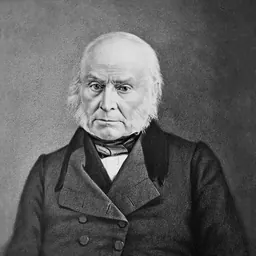

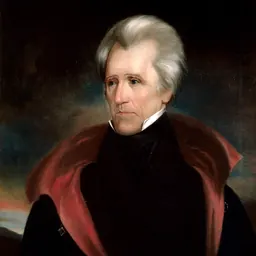
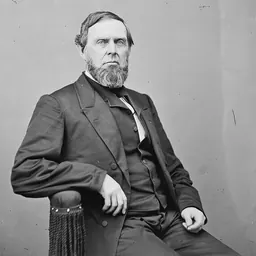
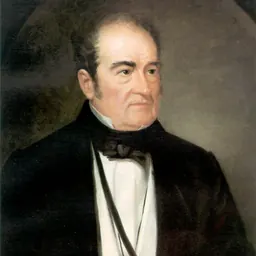
Related people
Same field, nearest in time


Contemporaries
People whose lives overlapped Robert P. Letcher's

Frequently asked questions
Who was Robert P. Letcher?
American governor of Kentucky (1788-1861)
When was Robert P. Letcher born?
Robert P. Letcher was born on 10 February 1788 in Goochland County.
When did Robert P. Letcher die?
Robert P. Letcher died on 24 January 1861 in Frankfort.
What was Robert P. Letcher's occupation?
Robert P. Letcher was a politician, lawyer and diplomat.
What nationality was Robert P. Letcher?
Robert P. Letcher was American.
Sources & further reading
· Wikipedia: Robert P. Letcher
Cite this page
APA: Biography.guide. (2026). Robert P. Letcher. https://biography.guide/robert-p-letcher/
MLA: "Robert P. Letcher." Biography.guide, https://biography.guide/robert-p-letcher/.
Chicago: "Robert P. Letcher." Biography.guide. https://biography.guide/robert-p-letcher/.
Data last updated: 2026-09-20 · Spot an error? Report a correction.
Page generated 2026-09-27 05:29 UTC