
About Robert Marsden Hope
Lived 1919 – 1999 (aged 80). Robert Marsden Hope was an Australian judge.
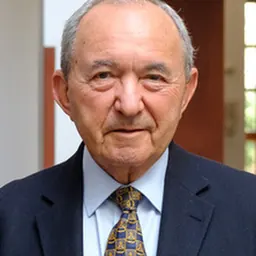
Robert Marsden Hope, (24 July 1919 – 12 October 1999) was a Justice of the New South Wales Court of Appeal and Royal Commissioner on three occasions, most notably the Royal Commission on Intelligence and Security. As a judge Hope was known for his legal positivism and as a royal commissioner he "instilled a sense of impartiality".
Career
Justice Hope received his Bachelor of Laws from the University of Sydney before being called to the New South Wales Bar on 26 October 1945. During his time at university he had attempted to join the Communist Party of Australia but due to "administrative incompetence" he had failed to do so.
By his own admission in 1998, the 1960s had brought Hope considerable professional success owing to his strategic decision to join the Liberal Party of Australia. Hope was appointed a Queen's Counsel in 1960. He became President of the NSW Council of Civil Liberties "but within weeks" he was then appointed Justice of the New South Wales Supreme Court. Hope was finally made a Justice of Appeal of the Supreme Court, the highest court in the New South Wales judiciary system in 1972, a position he held until his retirement in 1989. He also acknowledged that on two occasions he had allowed himself to be pressured by President Athol Moffitt into reaching decisions "he would have otherwise not made".
Justice Hope was appointed to the Australian Council for the Arts in 1974 and awarded the honour of Companion of the Order of St Michael and St George (CMG) in 1977. In 1989 he was made a Companion of the Order of Australia (AC), Australia's highest civilian honour. Hope was known as a "university senator and chancellor, a patron and promoter of the performing arts, (and) a civil libertarian". The park is known for its biodiversity. In 2011 the Patent Office Building in Canberra was renamed the Robert Marsden Hope Building in recognition of his achievements.
Royal commissions and inquiries
National Estate (cultural heritage and environment) In 1973, Hope was appointed the head commissioner in National Estate Committee of Inquiry (1973–1974). This commission dealt with Australia's cultural heritage, both architectural and environmental. Its findings formed the backbone of the Whitlam government's heritage and environmental agenda although its landmark recommendations were never realised.
Hope was again commissioned only a year later in 1978 to conduct the Protective Security Review (PSR) into protective security arrangements for the Commonwealth as well as co-operation between national and state cooperation on protective security following the bombing of the Hilton Hotel in Sydney during the Commonwealth Heads of Government Regional Meeting (CHOGRM). While the review nominally targeted "protective security", it was the threat of international terrorism in Australia that was at the heart of Prime Minister Malcolm Fraser's decision to use Hope's experience in the area of Australia's intelligence services. When completed in 1979, the review essentially ended up probing, "in a broad sense, terrorism possibilities in Australia, and ways, and means of State, Territory and Commonwealth co-operation in dealing with the threat of terror". Again as a direct result of his recommendations, government policy on intelligence and security changed. Hope designated ASIO as the agency responsible for producing national threat assessments in the field of terrorism and politically motivated violence and at the end of 1979, a new ASIO Act came into being which implemented many of Hope's recommendations from the RCIS and the PSR. At the same time, the Security Appeals Tribunal, another of Hope's RCIS recommendations, was bought into being.
In 1983, the Hawke government requested that Hope once again become commissioner for the Royal Commission into Australia's Security and Intelligence Agencies. Soon after this request was made the government became embroiled in the Combe-Ivanov affair, which involved an expelled Soviet agent, Valery Ivanov, who had been the First Secretary for the Soviet Embassy. The publicity surrounding the affair saw the Hawke Government commission Hope again to look into intelligence issues. Hope completed the Royal Commission into Australia's Security and Intelligence Agencies (RCASIA) in 1984 and made a range of logical and basic recommendations (in terms of the evolution of policies of the time) that again altered the parameters that Australia's intelligence agencies operated under and bought them into the political and cultural paradigms of the 1980s. One of Justice Hope's RCASIA recommendations was that "the ASIO Act expressly provide that it is not the purpose of the Act that the right of lawful advocacy, protest or dissent should be affected or that exercising those rights should, by themselves, constitute activity prejudicial to security". This recommendation was important from a cultural aspect in the sense that it effectively removed security agencies from suppression of civil protest and dissent in Australia. He also recommended the creation of the office of Inspector-General of Intelligence and Security to oversee and hold accountable the various agencies. As if to highlight the need for such a position, only the same year RCASIA was commissioned, the Security Appeals Tribunal ruled in a case against ASIO where they had given an unfavourable security assessment on a member of the Australian Communist Party, that "membership of the Communist Party of Australia did not warrant a recommendation against the grant of access to classified national security material (such as required by their job – Ed.). A nexus between the applicant and particular activities of security interest needed to be shown" and a marker of where the Australian intelligence and security agencies saw their priorities in the pre-Hilton Bombing environment.
In 1986 the ASIO Act was amended to take into consideration the recommendations of Hope in the RCASIA.
Don’t just read it —
keep it.
Full-length biographies made to live with: read them, listen on the way to work, watch them tonight.
- E-book
- Audio
- Video
Instant download · yours to keep · every purchase keeps this site free
Important facts
People in Robert Marsden Hope's life
Named in this biography and alive at the same time

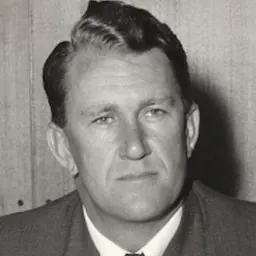


Related people
Same field, nearest in time
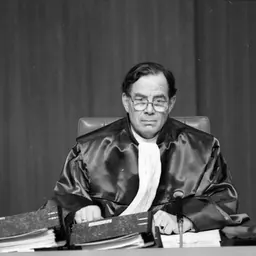
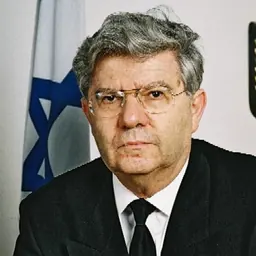
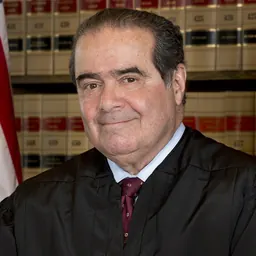
Contemporaries
People whose lives overlapped Robert Marsden Hope's



Frequently asked questions
Who was Robert Marsden Hope?
Australian judge
When was Robert Marsden Hope born?
Robert Marsden Hope was born on 24 July 1919 in Haberfield.
When did Robert Marsden Hope die?
Robert Marsden Hope died on 12 October 1999 in Turramurra.
What was Robert Marsden Hope's occupation?
Robert Marsden Hope was a judge.
What nationality was Robert Marsden Hope?
Robert Marsden Hope was Australian.
Sources & further reading
· Wikipedia: Robert Marsden Hope
· DBpedia: Robert Marsden Hope
Cite this page
APA: Biography.guide. (2026). Robert Marsden Hope. https://biography.guide/robert-marsden-hope/
MLA: "Robert Marsden Hope." Biography.guide, https://biography.guide/robert-marsden-hope/.
Chicago: "Robert Marsden Hope." Biography.guide. https://biography.guide/robert-marsden-hope/.
Data last updated: 2026-09-20 · Spot an error? Report a correction.
Page generated 2026-09-27 05:16 UTC