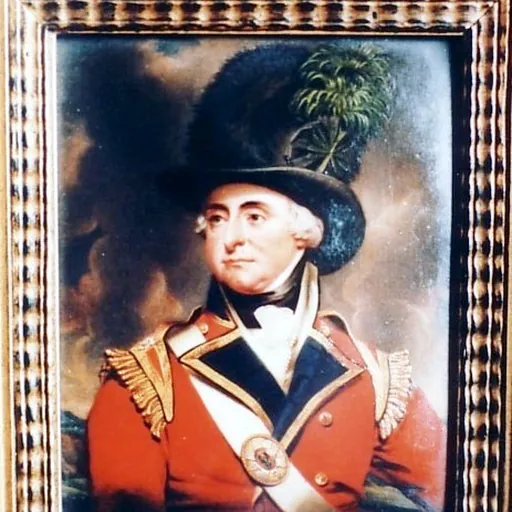
Robert Manners
British soldier and Member of Parliament
About Robert Manners
Lived 1758 – 1823 (aged 65). Robert Manners was a British politician and member of Parliament (United Kingdom).
General Robert Manners (2 January 1758 – 9 June 1823) was a British Army officer and Member of Parliament.
Life He was the eldest son of General Lord Robert Manners by his wife Mary Digges and succeeded to his father's estate at Bloxholm in Lincolnshire. He was educated at Caen Academy and took the Grand Tour.
Manners joined the Army as a cornet in the 3rd Dragoon Guards on 27 April 1775, and was promoted to lieutenant on 25 December 1778. On 3 October 1779, he became captain of a company in the 86th Foot, newly raised by his cousin, the Duke of Rutland. He went with the 86th Foot to the West Indies, serving on marine duty aboard a ship before being sent with a detachment to Tobago. In 1781 the island was captured by the Comte de Grasse, and the garrison returned to Europe, the officers giving their parole. and on 19 March 1783, he was made an equerry to the King. On 14 February 1784, he succeeded Allan Maclean as lieutenant-colonel of the 1st Battalion, 84th Regiment of Foot. That regiment was reduced on 24 June 1784,
In the general election of 1784, he was elected to Parliament for Great Bedwyn through the influence of Lord Ailesbury, the expenses of the election (£2,500, or the equivalent of £ today) being paid by George Rose out of Government secret funds. He was considered as a replacement for Sir Henry Peyton, MP for Cambridgeshire, on that gentleman's death in 1789, but unsuccessfully stood at Northampton in the general election in 1790. He returned to Parliament in a by-election for Cambridge on 12 February 1791. and served with the 1st Battalion of the regiment in the first Flanders campaign. In the second campaign in Flanders, he was appointed to the light company, which was formed into a battalion with the four grenadier companies. He commanded the four light infantry companies at the Battle of Tourcoing on 17 May 1794, where he was wounded at the storming of Mouvaux. He was at every subsequent action of the Guards Brigade during the campaign except Boxtel, when he was detached on a month's hospital duty. and major-general in the Army on 3 May 1796, when he was placed on the staff of the Eastern District. He then commanded the 9th Brigade during the expedition to Holland in 1799. He was then given the colonelcy of the 30th (Cambridgeshire) Regiment of Foot on 7 November 1799, and on returning from Holland he received command of a brigade at Norwich. The brigade moved to Bagshot camp before embarking at Southampton to participate in the Ferrol expedition in August 1800. After the failure of the expedition, the troops continued to Gibraltar with Sir Ralph Abercromby, while Manners returned to Britain with Sir James Pulteney, who joined the staff of the Southern District. After the establishment of the Regency, he was appointed Clerk Marshal in the King's Household at Windsor on 19 February 1812, He was unmarried but left children by Mary Ann Mansel (1780–1854). His elder sister Mary married William Hamilton Nisbet and was the mother of Mary Nisbet, first wife of Thomas Bruce, 7th Earl of Elgin.
(Imprint: Lane, Son & Stoker, London) Manners died on 9 June 1823 at his house in Curzon Street and was buried, with his parents, at the church of St. Mary the Virgin at Bloxholm; the chancel and porch had been erected by Manners in 1812.
Manners left Bloxholm to his brother George, High Sheriff of Lincolnshire, in 1826, whose death occurred in 1828. Both brothers had died unmarried, so George left the estate to their dearest cousin, Mrs Jenney. She was the daughter of John, second Duke of Rutland, and sister of Lord Robert Manners, the father of Robert and George, making her their first cousin, once removed. However, Lady Mary Bruce (her husband being Robert Nisbet-Hamilton, who changed his surname from Christopher), who was the brothers’ great niece and eldest daughter of the 7th Earl of Elgin, contested the will, saying George had changed his will in her favour, and took the matter to court. A relative of the brothers wrote to the Editor of the Stamford Mercury on 26 March 1841 making it very clear that the family knew George wanted Bloxholm to go to Mrs Jenney, writing: for it is the opinion of all who are acquainted with the circumstances, that the testator would never have altered had he been in the full possession of his faculties. The matter was settled in favour of Lady Mary Bruce.
Don’t just read it —
keep it.
Full-length biographies made to live with: read them, listen on the way to work, watch them tonight.
- E-book
- Audio
- Video
Instant download · yours to keep · every purchase keeps this site free
Important facts
People in Robert Manners's life
Named in this biography and alive at the same time

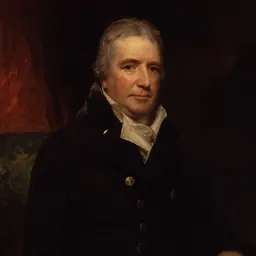


Related people
Same field, nearest in time

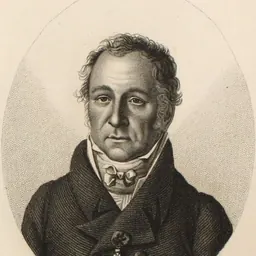


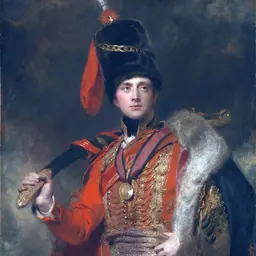
Contemporaries
People whose lives overlapped Robert Manners's





Frequently asked questions
Who was Robert Manners?
British soldier and Member of Parliament
When was Robert Manners born?
Robert Manners was born on 2 January 1758.
When did Robert Manners die?
Robert Manners died on 9 June 1823.
What was Robert Manners's occupation?
Robert Manners was a politician and member of Parliament (United Kingdom).
What nationality was Robert Manners?
Robert Manners was British.
Sources & further reading
· DBpedia: Robert Manners (British Army officer, born 1758)
Cite this page
APA: Biography.guide. (2026). Robert Manners. https://biography.guide/robert-manners/
MLA: "Robert Manners." Biography.guide, https://biography.guide/robert-manners/.
Chicago: "Robert Manners." Biography.guide. https://biography.guide/robert-manners/.
Data last updated: 2026-09-22 · Spot an error? Report a correction.
Portrait: Wikimedia Commons · author & licence
Page generated 2026-09-27 05:02 UTC