
About Robert Lowie
Lived 1883 – 1957 (aged 74). Robert Lowie was an Austrian and American curator, anthropologist, sociologist and ethnologist.
Robert Harry Lowie (born Robert Heinrich Löwe; June 12, 1883 – September 21, 1957) was an Austrian-American anthropologist. An expert on Indigenous peoples of the Americas, he was instrumental in the development of modern anthropology and has been described as "one of the key figures in the history of anthropology".
Early life and education Lowie was born and spent the first ten years of his life in Vienna, Austria-Hungary, but came to the United States in 1893. He studied at the College of the City of New York, where in 1896 he met and befriended Paul Radin while taking a BA in Classical Philology in 1901. After a short stint as a teacher, he began studying chemistry at Columbia University, but soon switched to anthropology under the tutelage of Franz Boas, Livingston Farrand and Clark Wissler. He graduated (Ph.D.) in 1908 with a dissertation titled The Test-Theme in North American Mythology. Shorter research expeditions led him to the southwestern United States, the Great Basin and to South America where he was inspired by Curt Nimuendajú. The focus of some of Lowie's work was salvage ethnography, the rapid collection of data from cultures close to extinction.
Ruth Benedict and Robert Lowie were each commissioned by the United States Office of War Information, during World War II, to write a piece about an enemy. Unlike Benedict's Chrysanthemum and the Sword in which she describes the culture of Japan without ever having set foot in Japan, Lowie could at least draw on his recollections from the German-speaking world of his childhood. In his book The German People: A Social Portrait to 1914, Lowie took a cautious approach and stressed his ignorance of what was going on in his country of origin at this time. Once the war ended, Lowie made several short trips to Germany.
Influences Together with Alfred Kroeber, Lowie was one of the first generation of students of Franz Boas. His theoretical orientation was within the Boasian mainstream of anthropological thought, emphasizing cultural relativism and opposed to the cultural evolutionism of the Victorian era.
Kinship Lowie influenced the discipline of social anthropology through his use of a system to distinguish kinship relationships: he identified four main systems, which differed based on the names of the relatives of the first ascending generation, i.e. the parent generation.
Honours Lowie was given honorary membership of a number of societies such as the Royal Anthropological Institute of Great Britain, the Instituto do Cerara in Brazil, the American Philosophical Society and the New York Academy of Science. He was elected to the National Academy of Sciences in 1931.
Writings His principal works include: Societies of the Arikara Indians (1914) Dances and Societies of the Plains Shoshones (1915) Notes on the social Organization and Customs of the Mandan, Hidatsa and Crow Indians (1917) Culture and Ethnology (1917) Plains Indian Age Societies (1917) Myths and Traditions of the Crow Indians (1918) The Matrilineal Complex (1919) Primitive Society (1919) The religion of the Crow Indians (1922) The Material Culture of the Crow Indians (1922) Crow Indian Art (1922) Psychology and Anthropology of Races (1923) Primitive Religion (1924) The Origin of the State (1927) The Crow Indians (1935) History of Ethnological Theory (1937) The German People (1945) Social Organization (1948) Towards Understanding Germany (1954) Robert H. Lowie, Ethnologist; A Personal Record (1959)
Don’t just read it —
keep it.
Full-length biographies made to live with: read them, listen on the way to work, watch them tonight.
- E-book
- Audio
- Video
Instant download · yours to keep · every purchase keeps this site free
Important facts
People in Robert Lowie's life
Named in this biography and alive at the same time



Related people
Same field, nearest in time

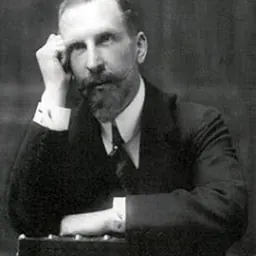
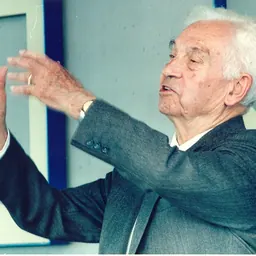

Contemporaries
People whose lives overlapped Robert Lowie's

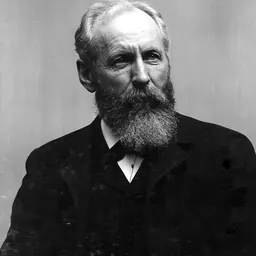

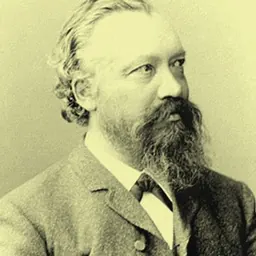
Frequently asked questions
Who was Robert Lowie?
American anthropologist (1883–1957)
When was Robert Lowie born?
Robert Lowie was born on 12 June 1883 in Vienna.
When did Robert Lowie die?
Robert Lowie died on 21 September 1957 in Berkeley.
What was Robert Lowie's occupation?
Robert Lowie was a curator, anthropologist, sociologist and ethnologist.
What nationality was Robert Lowie?
Robert Lowie was Austrian and American.
Sources & further reading
Cite this page
APA: Biography.guide. (2026). Robert Lowie. https://biography.guide/robert-lowie/
MLA: "Robert Lowie." Biography.guide, https://biography.guide/robert-lowie/.
Chicago: "Robert Lowie." Biography.guide. https://biography.guide/robert-lowie/.
Data last updated: 2026-09-20 · Spot an error? Report a correction.
Page generated 2026-09-27 05:11 UTC