
About Clark Wissler
Lived 1870 – 1947 (aged 76). Clark Wissler was an American anthropologist, curator, psychologist and writer, known for Ethnography.
Clark David Wissler (September 18, 1870 – August 25, 1947) was an American anthropologist, ethnologist, and archaeologist.
Early life Clark David Wissler was born in Cambridge City, Indiana on September 18, 1870, to Sylvania (née Needler) and Benjamin Franklin Wissler. After graduating from Hagerstown High School, he taught in local schools between 1887 and 1892, and studied at Purdue University after the six-month school term ended. The following year in 1893 he was the principal of Hagerstown High School, and then he resigned his post and enrolled in Indiana University.
Education Wissler received a Bachelor of Arts in Experimental Psychology from Indiana University in 1897 and a Master of Arts in 1899.
Other accomplishments He was division chairman of the National Research Council in 1920 and 1921. the American Philosophical Society in 1924, and the United States National Academy of Sciences in 1929.
Research Clark Wissler performed his field research from 1902 until 1905 on the Dakota, Gros Ventre, and the Blackfoot. Wissler's fieldwork provided comprehensive ethnographies of each Native American culture, especially the Blackfoot. While Curator, Wissler funded ethnological and archaeological fieldwork of the Northern Plains and the Southwest. Wissler also "encouraged physical anthropology, built up collections of worldwide scope, planned exhibitions, and oversaw the publication of about thirty-eight volumes of the Anthropological Papers of the American Museum of Natural History." Wissler shifted the analytical focus away from the culture and history of a specific social unit to "a concern with the trait-complex viewed in cross cultural perspective." Wissler was a specialist in North American ethnography, focusing on the Indians of the Plains. He contributed to the culture area and age-area ideology of the diffusionist viewpoint that is no longer popular in anthropology. Ball State University in Muncie, Indiana holds the papers of Clark Wissler. Furthermore, one hall of Indiana University's Teter Living Center is known as "Clark Wissler Hall".
Clark Wissler's main area of research was on Native American cultures. His influence is overlooked because of other anthropologists like Franz Boas and Ruth Benedict. Wissler offered some new theories that were quite different from Boas, who was a leading cultural researcher. One of Wissler's new concepts was the belief in cultural diffusion and that culture was biologically innate in humans. "Wissler also came up with the age-area hypothesis that is a theory that the age of cultural traits may be determined by examining the distribution of these traits throughout the larger area where these traits are present." He also was a proponent of a hierarchic racial theory that saw Africans as the lowest and Nordics as the highest rungs. This theory is today considered part and parcel of the early history of scientific racism.
Personal life Wissler married Etta Viola Gebhart of Hagerstown, Indiana on June 14, 1899. Together, they had a son and a daughter, Stanley Gebhart Wissler and Mary Viola Wissler.
Death Wissler died at Doctors Hospital in New York City on August 25, 1947.
Selected books and articles Anthropological Papers of the American Museum of Natural History, Volume XI, Part 1 (Clark Wissler). 1913 The American Indian (Clark Wissler). 1917. Oxford University Press, New York. North American Indians of the Plains (Clark Wissler). 1920. Smithsonian Institution, New York. Making Mankind (Clark Wissler, Fay Cooper Cole, William M. McGovern, et al.). 1929. D. Van Nostrand Company Star Legends (Clark Wissler). 1936. The American Museum of Natural History. Indian Cavalcade or Life on the Old-Time Indian Reservations (Clark Wissler). 1938. Sheridan House. Indian Costumes in the United States: A Guide to the Study of the Collections in the Museum (Clark Wissler). Man and Culture (Clark Wissler). 1940. Norwood Editions. Indians of the United States: Four Centuries of Their History and Culture (Clark Wissler). 1941. Doubleday and Company. A Blackfoot Source Book: Papers (Clark Wissler, David Hurst Thomas). 1986, Garland Pub.
Don’t just read it —
keep it.
Full-length biographies made to live with: read them, listen on the way to work, watch them tonight.
- E-book
- Audio
- Video
Instant download · yours to keep · every purchase keeps this site free
Important facts
People in Clark Wissler's life
Named in this biography and alive at the same time
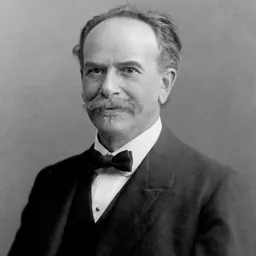



Related people
Same field, nearest in time



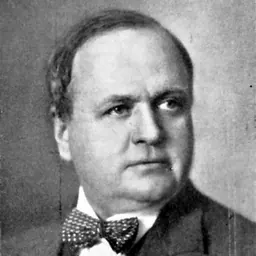
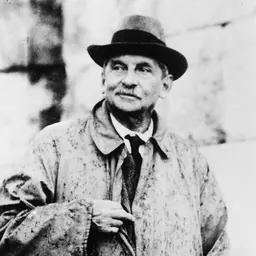
Contemporaries
People whose lives overlapped Clark Wissler's
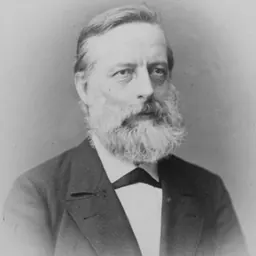



Frequently asked questions
Who was Clark Wissler?
American anthropologist (1870–1947)
When was Clark Wissler born?
Clark Wissler was born on 18 September 1870 in Hagerstown.
When did Clark Wissler die?
Clark Wissler died on 25 August 1947 in New York City.
What was Clark Wissler's occupation?
Clark Wissler was an anthropologist, curator, psychologist and writer.
What was Clark Wissler known for?
Clark Wissler was known for Ethnography.
What nationality was Clark Wissler?
Clark Wissler was American.
Sources & further reading
Cite this page
APA: Biography.guide. (2026). Clark Wissler. https://biography.guide/clark-wissler/
MLA: "Clark Wissler." Biography.guide, https://biography.guide/clark-wissler/.
Chicago: "Clark Wissler." Biography.guide. https://biography.guide/clark-wissler/.
Data last updated: 2026-09-20 · Spot an error? Report a correction.
Page generated 2026-09-27 05:20 UTC