
About Robert Kerr
Lived 1755 – 1813 (aged 57–58). Robert Kerr was a British linguist, historian, translator, zoologist, writer and surgeon.
Robert Kerr (20 October 1757 – 11 October 1813) was a Scottish surgeon, writer on scientific and other subjects, and translator.
Life Kerr was born in 1757 in Bughtridge, Roxburghshire, the son of James Kerr, a jeweller, who served as MP for Edinburgh 1747–1754, and his wife Elizabeth. He was sent to the High School in Edinburgh.
He studied medicine at the University of Edinburgh and practised at the Edinburgh Foundling Hospital as a surgeon. He was elected a Fellow of the Royal Society of Edinburgh in 1788. His proposers were Alexander Fraser Tytler, James Russell and Andrew Dalzell.
He translated several scientific works into English, such as Antoine Lavoisier's work of 1789, Traité Élémentaire de Chimie, published under the title Elements of Chemistry in a New Systematic Order containing All the Modern Discoveries, in 1790. In 1792, he published The Animal Kingdom, the first two volumes of a four-tome translation of Linnaeus' Systema Naturae, which is often cited as the taxonomic authority for a great many species. (He never translated the remaining two volumes.)
In 1794, he left his post as a surgeon to manage a paper mill at Ayton in Berwickshire which he had purchased. He lost much of his fortune with this enterprise. Out of economical necessity he began writing again in 1809, publishing a variety of minor works, for instance a General View of the Agriculture of Berwickshire. His last work was a translation of Cuvier's Recherches sur les ossements fossiles de quadrupedes, which was published after Kerr's death under the title "Essays on the Theory of the Earth".
His other works included a massive historical study entitled A General History and Collection of Voyages and Travels in eighteen volumes. Kerr began the series in 1811, dedicating it to Sir Alexander Cochrane, K.B., Vice-Admiral of the White. Publication did not cease following Kerr's death in 1813; the latter volumes were published into the 1820s.
He died at home, Hope Park House, east of the Meadows in Edinburgh, where he had lived since 1810, and is buried in Greyfriars Kirkyard in central Edinburgh against the eastern wall. His stone is added to a much earlier (1610) ornate stone monument. His son, David Wardrobe Kerr (1796–1815) lies with him.
Selected writings
Don’t just read it —
keep it.
Full-length biographies made to live with: read them, listen on the way to work, watch them tonight.
- E-book
- Audio
- Video
Instant download · yours to keep · every purchase keeps this site free
Important facts
People in Robert Kerr's life
Named in this biography and alive at the same time


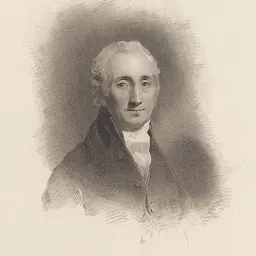
Related people
Same field, nearest in time
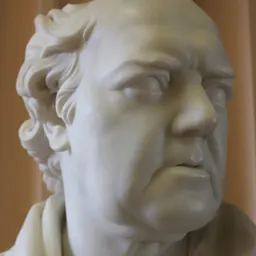




Contemporaries
People whose lives overlapped Robert Kerr's





Frequently asked questions
Who was Robert Kerr?
Scottish scientific writer and translator (1757–1813)
When was Robert Kerr born?
Robert Kerr was born in 1755 in Roxburghshire.
When did Robert Kerr die?
Robert Kerr died on 11 October 1813 in Edinburgh.
What was Robert Kerr's occupation?
Robert Kerr was a linguist, historian, translator, zoologist, writer and surgeon.
What nationality was Robert Kerr?
Robert Kerr was British.
Sources & further reading
· DBpedia: Robert Kerr (writer)
Cite this page
APA: Biography.guide. (2026). Robert Kerr. https://biography.guide/robert-kerr-linguist/
MLA: "Robert Kerr." Biography.guide, https://biography.guide/robert-kerr-linguist/.
Chicago: "Robert Kerr." Biography.guide. https://biography.guide/robert-kerr-linguist/.
Data last updated: 2026-09-26 · Spot an error? Report a correction.
Page generated 2026-09-27 05:14 UTC