
About Robert Holtzmann
Lived 1873 – 1946 (aged 72). Robert Holtzmann was a German medievalist, university teacher and historian.
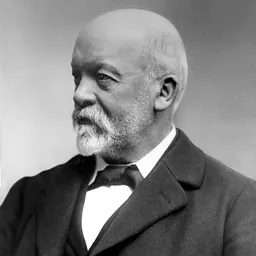
Robert Holtzmann (17 October 1873 – 27 June 1946) was a German Medievalist historian. He was something of a pioneer for what became an important post-war historiographical approach, respected among historians, in particular, as an authority on the Ottonians and their times, both during his life and for many years following his death.
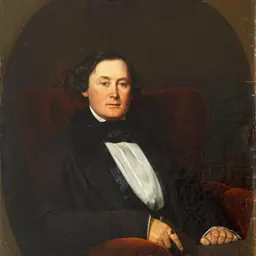
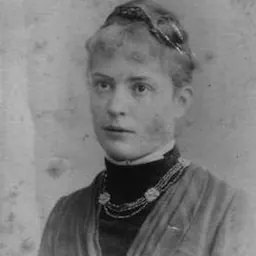
Life Provenance and early years Robert Holtzmann, the third of his parents’ four recorded children, was born in Heidelberg. His father, Prof. Heinrich Holtzmann, was a Protestant theologian, regarded by some among his colleagues something of a liberal. His mother, born Karoline Weber (1840–1897) was a daughter of Georg Weber (1808–1888), another historian. Of Robert Holtzmann's three siblings, two achieved significant notability on their own account. His elder sister, generally identified in sources by her married name, as Adelheid Steinmann (1866–1925) was a politically engaged women's rights activist and an effective advocate of equal education opportunities for women. His younger brother, Friedrich Holtzmann (1876–1948), became a noted physician and expert on hygiene.
Holtzmann's father taught at the university of Straßburg between 1874 and 1904, and it was in Strasbourg – between 1871 and 1918 a German city – that the boy grew up and received his schooling. On leaving school in 1892 he served his military service as a “one-year volunteer” in a recently formed infantry regiment. He then moved on to study for a first degree in History at the universities of Straßburg and (more briefly) Berlin. His most influential university teachers during this period were Paul Scheffer-Boichorst and Harry Bresslau. It was also in 1897 that he was recruited by Paul Scheffer-Boichorst to join the team working on the great “Monumenta Germaniae Historica” project.
Habilitation In 1902 Holtzmann received his post-doctoral Habilitation degree from the University of Straßburg, His degree project this time concerned the first part of the life of the man who became the Holy Roman Emperor Maximillian II, covering the years between 1527 and 1564. The Habilitation degree normally opened the way to a life-long teaching career in the universities sector, and he remained at the university as a ”Privatdozent” (‘’loosely, “tutor”’’). In 1907 he accepted a junior professorship. War broke out at the end of July 1914, however. Between 1914 and 1916 Holtzmann served on the western front. Serious injuries in the bitter fighting round Verdun put an end to his fighting career and he was released from further military service. His valour was recognised with the award of the Iron Cross 1st class and the Knight Cross 2nd class of the Order of the Zähringer Lion.
Halle and Berlin Seven years later he moved on again, this time to Halle, where he taught history till 1930. For the final part of his career, between 1930 and his retirement in 1939, he was employed as an ordinary (i.e. full) professor at the Friedrich Wilhelm University (as the “Humboldt” was known before 1945) in Berlin. Later during that decade, between 1928 and 1930, Holtzmann chaired the “Deutscher Historikerverband“ ([nationwide] "German Historians' Association").
Works Holtzmann's principal research focuses included the relations between the German medieval state and the surrounding territories, Franco-German relations during the later Middle Ages as France began to develop towards a more centralised power structure, the ”Ostsiedlung” (west-east colonisation of central Europe in the medieval centuries) and historical sources for the Ottonian period. In 1930 Holtzmann produced a new edition – the seventh edition – of Gebhardt's Handbook of German History. In 1938 he took over as series editor for what was still known as Wattenbach's “Deutschlands Geschichtsquellen im Mittelalter bis zur Mitte des XIII Jahrhunderts”, a directory produced of sources for Medieval German History intended for historians at all levels of scholarship
Recognition In 1943 Holtzmann was a recipient of the government's Goethe Medal. During the Summer of 1944 he was accepted an honorary doctorate from the Theology Faculty at the University of Halle.
Don’t just read it —
keep it.
Full-length biographies made to live with: read them, listen on the way to work, watch them tonight.
- E-book
- Audio
- Video
Instant download · yours to keep · every purchase keeps this site free
Important facts
People in Robert Holtzmann's life
Named in this biography and alive at the same time


Related people
Same field, nearest in time

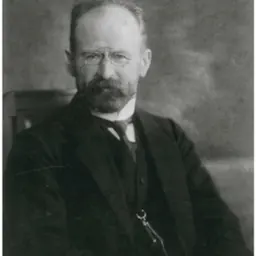

Contemporaries
People whose lives overlapped Robert Holtzmann's

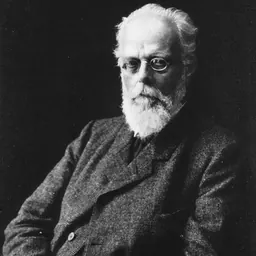
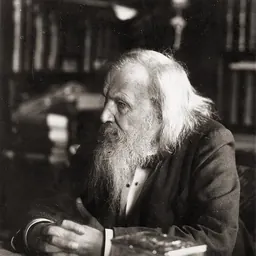
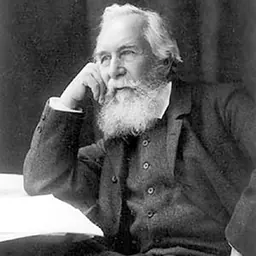
Frequently asked questions
Who was Robert Holtzmann?
German medievalist (1873–1946)
When was Robert Holtzmann born?
Robert Holtzmann was born on 17 October 1873 in Heidelberg.
When did Robert Holtzmann die?
Robert Holtzmann died on 27 June 1946 in Halle (Saale).
What was Robert Holtzmann's occupation?
Robert Holtzmann was a medievalist, university teacher and historian.
What nationality was Robert Holtzmann?
Robert Holtzmann was German.
Sources & further reading
Cite this page
APA: Biography.guide. (2026). Robert Holtzmann. https://biography.guide/robert-holtzmann/
MLA: "Robert Holtzmann." Biography.guide, https://biography.guide/robert-holtzmann/.
Chicago: "Robert Holtzmann." Biography.guide. https://biography.guide/robert-holtzmann/.
Data last updated: 2026-09-20 · Spot an error? Report a correction.
Page generated 2026-09-27 05:20 UTC