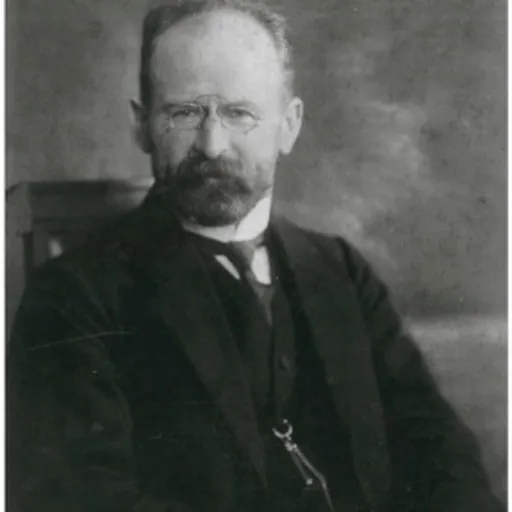
About Alexander Cartellieri
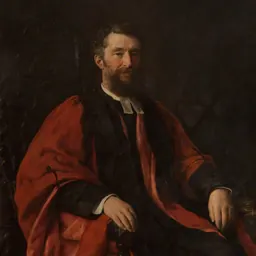
Lived 1867 – 1955 (aged 87). Alexander Cartellieri was a German medievalist, university teacher, archivist, historian and university of Jena.
Alexander Cartellieri (19 June 1867 – 16 January 1955) was a German historian, principally of the High Middle Ages. Between 1904 and 1934 he held a full professorship for Medieval and Modern History at the University of Jena. After his retirement in 1934, he continued to live in Jena through the National Socialist years, the war, Soviet occupation and the early years of German partition.
A committed monarchist and, until the First World War, well networked internationally with fellow medievalists, his personal diaries, which have been extensively researched and analysed posthumously, provide insights which are enlightening about the times through which he lived, and quite possibly constitute a more important contribution to European historiography than any of his published articles and books on the Medieval centuries. The war led him to break off his international contacts, most importantly with French and Belgian medieval scholars. He was never reconciled to the post-imperial "Weimar Republic" (as Adolf Hitler scathingly termed the democratic regime that operated in Germany between 1919 and 1933, thereby popularising a term that was quickly adopted by historians during the 1930s). Cartellieri campaigned against the "burdensome and humiliating" Versailles peace treaty, even though – unlike many German historians of the time – he never retreated into a narrowly nationalist historical vision. After 1933, the foreign policy successes of the Hitler government impressed him, but he resisted or ignored any pressures to become a propagandist for a National Socialist government strategy that was more and more obviously based on violence, both domestically and on the world stage. Alexander Cartellieri's great grandfather Antonio Cartellieri (1772–1807), a composer of church music who made his career Germany, had himself been the son of two opera singers, respectively from Milan and Riga, who were also living and working, at the time of his birth, in northern Germany. Antonio Cartellieri had in 1786 been relocated with his mother to Königsberg in East Prussia, following his parents' divorce. Alexander Cartellieri's more recent Cartellieri ancestors had made their way in life not as musicians but as businessmen. His grandfather, Julius Friedrich Leopold Cartellieri (1795–1873), was a city councillor and at one stage the treasurer in the port city of Pillau (which after 1945 became part of the Soviet Union and was renamed Baltiysk/Балтийск). Alexander Cartellieri's mother, born Cölestine Manger (1831–1918), was the daughter of a mine owner, originally from Kassel. In 1872 the Cartellieris relocated from Odessa to Paris where the children grew up. The move was undertaken in connection with Leopold Cartellieri's work for the international "Ephrussi & Co." bank. Alexander Cartellieri was unusual among German university history professors in having been born and grown up abroad. A few months before they moved to Paris the Franco-Prussian War had ended in French defeat. The traumatic Siege of Paris, the emperor's proclamation of 18 January 1871 in the Palace of Versailles and the loss of Alsace-Lorraine were all fresh and raw in the minds of Parisians. The family's social contacts were accordingly restricted to the very small number of German families living in the city. Another early focus of his historical passions, triggered by frequent walks in the Tuileries and to the royal tombs at Saint-Denis, involved the French monarchy.
In April 1883 Cartellieri was removed to the provincial German town of Gütersloh (between Dortmund and Hanover), which at that time had a population of fewer than 10,000. In addition to preparing him for university admission, three years in Gütersloh was an irresistible book-buying opportunity. He expanded his collection to above 400 volumes. These included von Ranke's already six volume "World History" series. His reading of the books inspired his decision, noted in his diary in November 1886, to become a university history professor.
Student years in Tübingen, Leipzig and Berlin At the start of the 1887, summer term Cartellieri enrolled at the University of Tübingen, The lectures of Heinrich von Treitschke covering the principal topical themes of the day, such as the "Jewish question", the church-state rivalries known collectively to historians as the "Kulturkampf" and education reform, also made a lasting impression on him. It was, according to his own diaries, from von Treitschke that he acquired his defining "belief in the German nation and in the Prussian state". Alongside Heinrich von Treitschke, Otto von Bismarck was always a defining figure in German and world history, from Cartellieri's perspective.
It was also in 1890 that Alexander Cartellieri met Margarete Ornold (1870–1931), the daughter of a Berlin lawyer. They married on 23 July 1894. According to at least one source, Cartellieri was able to benefit from "material support" from his Margarete's father for the rest of his life. whose own children include the bank director Ulrich Cartellieri. Margarete Cartellieri did indeed look after the household, but she also helped him with his work, proof reading and correcting his books ahead of publication. This principally involved parchment records from the fourteenth and fifteenth centuries. He also had frequent recourse to source records not held in Karlsruhe, and there were regular "archive trips" south, to Lucerne, Konstanz, Bregenz, Lindau and Freiburg. He also visited the Vatican Archive to view source material on the Bishops of Konstanz between 1351 and 1383. While in Karlsruhe he was also preparing for the government teaching exams. In the end he seems to have suffered some sort of fainting attack, caused by overwork, and was instructed to take a four-week break. By simply combing through the archival source records, he was not acquiring any sort of contextual overview or understanding of the place of these documents in world history in respect of the period from which they came. ) Underwhelmed by the "Regesta" work he turned, when he could, to questions involving historical theory and historical philosophy, and preoccupied himself with the structure and classifications of world history. He became interested in Marx's ideas on "Historical materialism", Arthur de Gobineau's work on "Race" and Darwin's endlessly current "Theories of Evolution".
He also engaged energetically in networking closer to home, participating in city life socially and becoming a member of a number of civic associations in Karlsruhe. He learned how to swim and to ride a bicycle in the Upper Rhine countryside. These activities, along with hiking and reading, became his favourite leisure pursuits as a young man. During the summer term, still at Heidelberg, he conducted his first tutorials on Latin Palaeography and delivered a lecture on France in the Middle Ages. There were also frequent stimulating exchanges of ideas with the art historian Carl Neumann and the polymath-jurist Georg Jellinek. Neumann brought him closer to the work of Jacob Burckhardt, while Jellinek was able to guide him in respect of the differing constitutional structures of different foreign countries. Cartellieri would retain fond memories of his years Heidelberg for the rest of his life, later describing the period as "the conclusion to a wonderful adolescence". as Professor for History at the University of Jena. He had already established a name as a knowledgeable practitioner of French Medieval History. But he did not feel at home in Jena as he had in Heidelberg. He confided to his diary on 24 August 1913 that he still found the place cold and unfriendly (...ein "Popel-Nest"). From the same source it is clear that in 1904, he had intended the Jena appointment to his first full professorship as a stepping stone. But the hoped for offer of a full professorship at Heidelberg University, the Ludwig-Maximilians-Universität München or the Friedrich Wilhelm University of Berlin never materialised. When a suitable vacancy arose at Heidelberg University the post was offered to Karl Hampe: Hampe accepted. For Cartellieri this was a source of "piercing hurt". Three years later, when he actually met the man who had been his rival for the job, he was so stressed by the encounter that he had great difficulty in "speaking clearly and slowly".
The house which Cartellieri and his wife rented (and later purchased outright for 50,000 Marks) was one of the first in a new development of so-called "noble houses" ("executive homes") on the western side of Jena. It remained his home till his death in 1955. Between 1904 and 1945 he supervised 144 doctoral dissertations and four habilitation dissertations. No fewer than fifty-five of those dissertations incorporated a strong focus on regional history, an academic discipline virtually never touched upon by scholars in more centralised states such as England and France.
Among colleagues at the University of Jena, Cartellieri was viewed as one who sided with the moderniser-reformers. As early as 1903, while sill only an associate professor, he put pen to paper in order to complain to the University Curator about the poorly equipped seminar rooms. He asked for more funding, especially for the library. Later, despite privately deploring the opening up of university facilities to female students in his diary, he was generally seen to be supportive of female students at Jena.
War years In common with many historians, Cartellieri's underlying beliefs were much affected by the First World War. By the start of 1914 his career was clearly on an upward trajectory. He had received the (probably largely honorary) title Hofrat in 1913. During Easter 1914 he accepted an appointment as university prorector which conferred certain administrative responsibilities and considerable status.
In the end the First World War lasted for more than four years. During that time "war journalism" became a major media growth sector in Germany. It was a sector to which, in the judgement of one twenty-first century historian, roughly half of Germany's Medievalist professors contributed. Steinbach finds that this contrasts starkly with a speech Cartellieri had delivered in June 1914 in his capacity as university prorector, in which he had characterised France and Germany as "siblings at odds over an inheritance" and urged students to "recognise no frontier-posts in the intellectual struggle, but to set out boldly in order to conquer the non-destructive realm of knowledge". He had stressed back in 1914 that it had "never been the German way [to] transfer harsh political differences into the spiritual and personal spheres". That approach had changed by October 1914, when in an address to a student audience he asserted that military and economic armaments were not sufficient: intellectual Germany must also work for victory: "The victory of German arms shall open up new paths for the triumph of German ideas".
Using the pseudonym "Konrad", Cartellieri contributed, during 1914/15 to Eugen Diederichs's monthly magazine Die Tat, a publication produced in Jena which was devoted to the arts and politics, and which during the war became strikingly nationalistic. He used his "Konrad" pieces to try and recreate medieval imperialism for the twentieth century and, as he expressed it, "to preach and speak of emperor and empire".
Following the German invasion of Belgium in August 1914, and in the context of the ensuing military occupation, Cartellieri's, the distinguished Wallon medievalist Henri Pirenne was questioned by the military authorities and then taken into custody, held successively in Krefeld, a hut in the camp on the edge of Holzminden, Jena (1916) and Creuzburg (from 1917 till the war ended). Shortly after his arrival in Jena, in August 1916 Pirenne met up with Cartellieri. The two men were at this time professional and personal friends of longstanding, but their views on the invasion of Belgium and the impact on each of them of subsequent events were understandably very different. Although Pirenne was detained, far from his family and against his will, the German authorities had recently relaxed the conditions of his detention. He was now required to report to the authorities only twice per week, and was otherwise left at large in Jena, though there is no mention in German-language sources of any relaxation of the condition imposed – according to French-language sources – in 1914, whereby he was prohibited from accessing any books. He devoted much of his time to authorship (from memory) and also took the opportunity to master the Russian language through oral instruction received from fellow detainees. While he was detained in Jena, Alexander Cartellieri was the only person whose company Pirenne sought out. After a long walk that the two men took together in January 1917, Cartellieri confided to his diary that he thought Pirenne "an exceptionally clever man, unfailingly obliging in discussion, but of course subject to the limitations to be expected of any Frenchman". "... ein ausnehmend kluger und in der Erörterung verbindlicher Mann, freilich in den Grenzen, die einem Franzosen Gesteck".
Peace and the republic The rolling revolutions of 1918/19 came as a great shock to Cartellieri. The tone of his diary entries sharpens. The Abdication of Wilhelm II on 9 November 1918 created a "day of irreversible shame for Germany": that shame could "only be washed away by blood". The armistice terms imposed on 11 November 1918 were "terrible". "... keinen Zorn in die Vergangenheit hineinzugiessen." Cartellieri had no great respect for "parliamentary principles", and adhered uncompromisingly to the view that no legitimate state authority can be based on a lot of slips of paper (i.e. ballot papers). The general election held on 19 January 1919 was Germany's first general election to use Proportional representation. It was the first time women were permitted to vote. The minimum voting age was reduced from 25 to 20. Despite Cartellieri's loathing of the rapidly emerging post-imperial constitutional arrangements, he and his entire family turned out and voted with more than 30 Million others. (In the previous general election, held in 1912, a little over 12 million people had voted. When the Catholic centrist politician Matthias Erzberger was murdered by right-wing terrorists in August 1921, Cartellieri's diary entry was lacking in human empathy: it characterised the late Erzberger as one of the "fatherland's worst pests". In view of his antiparliamentary stance in post-imperial Germany, Cartellieri cannot be identified as one of the so-called "Vernunftrepublikaner" (loosely, "republicans by pragmatism"): yet he conducted himself with unremarkable "constitutional loyalty". The biographer Matthias Steinbach places him closer to those who acknowledged the Weimar constitution from a sense of what was reasonable under the circumstances than to the die-hard "national-conservative" professors such as Dietrich Schäfer, Johannes Haller and Max Lenz. Cartellieri was also a propagator of the (subsequently) infamous Stab-in-the-back legend. It is evident from his diaries that he longed for a Hohenzollern restoration. In 1922, writing that he could now track his diary entries all the way back to 1915, he noted with wonder in 1922, the mood of optimistic pride and good cheer that had still prevailed back then.
The next year Ilse Cartellieri, daughter of Alexander Cartellieri, married the Eutin geographer Max Prange (1891–1979). The marriage was followed by the births of their three recorded children. These included the historian Wolfgang Prange (1932–2018).
The hyperinflation of 1922/23 took its toll on university salaries, and after 1922 the Cartellieris were no longer able to enjoy the standard of living that they would have taken for granted before 1914. Alexander Cartellieri sold part of his library in order to be able to buy groceries, and magazine subscriptions were cancelled. Although university salaries were increased with increasing frequency in order to try and match price rises, for much of the time Cartellieri's salary was virtually worthless. After currency stabilisation began to take effect, he was earning an annual salary of 3,500 Marks, which was approximately twice that of an unskilled worker.
The diaries contain several indications that during the 1920s Cartellieri became frustrated over the extent of his professional achievements. As early as 21 December 1921 he wrote in his diary, "My passionate yearning somehow to influence my times and the future, will perhaps never be fulfilled ... I would have loved to have been able to be of service to great men, I would have served them loyally in the old German manner, [but] the opportunity never came: I was unloved!". ("Mein heißes Verlangen, irgendwie einzuwirken auf meine Zeit, auf eine spätere Zeit, wird vielleicht nie erfüllt werden [...] Gerne hätte ich großen Männern gedient, ich wäre ihnen nach altgermanischer Art treu gewesen, es fand sich dazu keine Gelegenheit, geliebt hat mich auch keiner".)
Alongside his work at the University of Jena, Cartellieri served as deputy chair of the "Association for Thuringian History and Antiquity". He sat on the advisory board of the "Society of Friends of the University" and was also a member of the exclusive inner-circle at the Weimar-based German Dante Society. In February 1933, a few weeks after the Hitler government took power in Berlin, Alexander Cartellieri was accepted as a member of the Saxon Academy of Sciences and Humanities.
During the crisis years that directly preceded the toppling of republican democracy, Cartellieri's diaries become increasingly preoccupied with his private life. His younger brother, Otto Cartellieri, died suddenly and unexpectedly while vacationing in Switzerland in April 1930. Tragedy came even closer to home with the death of his wife in March 1931. Plunged into deep personal crisis, for the next couple of years Cartellieri found little space in his diaries for current events. After Margarete died, he tried several times to form new partnerships, hoping to marry again, but that never happened.
Germany under Hitler In March 1932 Cartellieri read "Hitlers Weg" (loosely, "Hitler's Path") by the commentator and liberal politician Theodor Heuss. Heuss was no fan of National Socialism: his critical study of Hitler's politics would run to eight editions and be translated into three additional languages. But with millions unemployed, street politics polarised and parliament deadlocked by the mutual hatreds of extremism, a few weeks later Alexander Cartellieri used the 1932 presidential election to vote for Adolf Hitler. It is apparent from his diary entries of the time that despite having voting for the "least bad" presidential option, he retained severe misgivings about Hitler. Steinbach characterises Cartellieri's attitude to National Socialism as that of "the approving sceptic".
By 1933 Cartellieri had passed his sixty-fifth birthday, and no longer felt a necessity to advance his career at the University of Jena. According to one commentator, he now felt able to observe developments after that point with "a mixture of national loyalty and aristocratic distance. He was not a party member, never engaged actively on behalf of the party and never spoke out in support of it in public.
In March 1933, a couple of weeks after the Reichstag fire, Cartellieri's diary entries disclose a heartfelt optimism, with regard to the new régime, "... that our so-called revolution in 1918, this dumb, criminal, and above all unnecessary revolution will be undone". His initial assumption was that the Hitler government was simply a transitional arrangement: "You have to go along with [Hitler]", he wrote in his diary on 1 May 1933, "because of its failure would deliver only collapse and Bolshevism. Perhaps he'll come to grief in Russia ... so long as we hold on to the current government. That would be for the best". For many people the so-called Röhm-Putsch ("Night of the long knives") on the night of 30 June/1 July 1934 came as an unwelcome eye-opener. In effect, it amounted to the murder, on the orders of Adolf Hitler, of the entire leadership of the Sturmabteilung, a Nazi paramilitary organisation that might constitute a future threat to the government. The killings had been performed without any judicial sentencing or other court involvement. Even though it constituted what subsequent generations would identify as a terrorist act by the government, Cartellieri's diary entries show no appreciation of the gravity of what had been done: he welcomed the "decision" and hoped that the outcome would be "a major improvement in general conditions". But Cartellieri held firmly to the Humboldt Educational Principal and resolutely protested against all attempts to politicise the university. As early as 1930, he spoke out against the appointment to the University of Jena's newly created "teaching chair for the study of ‘Race Science’" of the pseudoscientist and racism populariser, Hans F. K. Günther. (Frick had already acquired political notability in 1929 as the first National Socialist politician to be achieve ministerial appointment in a state/regional government anywhere in Germany. ) Cartellieri was shaken by the enforced resignation of the medical historian Theodor Meyer-Steineg, following the implementation of the government's so-called Law for the Restoration of the Professional Civil Service, and he later recorded in his diaries his shock at the anti-Jewish laws that came in the wake of the short but savage nationwide pogrom of November 1938. In order to try and reconcile his admiration for Adolf Hitler with his horror at the race-based persecution practiced by the government, Cartellieri returned to Philippe Auguste. In 1182 the French king had ordered the expulsion of all Jews from the royal demesne and the destruction of homes in the Jewish quarter of Paris, in order to make space for a vast new food market. He had then "recalled them" or "readmitted them" in 1198, albeit on terms more restricted than before the expulsion. Despite the dislike of government antisemitism evident in his diaries, for some years Cartellieri kept his misgivings to himself. But by the time he published the fourth volume of the "World History" ("Weltgeschichte als Machtgeschichte") series in 1941, something had changed. He included a bold judgement which, in view of the populist antisemitic position that had become mainstream among younger faculty colleagues, stands out as remarkable. In discussing the antisemitic arracks and massacres which erupted in the Rhineland at the end of the eleventh century as part of the build-up to the First Crusade, he shared with readers the assessment that those actions had brought "ruin to many who participated in them and, of course, to many innocent people .... and attracted great disapproval from contemporaries".
It is not entirely clear who Cartellieri thought would be reading his diaries: it is entirely possible that he was aware of the possibility or risk that they might somehow fall into the hands of some government agency. In January 1935 he writes, "I must take frightful care to control myself, so as not to say something dumb". The next sentence offers a further clue as to what might have been on his mind: "I am endlessly positive about National Socialism, not just at present, but already since a long time". ("Ich muss mich furchtbar zusammennehmen, um nicht auch etwas Dummes zu sagen.) Dabei bejahe ich unendlich viel vom Nationalsozialismus und nicht erst heute, sondern lange vorher."
The historians Matthias Steinbach and Herbert Gottwald conclude that he retained an emotionally fuelled "Nibelungentreue" faith in Hitler to the end, irrespective of the doubts that sometimes surface in the diary entries. "Ich glaube Verständnis für Hitlers Genialität zu haben, erkenne an, dass ein Mann aus dem Volke aufstehen musste, wie nach Azincourt und Troyes die Jungfrau von Orléans, aber gar manches, was in Hitlers Namen getan wird, will mir gar nicht behagen." One francophone reviewer identifies this "indeed troubling" line as the principal piece of evidence that the diaries contain of Cartellieri's antisemitism, but goes on to insist that plenty of other passages demonstrate convincingly that Cartellieri was not an anti-Semite. Even under National Socialism, for Alexander Cartellieri the old imperial government structure remained the proper government structure for Germany ("...die für Deutschland gegebene Lebensform"). And despite holding the former emperor Wilhelm II in deep contempt, it is clear from his diaries that he continued to believe that a Hohenzollern must be the emperor. Christian Amalvi, a twenty-first century commentator infers that he was thinking, in particular, of Germany's leading intellectuals, such as Berthold Brecht and Thomas Mann (both of whom are recalled by subsequent generations as high-profile anti-nazis who did indeed escape to the America, respectively in 1933 and 1939). After 1942 the possibility that Germany might lose a second "world war" was, for many observers, no longer unthinkable. Even after being told by a recently returned officer just how dire the military situation on the Russian front had become, Cartellieri refused to admit – apparently even to himself – the possibility of defeat. During the final weeks of the war news came through that Walter, his eldest son, had been killed in the fighting in Northern Italy. In his diary entry of 25 March 1945 Cartellieri was still expressing confidence that the tide of the war could be turned through rapid deployment of the new V-2 rockets. In a diary entry on 13 April 1945 he recorded the hope that the recent death of President Roosevelt might foreshadow a miracle equivalent to that resulting from the death of Russia's Empress Elizabeth in 1761, news of which came through in January 1762, and was widely credited with having preserved Prussia from seemingly certain destruction at the end of the "Seven Years' War". He received a personal letter of congratulations from the "Führer und Reichskanzler" ("Leader and national chancellor"). Karl Astel, the war-time university rector of the University of Jena, congratulated him personally. He also received the Goethe Medal for Arts, Humanities and Sciences in recognition of his contribution to Historical Scholarship. Matthias Steinbach believes that the sudden outburst of interest in Cartellieri from the National Socialists was based on two things. It enabled them to present a supposedly impartial version of history, free from ideology and dogma. Also, Cartellieri's tendency to see all history as the history of great men resonated strongly with the National Socialist vision of how the world worked, or at least of how it should work. The historical interpretation which he now advocated identified Hitler not as a specifically German problem but as a European problem. Without the fall of the empire and the Treaty of Versailles, Hitler could never have taken power. Just as he always had, Cartellieri continued to believe that "empire" had provided Germany with the "best" form of government. On 22 September 1946 he wrote in his diary: "No person of understanding can possibly doubt that if the 'Sozzen' (socialists), with their republican psychosis, had not driven the emperor away, the NSDAP could never have come to power". (Kein Verständiger kann bezweifeln, dass wenn die Sozzen nicht in ihrer Republikpsychose den Kaiser verjagt hätten, die NSDAP nie zur Macht gelangt wäre.) but Cartellieri's house was largely spared. War and its aftermath had nevertheless torn his family apart. His eldest son had been killed in Northern Italy during the final days of the fighting. Jena and the surrounding region had ended up administered as part of the post-war Soviet occupation zone. In February 1949 Ilse Prange, his daughter, died. His surviving children, with hundreds of thousands of others, seem to have taken the opportunity presented by the still relatively porous condition of the border between the occupation zones into which Germany had been divided to flee to the British and American occupation zones in the west. Alexander Cartellieri became increasingly cut off from the rest of his family. Many colleagues and friends had also perished in the war or else started new loves in the west. Cartellieri felt he could not leave his home in Jena because it would have meant leaving behind the substantial book collection which he had been able to build up after the traumatic experience of having to sell off many of his most valuable volumes during the economic collapse of the early 1920s in order to be able to feed himself and his family, and his final years were, at least on the domestic front, lonely. In September 1949, the rector Otto Schwarz of the University of Jena (who had been a party member since the formation of The Party in 1946) informed him that his allowance of so-called "intelligence cards" was to be withdrawn. "Intelligence cards" were supplementary ration coupons with which privileged comrades – apparently including retired university professors – were able to obtain discounts and / or a wider choice in respect of the food ration than the mass of comrades. The rector helpfully explained that his mistake had been to criticise the (party-backed) People's Congress movement. It had also been noted that he had spoken critically about the political situation in the Soviet occupation zone (relaunched, in October 1949, as the Soviet sponsored German Democratic Republic). in exchange for honey from Moscow in Idaho. ("Zeitschriften sind die Bierstuben und Kaffeehäuser der Wissenschaft." The work drew on his long-standing interest in the topics covered, but also reflected the author's own far more recent experiences of revolution in Germany following the destruction and military defeat of the "World War".) According to the Cartellieri scholar Matthias Steinbach the book is in essence a simple factual presentation: Cartellieri wanted to clarify the different views in ways that would enable his reader to form his or her own judgements. Respecting the tradition of Ranke, Cartellieri accepts as axiomatic both the conditionality and the mutual interdependence of events and conditions in France and in Germany in the period between 1789 and 1871. He always seeks to construe the shifts between reform, revolution and reaction in their full European dimension. Over the course of three decades Cartellieri researched the life and times of France's King Philip II ("Philippe Auguste"). His underlying thesis was that, under Philippe Auguste, France acquired "great power" status, engaging with significant effect in European power politics. Even in the king's early actions, Cartellieri detected "the early maturing and essentially political direction of his spirit and character". He attributed Philippe Auguste's hatred of England to "the impressions that the bright boy had taken in, at least in part unknowingly, when he saw how his father's entire being and legacy had been consumed in defending himself against this overmighty enemy". ("...nicht eine deutsch-feindliche Politik des französischen Königs, sondern besiegelte den Zusammenbruch des angevinischen Reiches".) He was keen to having the scope of the work defined by far more than simply the history of nations and states: instead he sought, in the first instance, to summarize world history in terms of the roles played by the leading personalities from each generation, whose achievements in their respective fields had stood the test of time. He followed the sources closely, seeking to give his own presentation and enduring timeless quality. "It is only right and proper", he wrote in the foreword to his first volume, "to raise world history to the level of a deserving subject for academic study, by not permitting it to say anything that cannot be proven: that is directly or indirectly traced back to the sources". He did not subdivide the period under discussion into conventionally "manageable" chronologically arranged chunks. He did not want to discuss or differentiate between the defining characteristics of antiquity and the middle ages, and he certainly did not want to write about the generality of "medieval people". He was concerned, he confided to readers of his diary, not to "clarify" contentious details, but rather to "hold fast to the essentials". The guiding principal for Cartellieri he described as the "eternally unchanging general human experience of power-play, always concealed within new wrappings". Today Cartellieri's diaries are part of his literary estate, held at the Jena University Library.
In retrospect Cartellieri's two volume biographical study of Philip II remains a standard work of German historiography a century after it was first published. The enduring value of the work lies in the author's methodological precision, his disciplined application of a clear and reliable chronology and his well considered and presented judgments of the French king and his actions. Irrespective of its underlying merits, Cartellieri's work on Philippe Auguste was not sufficiently persuasive to shift the mainstream assessment the Battle of Bouvines. During the nineteenth century, with nationalism a powerful force in European historiography, the battle came to be seen as symbolic of French strength and German weakness. It was not till the 1970s that new avenues of research introduced a more nuanced set of understandings of the battle and its significance. Cartellieri scholar Dr. Matthias Steinbach leaning on the grave memorial of Alexander Cartellieri in the "Nordfriedhof" (cemetery) in Jena Even among his contemporaries, there were none who would have picked out Alexander Cartellieri as one of the leading medievalists of his generation. In the Soviet occupation zone and the German Democratic Republic, in which he lived out the final decade of his retirement, history quickly came to be dominated by the Marxist world vision. There was no room for Cartellieri in that. After his death, Cartellieri's 16,000 volume library was purchased by the University of Jena: for more than three decades the collection was left to fester, largely undisturbed. During 1989, a first-year history student at the University of Jena, Matthias Steinbach, undertook his first visit to the Manuscripts Department of the University Library and noticed the 16,000 volume collection. He was unable to avoid wondering who might have collected so many volumes – many of them not even in German, but in French or in Italian – in Jena. (Neither France nor Italy was among the small number of countries that most East Germans were permitted to visit between 1949 and 1989.) Steinbach's curiosity was the starting point for several years of study that culminated, nine years later, and after first obtaining his first degree and his national teaching qualifications, in Steinbach's doctoral dissertation about Alexander Cartellieri. The doctorate was awarded in 1998 and the dissertation appeared in an expanded and adapted form as a book in 2001. Cartellieri has been at the heart of Steinbach's work as a historian since that time. Even for Steinbach, however, Cartellieri was "not [to be included among] the leading figures in German cultural and academic life during the fifteen years between the German Empire and the National Socialist dictatorship". Steinbach teamed up with Uwe Dathe to prepare for publication an edited selection of Cartellieri's diary entries covering the period between 1899 and 1953. The result of their work was a stout "critically commentated" volume of 980 pages, published at the end of 2013. The publishers presented Cartellieri's diaries as "representative" testimony, providing an insight into the "Mindset of senior German educators" (... die "Mentalität des deutschen Bildungsbürgertums"). Diary entries covering Cartellieri's time working, between 1892 and 1898, with the State Archives Service in Karlsruhe, had been separately published already, also by Matthias Steinbach, two years earlier.
In 2014 the western journalist-historian Tillmann Bendikowski produced his popular book "Sommer 1914", in which he tried to show, through the eyes of five very different contemporary witnesses, how Germans experienced the outbreak of the First World War. He selected Alexander Cartellieri to represent the nation's "haute-bourgeoisie".
Don’t just read it —
keep it.
Full-length biographies made to live with: read them, listen on the way to work, watch them tonight.
- E-book
- Audio
- Video
Instant download · yours to keep · every purchase keeps this site free
Important facts
People in Alexander Cartellieri's life
Named in this biography and alive at the same time

Related people
Same field, nearest in time

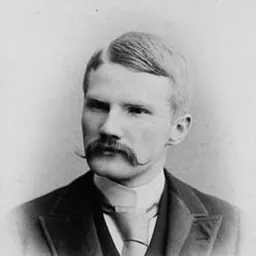
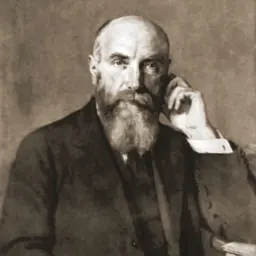

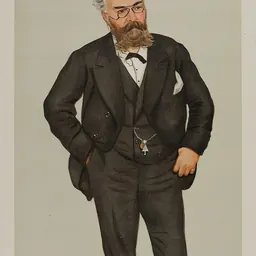
Contemporaries
People whose lives overlapped Alexander Cartellieri's
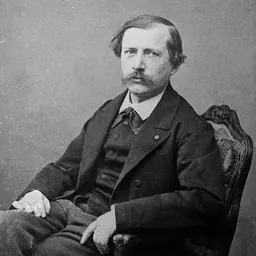




Frequently asked questions
Who was Alexander Cartellieri?
German medievalist (1867–1955)
When was Alexander Cartellieri born?
Alexander Cartellieri was born on 19 June 1867 in Odesa.
When did Alexander Cartellieri die?
Alexander Cartellieri died on 16 January 1955 in Jena.
What was Alexander Cartellieri's occupation?
Alexander Cartellieri was a medievalist, university teacher, archivist, historian and university of Jena.
What nationality was Alexander Cartellieri?
Alexander Cartellieri was German.
Sources & further reading
· Wikipedia: Alexander Cartellieri
· DBpedia: Alexander Cartellieri
Cite this page
APA: Biography.guide. (2026). Alexander Cartellieri. https://biography.guide/alexander-cartellieri/
MLA: "Alexander Cartellieri." Biography.guide, https://biography.guide/alexander-cartellieri/.
Chicago: "Alexander Cartellieri." Biography.guide. https://biography.guide/alexander-cartellieri/.
Data last updated: 2026-09-22 · Spot an error? Report a correction.
Portrait: Wikimedia Commons · author & licence
Page generated 2026-09-27 05:04 UTC