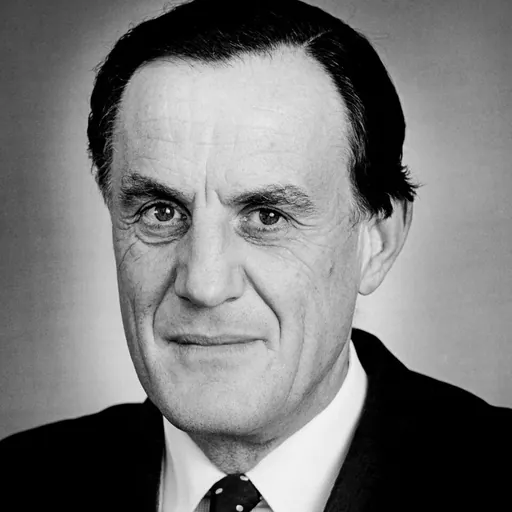
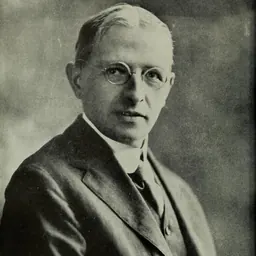
Robert Hanbury Brown
British astronomer and physicist, born in India
About Robert Hanbury Brown
Lived 1916 – 2002 (aged 85). Robert Hanbury Brown was an Australian and British physicist, astronomer, university teacher and researcher.
Robert Hanbury Brown, AC FRS (31 August 1916 – 16 January 2002) was a British astronomer and physicist born in Aruvankadu, India. He made notable contributions to the development of radar and later conducted pioneering work in the field of radio astronomy.
With Richard Q. Twiss he developed the Hanbury Brown and Twiss effect leading to the creation of intensity interferometers. Hanbury Brown was one of the main designers of the Narrabri Stellar Intensity Interferometer and received a number of honours and awards for his work.
Early years Hanbury Brown was born in Aruvankadu, the Nilgiris, British India in 1916, the son of an army officer. At age 8 he was sent to England to attend Cottesmore preparatory school in Hove, where he was educated in primarily non-scientific subjects. In 1930, at age 14, Hanbury Brown went on to attend Tonbridge School in Kent for only two years before changing to Brighton Technical College. Though originally planning to become a classics scholar, the change to a technical college came due to influences from those around him. His grandfather, Sir Robert Hanbury Brown, K.C.M.G., a notable irrigation engineer, was also one of the early pioneers of radio, and following Hanbury Brown's parents' divorce, his legal guardian was a consulting radio engineer. At Brighton Technical College, Hanbury Brown studied for an external Bachelor's degree in electrical engineering from the University of London, which he received at the age of 19. At this time he also published his first paper, 'Lamp polar curves on the cathode-ray oscillograph'.
Career Though initially planning to study for a Ph.D. at Imperial College, London, Hanbury Brown drew the attention of Henry Tizard. Tizard recruited Hanbury Brown to work for what would become the Telecommunications Research Establishment on Chain Home in 1936, where he worked until 1942; after this he spent 3 years in Washington, D.C. to work with the Combined Research Group at the Naval Research Laboratory developing the Rebecca/Eureka transponding radar which he and John William Sutton Pringle originally invented. By 1947 a consultancy that had been set up by Sir Robert Watson-Watt, the father of radar, offered more interesting prospects for the conversion of wartime developments into peacetime technologies. Hanbury Brown was recruited and worked as a consulting engineer until Watson-Watt moved the firm to Canada. After considering his career possibilities, Hanbury Brown joined Bernard Lovell's radio astronomy group at the University of Manchester in 1949 to work on his PhD.
Hanbury Brown died in Andover, Hampshire on 16 January 2002. In 1968, he received the Eddington Medal jointly with Twiss (see Hanbury Brown and Twiss effect). He also won the Thomas Ranken Lyle Medal of the Australian Academy of Science in 1972. In 1982 he was named President of the International Astronomical Union, a title he retained until the end of his term in 1985. In 1986 he was appointed Companion of the Order of Australia. He was awarded the Albert A. Michelson Medal of the Franklin Institute in 1982, jointly with Richard Q. Twiss and the Matthew Flinders Medal and Lecture the same year.
Publications He wrote an autobiographical account of the development of airborne and ground-based radar, and his subsequent work on radio astronomy. Since he was rumoured to have been the original boffin who inspired the term, he called these recollections Boffin: A Personal Story of the Early Days of Radar, Radio Astronomy and Quantum Optics
Hanbury Brown and Twiss, Nature, Vol. 178, pp. 1046 1956 Hanbury Brown et al., Mon. Not. R. Astron. Soc., Vol. 167, pp 121–136 1974 Hanbury Brown, Boffin : A Personal Story of the Early Days of Radar, Radio Astronomy and Quantum Optics . Hanbury Brown, The Wisdom of Science – its relevance to Culture & Religion .
Hanbury Brown is author of 127 articles and other scientific works, published over a 67-year period of activity (1935–2002). The full list of his contributions can be found in a document made available by the Royal Society Publishing Organisation, at the following url: http://rsbm.royalsocietypublishing.org/content/49/83/suppl/DC1
The Hanbury Brown Papers were catalogued by Anna-K Mayer and Tim Powell, NCUACS, and have been deposited with the Royal Society, London.
Don’t just read it —
keep it.
Full-length biographies made to live with: read them, listen on the way to work, watch them tonight.
- E-book
- Audio
- Video
Instant download · yours to keep · every purchase keeps this site free
Important facts
People in Robert Hanbury Brown's life
Named in this biography and alive at the same time





Related people
Same field, nearest in time

Contemporaries
People whose lives overlapped Robert Hanbury Brown's



Frequently asked questions
Who was Robert Hanbury Brown?
British astronomer and physicist, born in India (1916–2002)
When was Robert Hanbury Brown born?
Robert Hanbury Brown was born on 31 August 1916 in Aruvankadu.
When did Robert Hanbury Brown die?
Robert Hanbury Brown died on 16 January 2002 in Andover.
What was Robert Hanbury Brown's occupation?
Robert Hanbury Brown was a physicist, astronomer, university teacher and researcher.
What nationality was Robert Hanbury Brown?
Robert Hanbury Brown was Australian and British.
Sources & further reading
· Wikipedia: Robert Hanbury Brown
· DBpedia: Robert Hanbury Brown
Cite this page
APA: Biography.guide. (2026). Robert Hanbury Brown. https://biography.guide/robert-hanbury-brown/
MLA: "Robert Hanbury Brown." Biography.guide, https://biography.guide/robert-hanbury-brown/.
Chicago: "Robert Hanbury Brown." Biography.guide. https://biography.guide/robert-hanbury-brown/.
Data last updated: 2026-09-22 · Spot an error? Report a correction.
Portrait: Wikimedia Commons · author & licence
Page generated 2026-09-27 05:02 UTC