
About Robert H. Thouless
Lived 1894 – 1984 (aged 90). Robert H. Thouless was a British psychologist and parapsychology.
Robert Henry Thouless (15 July 1894 – 25 September 1984) was an English psychologist and parapsychologist.
Career
He studied at Cambridge University where he earned B.A. hons in 1914, an M.A. in 1919 and a PhD in 1922. His own experiments did not confirm the results of J. B. Rhine and he criticised the experimental protocols of previous experimenters. He is credited (along with Bertold Wiesner ) with introducing the word psi as a term for parapsychological phenomena in a 1942 article in the British Journal of Psychology. He served as president of the Society for Psychical Research from 1942 to 1944.
Thouless was a friend of the philosopher Ludwig Wittgenstein and attended his lectures. Alongside C.H. Waddington, he and Wittgenstein would meet up every week and discuss philosophy.
Attempt to prove dead could communicate with the living
In 1948 Thouless created a test that he thought could provide evidence that he could communicate with living people after his death. One way of testing this, which had been tried before, was to ask dying people to write a message that would be sealed, then ask a medium to try to contact the deceased for the message.
Thouless called his experiment "A Test of Survival" and published it in the Proceedings of the Society for Psychical Research. He initially published two ciphers, Passage I and Passage II. Thouless also published a description of the methods used for Passages II and III, as he assumed they were practically unbreakable without the keys.
Passage II survived until 2019, when it was cracked by , a Research Fellow in the School of Information Technology and Electrical Engineering at The University of Queensland. Passage II used a variant of a book cipher, which means that it used a published phrase in its encipherment. Bean cracked it by writing a computer script that tried out 37,000 books from Project Gutenberg and ranked the potential solutions based on expected English letter frequencies. The source book was Selected Poems of Francis Thompson, and the particular entry used was the poem "The Hound of Heaven”. The deciphered message read "A number of successful experiments of this kind would give strong evidence for survival."
Reception
His An Introduction to the Psychology of Religion (1923, reprinted 1961) received a mixed reception from academics. One criticism of the book was the over-reliance of Freud's psychoanalyst approach to the subject. Professor James E. Dittes wrote that despite the obsolete Freudian views it is a useful elementary guide to the psychology of religion.
Psychologist John Beloff commenting on Thouless and his parapsychological studies wrote:
"Although his own ESP experiments were not notably successful, he made an original contribution to the study of PK (psychokinesis) with dice, using himself as subject. Unlike Rhine, however, he never lost interest in the age old topic of an afterlife... He even devised a coded message, which he took with him to the grave, in the hope that he might demonstrate survival by revealing the code posthumously through a medium. No such message, however, has yet been received."
Psychologist L. Börje Löfgren has criticised Thouless for endorsing the mentalist Frederick Marion as a genuine psychic. He suggested that "Thouless is an honest man, but his powers of self-deception must be rather considerable."
Personal life Robert Thouless married Priscilla Gorton, an English teacher, and was the father of the Nobel Prize-winning physicist David Thouless.
Publications An Introduction to the Psychology of Religion (1923, 1961) The Lady Julian: A Psychological Study (1924) Social Psychology: A Text Book for Students of Economics (1925) Control of the Mind (1929) How to Think Straight (1948) Experimental Psychical Research (1963) Mind and Consciousness in Experimental Psychology (1963) Rationality and Prejudice (1964) Straight and Crooked Thinking (1968) From Anecdote to Experiment in Psychical Research (1972)
Don’t just read it —
keep it.
Full-length biographies made to live with: read them, listen on the way to work, watch them tonight.
- E-book
- Audio
- Video
Instant download · yours to keep · every purchase keeps this site free
Important facts
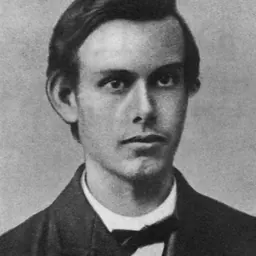
People in Robert H. Thouless's life
Named in this biography and alive at the same time




Related people
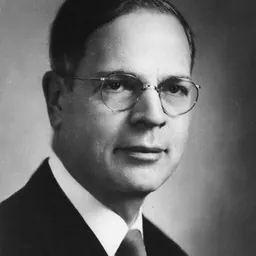
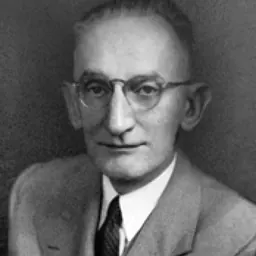
Same field, nearest in time



Contemporaries
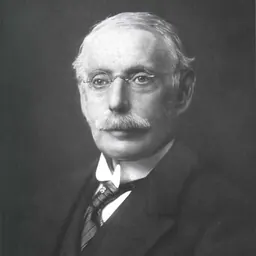
People whose lives overlapped Robert H. Thouless's


Frequently asked questions
Who was Robert H. Thouless?
British parapsychologist (1894–1984)
When was Robert H. Thouless born?
Robert H. Thouless was born on 15 July 1894.
When did Robert H. Thouless die?
Robert H. Thouless died on 25 September 1984.
What was Robert H. Thouless's occupation?
Robert H. Thouless was a psychologist and parapsychology.
What nationality was Robert H. Thouless?
Robert H. Thouless was British.
Sources & further reading
· Wikipedia: Robert H. Thouless
Cite this page
APA: Biography.guide. (2026). Robert H. Thouless. https://biography.guide/robert-h-thouless/
MLA: "Robert H. Thouless." Biography.guide, https://biography.guide/robert-h-thouless/.
Chicago: "Robert H. Thouless." Biography.guide. https://biography.guide/robert-h-thouless/.
Data last updated: 2026-09-22 · Spot an error? Report a correction.
Page generated 2026-09-27 05:32 UTC