
About Robert H. Socolow
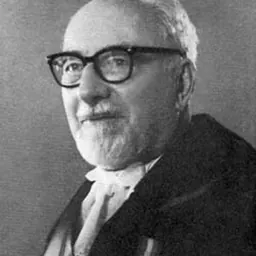
Born 1937. Robert H. Socolow is an American university teacher, physicist and environmental scientist.
Robert Harry Socolow (born December 27, 1937; surname pronunciation sŏc‘-ŏ-lō) is an American environmental scientist, theoretical physicist and professor emeritus of Mechanical and Aerospace Engineering at Princeton University. He was a founder of the Carbon Mitigation Initiative of Princeton University. He has articulated pathways to reduction of carbon dioxide emissions for minimizing climate change, especially the concept of climate stabilization wedge. Socolow has developed equitable approaches to climate change mitigation that balance reductions in greenhouse gas emissions with economic development.
The American Physical Society stated that Socolow had a leadership role in establishing energy and environmental problems as interdisciplinary research fields for physicists consistent with the highest scientific standards. In this regard, with ecologist John Harte, in 1971 Socolow authored Patient Earth which was an early casebook on environmental science. His research was characterized as pioneering in energy efficiency research in the context of environmentalism. Socolow's scientific investigations influenced the decision to cancel the Miami Jetport project and the Tocks Island Dam project in northern New Jersey. He articulated approaches to industrialization of the developing countries through environmentally responsible means.
Early life and education Socolow was born in 1937 in New York City to parents Abraham Walter Socolow and Edith Socolow (née Gutman). He attended the Ethical Culture Fieldston School. His father, A. Walter Socolow, was a founder of the Reconstructionist Rabbinical College of Pennsylvania and served as president of the Board of Jewish Education of Greater New York and also the Society for the Advancement of Judaism.
Socolow graduated summa cum laude in 1959 from Harvard College with a Bachelor of Arts degree in physics. Through a program at Harvard, he traveled for a year in Africa and Asia, having been awarded a Frederick Sheldon Travel Scholarship. Socolow then earned his Ph.D. in physics from Harvard University working on theoretical problems, finishing his doctorate in 1964. His doctoral thesis was on "Electromagnetic Self-Energies and Weak Decays in Unitary Symmetry" which was research conducted with Harvard professor Sidney Coleman. Between 1964 and 1966 he was National Science Foundation Postdoctoral Fellow in Physics, at the University of California at Berkeley and the European Center for Nuclear Research (CERN) in Geneva, Switzerland.
Socolow's upbringing and early education emphasized arts, culture, and languages. He became multilingual, especially French and Russian.
In 1957 during his undergraduate years, Socolow worked as a summer student at the Brookhaven National Laboratory. His time there exposed him to the rapid advances in the field of particle physics and convinced him to pursue an undergraduate degree in physics. Later, in 1961 when Socolow was in graduate school, he worked at the Pugwash Conferences on Science and World Affairs at which time he realized that scientific rigor is useful in developing public policy.
While at Yale, Socolow and other faculty members organized a "Day of Reflection" to discuss the role of scientists in the military and the Vietnam War, as part of the peace movement of the era. The event was held on March 4, 1969.
Environmental research In 1969, through his antiwar activities, Socolow became acquainted with then Princeton physics professor Marvin Goldberger. Goldberger encouraged Socolow to participate in a summer case study program sponsored by the National Academy of Sciences at Stanford University on management of the environment. With fellow participant and Yale colleague John Harte, Socolow evaluated the environmental impact of the proposed Big Cypress Jetport in the Florida Everglades. They concluded that the impact on local water supplies was too large to justify continued construction of the airport. This study was influential in the decision to discontinue the project. As a result of this experience, Socolow redirected his scientific investigations and career endeavors to matters related to environmentalism, energy efficiency and sustainable development. During his tenure at the CEES, Socolow worked on initiatives that would enable economic advancements of the developing world that are environmentally responsible, approaches to environmentally improved means of delivering nitrogen fertilizer in agricultural settings, economically viable approaches to carbon sequestration for reduction of atmospheric carbon dioxide levels, and industrial ecology. He further contended that each generation has a moral and ethical obligation to leave successive generations with improved means for environmental stewardship.
Princeton University president Robert F. Goheen had significant interest in matters related to energy and the environment, and he believed that Princeton could have a leadership role in such matters. To this end, he recruited Socolow to Princeton University, charging him with developing a multidisciplinary approach to energy and the environment. In 1971, Socolow moved to Princeton's newly-formed CEES and became a faculty member of the university's School of Engineering and Applied Science.
Carbon mitigation initiative
Beginning in 2000, Socolow collaborated with Princeton colleagues Robert H. Williams and Stephen W. Pacala to establish the carbon mitigation initiative (CMI). The goal of CMI was to address the problem of anthropogenic climate change through more effective management and reduction of atmospheric carbon dioxide emissions. CMI was established as a long term project, funded as of 2024 through 2025. The initiative was sponsored by BP with some initial participation by the Ford Motor Company.
As first published, the climate stabilization wedges consisted of seven wedges which in combination would provide the needed carbon dioxide mitigation. These could be selected from existing technologies that include: Energy efficiency and conservation; Improved power generation; Carbon sequestration; Alternative energy sources; and Agriculture / Forestry. The wedges selected need not be the same for the Developing world and the Industrialized world. Socolow and Pacala first published the concept of climate stabilization wedges in the journal Science in 2004.
Emphasizing the implementation of existing technologies as a portfolio of options for carbon dioxide mitigation, Socolow and Pacala stated in the journal Scientific American:
"Holding carbon dioxide emissions constant for 50 years, without choking off economic growth, is within our grasp."
Later career In a 2009 scientific publication with ecologist G. David Tilman and others, Socolow cautioned against biofuels that are implemented poorly. Tilman and Socolow's scientific publication on the subject stated that biofuels should not compete with food crops or cause land-clearing and that they should offer overall greenhouse gas emissions as indicated by life cycle analysis.
In his on-going involvement with Princeton's Andinger Center for Energy and the Environment, Socolow led a group that wrote a series of environmentally-relevant monographs covering such topics as wind and solar power, grid power storage, small scale nuclear reactors, and nuclear fusion. Following his 2013 retirement from his professorship, Socolow became an emeritus professor, while continuing his research at Princeton University. Destiny studies became an on-going endeavor at Princeton University and was the subject of a 2019 symposium conducted in honor of Socolow's retirement from full professorship.
Around the same time, Socolow articulated practical approaches to climate change mitigation based on an analysis of demand, supply and the relationship to international politics, as well as the role of populations growth. He acknowledged the uncertainty in the degree of urgency and that resistance is natural and to be expected. He discussed impediments resulting from factions that rarely communicate with one another, such as the nuclear power industry and the renewable fuels industry.
Regarding the impact of the developing world on climate change, Socolow stated that an equitable approach is through the concept of the personal carbon footprint, which emphasized emissions of carbon dioxide through activities of individuals rather than societies as a whole. The basis of this method of analysis is that affluent people in the developing world account for the majority of the carbon dioxide emissions within nations of the developing world even though they are a small portion of the population. Socolow first articulated the concept of the personal carbon footprint in a 2006 journal article of the Proceedings of the National Academy of Sciences co-authored by his colleague Pacala.
In a follow-up publication, Socolow and his co-authors elaborated on the responsibilities of "high emitters" who reside in developing nations.
Socolow pointed out the environmental impact of population growth and its role in population ecology.
With colleague Chris Grieg, Socolow published an opinion piece in The Washington Post stating that there can be an important role for the fossil fuel industry while simultaneously reducing carbon dioxide emissions through carbon sequestration.
Personal life Socolow resides in Princeton, New Jersey, with his partner, Mimi Schwartz, a writer and scholar of creative non-fiction. He has two sons and was married three times. Elizabeth Anne (Sussman) Socolow is a published poet. The late Dr. Jane Reis Pitt, a physician-scientist, was a researcher on HIV pediatric infections at Columbia Presbyterian. Emily Matthews is an editor who worked for many years at the World Resources Institute.
Awards and recognition From 1992 to 2002 Socolow was an editor for Annual Review of Energy and the Environment. He served on two committees of the National Academies: America's Energy Future and America's Climate Choices and in 2004 became lifetime national associate of the National Academy of Sciences. He received the Leo Szilard Lectureship Award in 2003. The Szilard Lectureship Award citation stated about Socolow, "for leadership in establishing energy and environmental problems as legitimate research fields for physicists, and for demonstrating that these broadly defined problems can be addressed with the highest scientific standards". and of the American Association for the Advancement of Science. Then, in 2009, Time listed the "personal carbon footprint" as number 12 on the list of 50 best inventions of the year. Socolow and other Princeton colleagues were inventors on the personal carbon footprint concept.
Socolow and Pacala's publication in the journal Scientific American, "A Plan to Keep Carbon in Check", was one of 28 scientific articles included in the 2007 edition of the book The Best American Science and Nature Writing.
In 2010, Socolow received the Keystone Award for Leadership in the Environment from the Keystone Center of Colorado. He was a 2023 winner of the John Scott Medal for his career-long contributions for understanding and addressing anthropogenic climate change. In 2014 Socolow became a member of the American Academy of Arts and Sciences.
Socolow was a long-time member of the board of directors of the National Audubon Society.
Representative scholarly publications These lists are non-exhaustive.
Books John Harte; Robert H Socolow. Patient earth. New York, Holt, Rinehart and Winston, 1971, 364 pages. Feiveson, Harold, Frank Sinden, and Robert Socolow. Boundaries of Analysis: an Inquiry Into the Tocks Island Dam Controversy. Cambridge, Mass.: Ballinger Publishing Company, 1976. OIES Global Change Institute & Socolow, R. H. (1994). Industrial ecology and global change. Cambridge University Press.
Journal articles S. Pacala, R. Socolow, Stabilization Wedges: Solving the Climate Problem for the Next 50 Years with Current Technologies. Science 305, pp. 968-972 (2004). Chakravarty, Shoibal, Ananth Chikkatur, Heleen De Coninck, Stephen Pacala, Robert Socolow, and Massimo Tavoni. "Sharing global CO2 emission reductions among one billion high emitters." Proceedings of the National Academy of Sciences 106, no. 29 (2009): 11884-11888. Robert H. Socolow, Truths We Must Tell Ourselves to Manage Climate Change, 65, Vanderbilt Law Review 1455 (2019). Robert H. Socolow, “Witnessing for the Middle to Depolarize the Climate Change Conversation,” Dædalus 149 (4) (Fall 2020).
Reports R.H. Socolow, ed., 1997. Fuels Decarbonization and Carbon Sequestration: Report of a Workshop. R.H. Socolow et al., 2011. Direct Air Capture of CO2 with Chemicals.
Don’t just read it —
keep it.
Full-length biographies made to live with: read them, listen on the way to work, watch them tonight.
- E-book
- Audio
- Video
Instant download · yours to keep · every purchase keeps this site free
Important facts
People in Robert H. Socolow's life
Named in this biography and alive at the same time





Related people
Same field, nearest in time


Contemporaries
People whose lives overlapped Robert H. Socolow's


Frequently asked questions
Who is Robert H. Socolow?
American physicist
When was Robert H. Socolow born?
Robert H. Socolow was born on 27 December 1937 in New York City.
What is Robert H. Socolow's occupation?
Robert H. Socolow is a university teacher, physicist and environmental scientist.
What nationality is Robert H. Socolow?
Robert H. Socolow is American.
Sources & further reading
· Wikipedia: Robert H. Socolow
Cite this page
APA: Biography.guide. (2026). Robert H. Socolow. https://biography.guide/robert-h-socolow/
MLA: "Robert H. Socolow." Biography.guide, https://biography.guide/robert-h-socolow/.
Chicago: "Robert H. Socolow." Biography.guide. https://biography.guide/robert-h-socolow/.
Data last updated: 2026-09-20 · Spot an error? Report a correction.
Page generated 2026-09-27 05:23 UTC