
About Robert E. Lee
Lived 1912 – 1993 (aged 81). Robert E. Lee was an American politician.
Robert Emmet Lee (March 31, 1912 – April 5, 1993) was an American government official, best known as commissioner of the Federal Communications Commission from 1953 to 1981, including interim FCC chairman (February 5, 1981 – April 12, 1981) and chairman (April 13, 1981 – May 18, 1981).
Background
Robert Emmet Lee was born on March 31, 1912, in Chicago to a family of Irish immigrants. He had at least one sibling, a brother Edward. In the 1920s, He attended St. Vincent's Grammar School. In 1935, he graduated from DePaul University's College of Commerce and Law.
Career
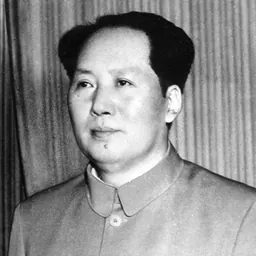
In 1932, while still a student, Lee began his career as a night clerk and auditor at the Congress Hotel in Chicago. In 1933, he had become assistant auditor at the Great Northern Hotel in Chicago. In 1935, he became auditor of the Roosevelt Hotel in St. Louis, Missouri. Later that year, he became auditor of the American Bond and Mortgage Company Bondholders Protective Committee. ) During a congressional hearing on March 10, 1948, Assistant Secretary of State John E. Peurifoy claimed the number had dropped from 108 to 57 names. U.S. Colonel David D. Barrett with Mao Zedong during the Dixie Mission (1944–1947), formed the background to which the "Lee List" also contributed The Dixie Mission (July 22, 1944 – March 11, 1947), was the first U.S. effort to establish official relations with the Chinese Communist Party. Domestic suspicion about China Hands undermined mission members such as State Department official John S. Service (who, in an August 3, 1944, report The Communist Policy Towards the Kuomintang stated "impressive personal qualities of the Communist leaders, their seeming sincerity, and the coherence and logical nature of their program leads me, at least, toward general acceptance of the first explanation – that the Communists base their policy toward the Kuomintang on a real desire for democracy in China under which there can be orderly economic growth through a stage of private enterprise to eventual socialism without the need of violent social upheaval and revolution."). Service was implicated in the "Amerasia Affair" espionage investigations of 1945–1946. In November 1944, U.S. General Joseph Stilwell was recalled from China amidst controversy about American support for nationalist and communist Chinese forces that made the cover of TIME magazine. In 1946, a House Judiciary subcommittee chaired by Rep. Samuel F. Hobbs (followed in 1950 by the Senate Foreign Relations Subcommittee on the Investigation of Loyalty of State Department Employees, commonly known as the Tydings Committee) investigated the Amerasia case. "Thus, by 1946, "members of both parties and both houses were focused on the security shop at Satate, albeit from different angles, by the latter part of 1946." During 1946, Congress attached a "McCarran Rider" to appropriations for the State Department: it empowered the U.S. Secretary of State to fire summarily anyone deemed "necessary or advisable in the interests of the United States."
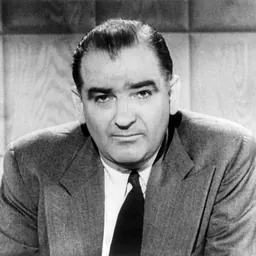
On February 9, 1950, Senator McCarthy gave a Lincoln Day "Enemies Within" speech to the Republican Women's Club of Wheeling, West Virginia. His words in the speech are a matter of some debate, as no audio recording was saved. However, it is generally agreed that he produced a piece of paper that he claimed contained a list of known Communists working for the State Department. McCarthy is usually quoted to have said: "The State Department is infested with communists. I have here in my hand a list of 205—a list of names that were made known to the Secretary of State as being members of the Communist Party and who nevertheless are still working and shaping policy in the State Department." There is some dispute about whether or not McCarthy actually gave the number of people on the list as being "205" or "57". In a later telegram to President Truman, and when entering the speech into the Congressional Record, he used the number "57."
FCC commissioner
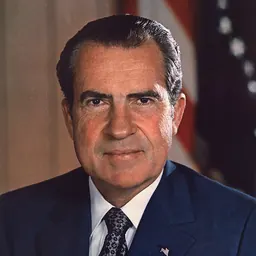
In 1953, U.S. president Dwight D. Eisenhower appointed Lee commission to the new Federal Communications Commission, where he served for nearly 28 years to 1981. Lee was a personal friend of U.S. Senator Joseph McCarthy and so faced some opposition in the American press when Eisenhower appointed him FCC commissioner. Subsequent presidents Lyndon Baines Johnson, Richard Nixon, and Ronald Reagan re-appointed him. In his final year, he served briefly as interim chairman (February 5, 1981 – April 12, 1981) and chairman (April 13, 1981 – May 18, 1981).
His papers were donated by his widow to the Dwight D. Eisenhower Library in 1998.
Don’t just read it —
keep it.
Full-length biographies made to live with: read them, listen on the way to work, watch them tonight.
- E-book
- Audio
- Video
Instant download · yours to keep · every purchase keeps this site free
Important facts
People in Robert E. Lee's life
Named in this biography and alive at the same time



Related people
Same field, nearest in time





Contemporaries
People whose lives overlapped Robert E. Lee's




Frequently asked questions
Who was Robert E. Lee?
Commissioner of the Federal Communications Commission (1912–1993)
When was Robert E. Lee born?
Robert E. Lee was born on 31 March 1912 in Chicago.
When did Robert E. Lee die?
Robert E. Lee died on 15 April 1993 in Arlington County.
What was Robert E. Lee's occupation?
Robert E. Lee was a politician.
What nationality was Robert E. Lee?
Robert E. Lee was American.
Sources & further reading
· DBpedia: Robert E. Lee (FCC)
Cite this page
APA: Biography.guide. (2026). Robert E. Lee. https://biography.guide/robert-e-lee-politician/
MLA: "Robert E. Lee." Biography.guide, https://biography.guide/robert-e-lee-politician/.
Chicago: "Robert E. Lee." Biography.guide. https://biography.guide/robert-e-lee-politician/.
Data last updated: 2026-09-20 · Spot an error? Report a correction.
Page generated 2026-09-27 05:22 UTC