
Robert D. Putnam
American political scientist
About Robert D. Putnam
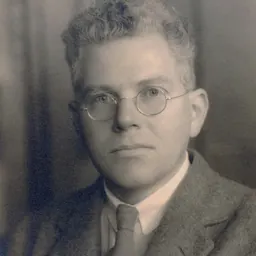
Born 1941. Robert D. Putnam is an American political scientist, sociologist and university teacher.
Robert David Putnam (born January 9, 1941) is an American political scientist specializing in comparative politics. He is the Peter and Isabel Malkin Professor of Public Policy at the Harvard University John F. Kennedy School of Government.
Putnam developed the influential two-level game theory that assumes international agreements will only be successfully brokered if they also result in domestic benefits. His most famous work, Bowling Alone, argues that the United States has undergone an unprecedented collapse in civic, social, associational, and political life (social capital) since the 1960s, with serious negative consequences. In March 2015, he published a book called Our Kids: The American Dream in Crisis that looked at issues of inequality of opportunity in the United States. According to the Open Syllabus Project, Putnam is the fourth most frequently cited author on college syllabi for political science courses.
Join or Die, a 2023 documentary film about community connections and club participation that is available on Netflix, features Putnam and is based on Putnam's works.
Early life and career Robert David Putnam was born on January 9, 1941, in Rochester, New York, and grew up in Port Clinton, Ohio, where he participated in a competitive bowling league as a teenager. Putnam graduated from Swarthmore College in 1963 where he was a member of the Phi Sigma Kappa fraternity. He won a Fulbright Fellowship to study at Balliol College, Oxford, and went on to earn a master's degree and doctorate from Yale University in 1970.
He taught at the University of Michigan until joining the faculty at Harvard in 1979, where he has held a variety of positions, including Dean of the Kennedy School, and is currently the Malkin Professor of Public Policy. Putnam was raised as a religiously observant Methodist. In 1963, Putnam married his wife Rosemary, a special education teacher and French horn player.
Making Democracy Work His first work in the area of social capital was Making Democracy Work: Civic Traditions in Modern Italy, published in 1993. It is a comparative study of regional governments in Italy that drew great scholarly attention for its argument that the success of democracies depends in large part on the horizontal bonds that make up social capital. Putnam writes that northern Italy's history of community, guilds, clubs, and choral societies led to greater civic involvement and greater economic prosperity. Meanwhile, the agrarian society of Southern Italy is less prosperous economically and democratically because of less social capital. Social capital, which Putnam defines as "networks and norms of civic engagement", allows members of a community to trust one another.
Bowling Alone League participation peaked in the 1960s and 1970s. League bowling was used as a barometer of social capital in Bowling Alone (2000).
In 1995, he published "Bowling Alone: America's Declining Social Capital" in the Journal of Democracy. The article was widely read and garnered much attention for Putnam, including an invitation to meet with then-President Bill Clinton and a spot in the pages of People.
In 2000, he published Bowling Alone: The Collapse and Revival of American Community, a book-length expansion of the original argument, adding new evidence and answering many of his critics. Though he measured the decline of social capital with data of many varieties, his most striking point was that many traditional civic, social and fraternal organizations – typified by bowling leagues – had undergone a massive decline in membership while the number of people bowling had increased dramatically.
Putnam distinguishes two kinds of social capital: bonding capital and bridging capital. Bonding occurs among similar people (same age, same race, same religion, etc.), while bridging involves the same activities among dissimilar people. He argues that peaceful multi-ethnic societies require both types. Putnam argues that those two kinds of social capital, bonding and bridging, do strengthen each other. Consequently, with the decline of the bonding capital mentioned above inevitably comes the decline of the bridging capital leading to greater ethnic tensions.
Since the publication of Bowling Alone, Putnam has worked on efforts to revive American social capital, notably through the Saguaro Seminar, a series of meetings among academics, civil society leaders, commentators, and politicians to discuss strategies to re-connect Americans with their communities. These resulted in the publication of the book and website, Better Together, in 2003 which provides case studies of vibrant and new forms of social capital building in the United States.
In 2016, Putnam explained his inspiration for the book, by saying,
In a review essay, economist Steven Durlauf criticized the scholarly analysis in Bowling Alone. He argued that Putnam uses the term social capital inconsistently for distinct phenomena, including social networks, information flows, reciprocity, and trustworthiness, without adequately explaining why they should be treated as a single concept. Although Durlauf regarded Putnam’s documentation of declining participation in voluntary organizations as persuasive, he argued that the book provides neither a well-developed causal explanation for this decline nor convincing evidence that it represents a decline in social capital. Declining participation could, for example, reflect reduced social pressure to join organizations, while government programmes or markets may sometimes replace functions previously performed through informal associations, such as private welfare provision, parental involvement in education, or mutual credit arrangements. Durlauf also argued that Putnam frequently treats correlations between measures of social capital and socioeconomic outcomes as evidence of causal effects, although the studies and state-level comparisons presented in the book do not adequately distinguish social-capital explanations from competing explanations. He further maintained that Putnam sometimes draws claims from cited studies that those studies do not support. Finally, although Putnam acknowledges a “dark side” of social capital, Durlauf argued that he underestimates how group solidarity and social sanctions can reinforce conformity, racial segregation, stereotyping, and hostility toward outsiders. Durlauf concluded that the book presents an impressive collection of facts but is ultimately unsuccessful as a work of social-science scholarship because of its conceptual ambiguity and failure to address fundamental problems of causal inference.
Critics such as the sociologist Claude Fischer argue that Putnam (a) concentrates on certain forms of social organizations, and pays much less attention to privatized networks or emerging forms of support organizations on and off the Internet; (b) relies on contradictory data that hasn't fully been explained; and (c) underestimates the impact of women's workforce participation. Fischer calls for reconceptualizing social capital and proposing other explanations of the decline in public civic participation. Putnam observes a declining trend in social capital since the 1960s. The decreasing in social capital is blamed for rising rates in unhappiness as well as political apathy. Low social capital, a feeling of alienation within society is associated with additional consequences such as: Lower confidence in local government, local leaders and the local news media. Lower political efficacy – that is, confidence in one's own influence. Lower frequency of registering to vote, but more interest and knowledge about politics and more participation in protest marches and social reform groups. Higher political advocacy, but lower expectations that it will bring about a desirable result. Less expectation that others will cooperate to solve dilemmas of collective action (e.g., voluntary conservation to ease a water or energy shortage). Less likelihood of working on a community project. Less likelihood of giving to charity or volunteering. Fewer close friends and confidants. Less happiness and lower perceived quality of life. More time spent watching television and more agreement that "television is my most important form of entertainment".
Diversity and trust within communities
Putnam examined the relationship between ethnic diversity and trust using survey data from approximately 30,000 respondents, including samples from 41 communities across the United States. He reported that, in the short to medium term, greater neighbourhood ethnic diversity was associated with lower trust both between ethnic groups and among members of the same ethnic group. Putnam described residents of diverse communities as “hunkering down”: withdrawing from collective life and expressing less trust in their neighbours. In his multivariate analysis of trust in neighbours, the association with ethnic diversity remained after controlling for individual and neighbourhood characteristics, including poverty, income inequality, and crime. Putnam says, however, that "in the long run immigration and diversity are likely to have important cultural, economic, fiscal, and developmental benefits."
Putnam published his data set from this study in 2001 and subsequently published the full paper in 2007. Putnam has been criticized for the lag between his initial study and his publication of his article. In 2006, Putnam was quoted in the Financial Times as saying he had delayed publishing the article until he could "develop proposals to compensate for the negative effects of diversity" (quote from John Lloyd of Financial Times). In 2007, writing in City Journal, John Leo questioned whether this suppression of publication was ethical behavior for a scholar, noting that "Academics aren't supposed to withhold negative data until they can suggest antidotes to their findings." On the other hand, Putnam did release the data in 2001 and publicized this fact.
Putnam denied allegations he was arguing against diversity in society and contended that his paper had been "twisted" to make a case against race-based admissions to universities. He asserted that his "extensive research and experience confirm the substantial benefits of diversity, including racial and ethnic diversity, to our society."
Recognition Memberships and fellowships He has been a member of Phi Beta Kappa since 1963, the International Institute of Strategic Studies since 1986, the American Philosophical Society since 2005 and the National Academy of Sciences since 2001. He has been a Fellow of the American Academy of Arts and Sciences from 1980 and a Corresponding Fellow of the British Academy from 2001 and was a Fellow of the National Academy of Public Administration, 1989–2006 and Center for Advanced Study in the Behavioral Sciences, 1974–1975 and 1988–1989. Other fellowships included the Guggenheim 1988–1989; the Woodrow Wilson International Center for Scholars 1977 and 1979; Fulbright 1964–1965 and 1977; SSRC-ACLS 1966–1968; Ford Foundation, 1970; German Marshall Fund, 1979; SSRC-Fulbright, 1982; SSRC-Foreign Policy Studies, 1988–1989 and was made a Harold Lasswell Fellow by the American Academy of Political and Social Science. Robert Putnam was a fellow of the Council on Foreign Relations 1977–1978 and a member since 1981. He was a member of the Trilateral Commission from 1990 to 1998. He was the President of the American Political Science Association (2001–2002). He had been Vice-president 1997–1998. and his alma mater Yale University (2026)
In 2013, he was awarded the National Humanities Medal by President Barack Obama for "deepening our understanding of community in America."
In 2015, he was awarded the University of Bologna, ISA Medal for Science for research activities characterized by excellence and scientific value.
Works Books The Beliefs of Politicians: Ideology, Conflict, and Democracy in Britain and Italy. New Haven: Yale University Press, 1973. The Comparative Study of Political Elites. Englewood Cliffs, New Jersey: Prentice-Hall, 1976. (with Joel D. Aberbach and Bert A. Rockman). Bureaucrats and Politicians in Western Democracies. 1981. (with Nicholas Bayne). Hanging Together: Cooperation and Conflict in the Seven-Power Summits. 1984; revised 1987. (with Robert Leonardi and Raffaella Nanetti). Making Democracy Work: Civic Traditions in Modern Italy. 1993. Bowling Alone: The Collapse and Revival of American Community. 2000. (ed.) Democracies in Flux: The Evolution of Social Capital in Contemporary Society Oxford University Press, 2002. (with Lewis M. Feldstein). Better Together: Restoring the American Community. 2003. Staying Together: The G8 Summit Confronts the 21st Century. Aldershot, England: Ashgate Publishing, 2005. ; )
Chapters and articles "The Italian Communist Politician" in Communism in Italy and France Donald Blackmer and Sidney Tarrow, eds. Princeton: Princeton University Press. "Diplomacy and Domestic Politics: The Logic of Two-Level Games". International Organization, 42 (Summer 1988): 427–460.
Other
Interviews
Don’t just read it —
keep it.
Full-length biographies made to live with: read them, listen on the way to work, watch them tonight.
- E-book
- Audio
- Video
Instant download · yours to keep · every purchase keeps this site free
Important facts
People in Robert D. Putnam's life
Named in this biography and alive at the same time







Related people
Same field, nearest in time



Contemporaries
People whose lives overlapped Robert D. Putnam's



Frequently asked questions
Who is Robert D. Putnam?
American political scientist
When was Robert D. Putnam born?
Robert D. Putnam was born on 9 January 1941 in Rochester.
What is Robert D. Putnam's occupation?
Robert D. Putnam is a political scientist, sociologist and university teacher.
What nationality is Robert D. Putnam?
Robert D. Putnam is American.
Sources & further reading
Cite this page
APA: Biography.guide. (2026). Robert D. Putnam. https://biography.guide/robert-d-putnam/
MLA: "Robert D. Putnam." Biography.guide, https://biography.guide/robert-d-putnam/.
Chicago: "Robert D. Putnam." Biography.guide. https://biography.guide/robert-d-putnam/.
Data last updated: 2026-09-20 · Spot an error? Report a correction.
Page generated 2026-09-27 05:06 UTC