
Robert Coombes
British person convicted of matricide
About Robert Coombes
Lived 1882 – 1949 (aged 67). Robert Coombes was a British.
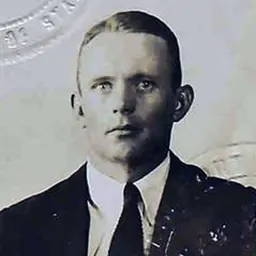
Robert Allen Coombes MM (6 January 1882 – 7 May 1949) was an Englishman whose murder of his mother in 1895 at the age of 13 caused a media sensation, dubbed the Plaistow Horror. Contemporary descriptions suggest Robert had no moral compass, and was involved in many financial tricks, before turning to murder.
Robert was one of the only male prisoners in Holloway Prison and the youngest ever inmate of Broadmoor. He served 17 years in gaol for his crimes, being released at 30. Afterwards, he emigrated to Australia where he died at 67.
Life Robert Allen Coombes was born in Bethnal Green in London on 6 January 1882. He was the first son of Robert Coombes and his wife Emily Harrison Coombes (née Allen). His father was a steward on a transatlantic steamer, France, and was often away from home for prolonged periods. Robert was a forceps birth and had visible marks on each temple. He was baptised in April 1882, but the parents' surname was recorded as Allen instead of Coombes, which was the maiden name of his mother. His father was a butcher.
His brother Nathaniel George Coombes was born in February 1883.
Robert had severe headaches from the age of around three years. The doctor advised never to strike him on the head. The family moved to Liverpool and stayed with relatives in 1885/6. Their father stayed in Liverpool until 1892, when Emily and the boys returned to London. Their doctor Dr Coward began prescribing potassium bromide during the period of the father's absence.
Back in London in 1888, young Robert was exposed to the surrounding Whitechapel murders and Jack the Ripper and became obsessed with the cheap sensationalist papers known as penny dreadfuls. This interest was not discouraged.
In the winter of 1891–2, the family moved to 35 Cave Road in the Plaistow district of London's east end. The boys attended Grange Road School under headmaster George Charles Hollamby. Robert was described as exceptionally clever. He moved to Stock Street School under Jesse Smith in 1893. They later moved to Cave Street School in July 1894 under Charles Struler.
In November 1894, he had made complicated journeys alone to attend the trial of the murderer James Canham Read, the "Southend Murderer" (of Florence Dennis) at Chelmsford (Essex Assizes). Read was found guilty and hanged in December.
Murder
Both Robert and Nathaniel testified that Robert had purchased the knife himself with the express intention of killing his mother, a week or so before the event at the Brett's shop at 273 Barking Road for the price of five pence. The knife was first hidden in a dustbin in the back yard then in an unused chimney in the house.
Aftermath
Robert took a gold sovereign from his mother's purse on Monday morning and asked the neighbour James William Robertson at 33 Cave Road for change of the coin. He gave two half sovereigns in exchange and they gave him one and their mother's rent book asking him to pay their rent (7 shillings a week which was due every Monday), as their mother was away. He agreed. Robert returned at 7 pm to collect his three shillings change.
Later that day, and the day after, Robert used the remaining half sovereign. He and Nathaniel went to Lord's Cricket Ground to see the famous W. G. Grace play cricket as part of his "golden summer" of centuries.
On the Wednesday, Robert contacted 39-year-old John Fox at the Royal Albert Dock, where Fox did odd jobs for the National Steamship Company. Fox, who was mentally challenged, had been a seaman on the Egypt. Following a fire and loss of the ship, he had become too scared to go to sea again and worked in the dock area instead. Fox was a friend of his father and the two had probably worked together.
Young Robert asked Fox to look after them while his mother was "away" and to pawn items from the house, including his father's gold pocket watch, at George Fish's pawn shop in Poplar. Fox claimed to be Robert Coombes senior and got 10 shillings for the gold watch. He then went to a second pawn shop and pawned Coombes' silver watch and then a third, where he pawned a mandolin.
On 13 July, John Fox went to John Hewson, the cashier of the National Steamship Company, with a letter allegedly from Robert Coombes junior, saying his mother was very ill with Bright's Disease and had a heavy doctor's bill to pay. It requested that Hewson advance the family £4 from their father's pay to pay this bill. Hewson requested a doctor's certificate. On Monday 15 July young Robert went to Hewson himself, with a fabricated letter alleging to be from J. J. Griffin, the local physician, confirming the mother's illness. Apparently two years earlier Robert had obtained £2 using a similar ruse. Hewson said he would go to their house to give his mother the money.
Neighbours became suspicious, and the boys' story that Emily had gone to Liverpool did not make sense. Neighbour Ms Burridge contacted Emily's sister-in-law, also Emily Coombes, to investigate. She attended on Monday 8 July but got no response. She returned on Monday 15 July; Fox (whom she did not know) answered the door. She was again told Ms Coombes was in Liverpool. She returned on Wednesday 17 July and got no response.
The police were summoned. Constable Robert Thwart came at 1:50 pm. Nathaniel had escaped through a window. More police arrived. Sergeant Henry Balch took Fox's statement. Robert and John Fox were arrested at the scene and held in the police cells at West Ham. Divisional Police Surgeon Alfred Kennedy removed the body. He described the head as "horribly decomposed". The bedsheets were covered in dried blood. The blood-covered knife still lay nearby.
The bedroom where the murder had taken place had been ransacked by Robert and the contents of the drawers were strewn around the room. He appeared to have been looking for more valuables to sell. He also found a letter from Robert to his father, not apologising for his crime, but contriving a complicated story about mother injuring her hand and not being able to write, and could he send money to cover various bills. There was an unsent advert to a local newspaper from young Robert, seeking a private loan of £30 in return for six monthly repayments of £6. The rent book was there showing the 7 shilling payment on 8 July, after the mother's death.
Trial and imprisonment
Robert was moved to Holloway Prison on 18 July and remained there until the trial. He was observed by the Medical Officer, George Edward Walker, who on 10 August, on advice from the guards, moved him to a padded cell for his own safety. He told Walker he heard voices telling him to kill his mother and he had an "irresistible impulse to kill her". Walker noted that the pupils of his eyes would wander unequally during his headaches and noted the unusual scars from his forceps birth. Walker reported that the boy was greatly excited (in a positive way) regarding his forthcoming trial, and seemed to view this with glee. However he started to cry when he thought about missing his cats, and his mandolin.
The trial began at the Old Bailey on 9 September 1895. The jury were told to focus on the mental health of the boy. The prosecution was led by two famous barristers: Horace Avory and Guy Stephenson.
Robert was released in 1912 after serving 17 years, aged 30.
After the war he worked on a farm at Nana Glen and taught music in the surrounding area of New South Wales. He then started his own market garden in the Glenreagh district.
Nathaniel was Chief Stoker on HMAS Australia in the First World War and died in Newcastle, New South Wales in 1946.
Robert died at Coffs Harbour Hospital on 7 May 1949, aged 67. He never married, but did have an adopted son to whom he left everything he owned. He is buried in Coffs Harbour Historic Cemetery, NSW.
Don’t just read it —
keep it.
Full-length biographies made to live with: read them, listen on the way to work, watch them tonight.
- E-book
- Audio
- Video
Instant download · yours to keep · every purchase keeps this site free
Important facts
People in Robert Coombes's life
Named in this biography and alive at the same time







Contemporaries
People whose lives overlapped Robert Coombes's


Frequently asked questions
Who was Robert Coombes?
British person convicted of matricide (1882–1949)
When was Robert Coombes born?
Robert Coombes was born on 6 January 1882 in Bethnal Green.
When did Robert Coombes die?
Robert Coombes died on 7 May 1949 in Coffs Harbour.
What nationality was Robert Coombes?
Robert Coombes was British.
Sources & further reading
· DBpedia: Robert Coombes (murderer)
Cite this page
APA: Biography.guide. (2026). Robert Coombes. https://biography.guide/robert-coombes/
MLA: "Robert Coombes." Biography.guide, https://biography.guide/robert-coombes/.
Chicago: "Robert Coombes." Biography.guide. https://biography.guide/robert-coombes/.
Data last updated: 2026-09-25 · Spot an error? Report a correction.
Page generated 2026-09-27 05:11 UTC