
About Robert Brady
Lived 1627 – 1700. Robert Brady was a historian, politician and physician.
Robert Brady (1627–1700) was an English academic and historical writer supporting the royalist position in the reigns of Charles II of England and James II of England. He was also a physician.
Biography Brady was born in Denver, Norfolk in 1627. He was son of Thomas Brady, an attorney of Denver, Norfolk. He was educated in Downham Market and at Caius College, Cambridge. He was made Master of Caius College in 1660, on the English Restoration. In the 1670s, he hoped to write for the prominent politicians Joseph Williamson and Anthony Ashley-Cooper, 1st Earl of Shaftesbury, but they declined the offer. It was only when William Sancroft became Archbishop of Canterbury that Brady found a patron.
In historical controversy, he was opposed to William Petyt and James Tyrrell, along what would become Tory versus Whig lines, then forming in the Exclusion crisis of the 1680s. Brady is regarded as holding to an uncompromising royalist position. Others on the Whig side were William Atwood, Edward Cooke, and Sir John Somers.
J. P. Kenyon takes him as a pioneer among the royalist scholars of English medieval history, who were working towards a formulation akin to Kenyon's viewpoint. John Pocock regards as "unforgettably damaging" the effect the (proto-)Tory Brady and others made, in attacking the doctrine of the "Ancient Constitution" as a failed description of the real circumstances of political arrangements in the England of the Middle Ages. On the narrow point of the actual legal effects of the Norman Conquest, Brady had been anticipated by Samuel Daniel, in views that are quite close to some modern scholars. He moved from there to argue for absolutism, and that Magna Carta was not a major charter for popular freedom. Brady's ideas drew on Henry Spelman and Robert Filmer.
David C. Douglas remarks that although his motivations as a scholar were at least as political as those of his opponents, his techniques were so far superior that his work remained of importance. Brady was aided in his later work by a position from 1686 in the archives of the Tower of London.
Offices held
Don’t just read it —
keep it.
Full-length biographies made to live with: read them, listen on the way to work, watch them tonight.
- E-book
- Audio
- Video
Instant download · yours to keep · every purchase keeps this site free
Important facts
People in Robert Brady's life
Named in this biography and alive at the same time



Related people
Same field, nearest in time

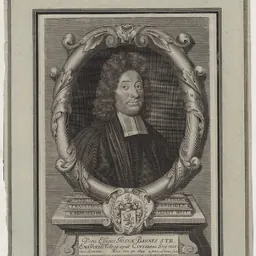
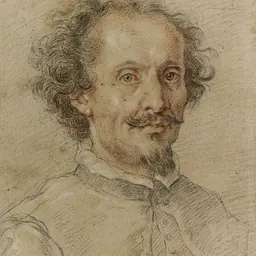
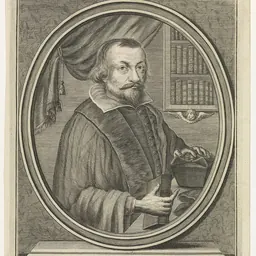
Contemporaries
People whose lives overlapped Robert Brady's






Frequently asked questions
Who was Robert Brady?
English historian
When was Robert Brady born?
Robert Brady was born in 1627.
When did Robert Brady die?
Robert Brady died in 1700.
What was Robert Brady's occupation?
Robert Brady was a historian, politician and physician.
Sources & further reading
· DBpedia: Robert Brady (writer)
Cite this page
APA: Biography.guide. (2026). Robert Brady. https://biography.guide/robert-brady/
MLA: "Robert Brady." Biography.guide, https://biography.guide/robert-brady/.
Chicago: "Robert Brady." Biography.guide. https://biography.guide/robert-brady/.
Data last updated: 2026-09-26 · Spot an error? Report a correction.
Page generated 2026-09-27 05:14 UTC