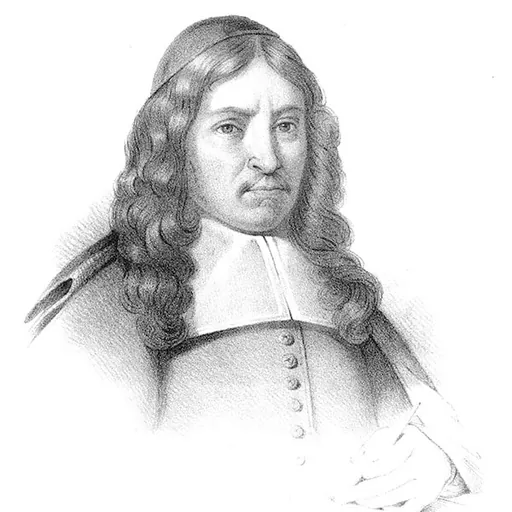
Olaus Verelius
Scholar of Old Norse and Scandinavian studies
About Olaus Verelius
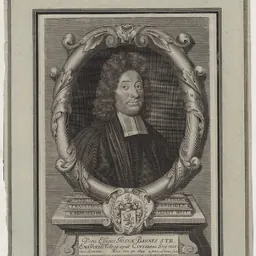
Lived 1618 – 1682 (aged 63). Olaus Verelius was a Swedish historian and university teacher.
Olaus or Olof Verelius (12 February 1618 – 3 January 1682) was a Swedish scholar of Northern antiquities who published the first edition of a saga and the first Old Norse-Swedish dictionary and is held to have been the founder of the Hyperborean School which led to Gothicism.
Life and career He was born in Häsleby parish in Jönköping County, to the pastor Nicolaus Petri and his wife, Botilda Olofsdotter, but adopted the surname Verelius in his youth. He studied at Dorpat (now Tartu, Estonia) in 1633 and Uppsala in 1638, was given a position as tutor to youths of noble birth by Axel Oxenstierna, and in 1648–50 took a tour abroad on which he made a speech in Leiden about the Peace of Westphalia and in Paris on the occasion of the coronation of Queen Christina. In 1675 and 1679 respectively, he resigned those positions. With his uncredited assistance in translation, in 1664 Verelius published the first edition of an Icelandic saga, together with a Swedish translation: Gautreks saga, under the title Gothrici & Rolfi Westrogothiæ regum historia lingua antiqua Gothica conscripta. This was followed by Herrauds och Bosa saga (Bósa saga ok Herrauðs) in 1666 and Hervarar saga (Hervarar saga ok Heiðreks) in 1672. He was probably best known abroad for this and the Hervarar saga.
In 1675, he published a handbook of Swedish runic inscriptions, in Latin and Swedish, Manuductio ad runographiam. This continued Johannes Bureus' research into the runes and was a significant work, although limited by, for example, the assumption that the runes could be derived from the Greek alphabet.
From 1672 to 1681 he and Johannes Schefferus disputed bitterly over the site of the heathen temple at Uppsala. Schefferus argued in Upsalia, published in 1666, that the temple had been located in the centre of the modern town. Verelius disputed this in his notes to Hervarar saga, arguing that the temple had been on the site of the church at Gamla Uppsala. In any event Verelius' view on the location, although based less on sober scholarship than Schefferus'— he considered wrongly for instance that the tower of the church at Gamla Uppsala to predate Christianity and be identical with the temple — has proven correct.
Don’t just read it —
keep it.
Full-length biographies made to live with: read them, listen on the way to work, watch them tonight.
- E-book
- Audio
- Video
Instant download · yours to keep · every purchase keeps this site free
Important facts
People in Olaus Verelius's life
Named in this biography and alive at the same time


Related people
Same field, nearest in time

Contemporaries
People whose lives overlapped Olaus Verelius's






Frequently asked questions
Who was Olaus Verelius?
Scholar of Old Norse and Scandinavian studies (1618-1682)
When was Olaus Verelius born?
Olaus Verelius was born on 12 February 1618.
When did Olaus Verelius die?
Olaus Verelius died on 3 January 1682 in Uppsala.
What was Olaus Verelius's occupation?
Olaus Verelius was a historian and university teacher.
What nationality was Olaus Verelius?
Olaus Verelius was Swedish.
Sources & further reading
Cite this page
APA: Biography.guide. (2026). Olaus Verelius. https://biography.guide/olaus-verelius/
MLA: "Olaus Verelius." Biography.guide, https://biography.guide/olaus-verelius/.
Chicago: "Olaus Verelius." Biography.guide. https://biography.guide/olaus-verelius/.
Data last updated: 2026-09-20 · Spot an error? Report a correction.
Portrait: Wikimedia Commons · author & licence
Page generated 2026-09-27 04:57 UTC