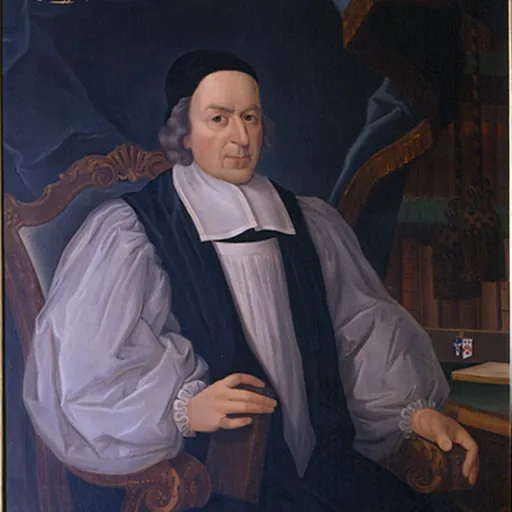
About William Sancroft
Lived 1617 – 1693 (aged 76). William Sancroft was a British anglican priest and archbishop.
Arms of William Sancroft, Archbishop of Canterbury, St Lawrence's Church, Mereworth in Kent. 1740s glass by William Price the Younger in imitation of Elizabethan/Jacobean style William Sancroft (30 January 161724 November 1693) was the 79th Archbishop of Canterbury, and was one of the Seven Bishops imprisoned in 1688 for seditious libel against King James II, over his opposition to the king's Declaration of Indulgence. Deprived of his office in 1690 for refusing to swear allegiance to William III and Mary II, he later enabled and supported the consecration of new nonjuring bishops leading to the nonjuring schism.
Life
Sancroft was born at Ufford Hall in Fressingfield, Suffolk, son of Francis Sandcroft (1580–1647) and Margaret Sandcroft née Butcher (1594–1631). He was educated at the Bury St Edmunds free grammar school before being admitted to Emmanuel College, Cambridge, in September 1633 and matriculating there in 1634. His uncle William Sancroft the Elder was then master of the college. He graduated B.A. in 1638, M.A. in 1641 and became a fellow in 1642, but was ejected in 1649 for refusing to accept the "Engagement". He remained abroad till the Restoration, after which he was chosen one of the university preachers, and was elected Master of his alma mater Emmanuel College in 1662, serving until 1665. He began fundraising for a new chapel for the college in 1663 and contributed largely towards the cost. He continued to play a role in college affairs and the chapel was completed in 1667 to a design by Christopher Wren.
In 1663 he was nominated to the deanery of York. He became Dean of St Paul's in 1664, greatly assisting with the rebuilding of St Paul's Cathedral after the Great Fire of London, towards which he contributed £1400. He also rebuilt the deanery, and improved its revenue. He was criticized for leaving London during the Great Plague of 1665, though in his defence virtually all of the upper class did the same.
In 1668 he was admitted Archdeacon of Canterbury upon the king's presentation, but he resigned the post in 1670. In 1677, being now prolocutor of the Convocation of the English Clergy, he was unexpectedly advanced to the archbishopric of Canterbury, at the express wish of the King, who trusted in his moderation. So unwilling was he to accept that the King only persuaded him by explaining that he had already appointed the new Dean of St Paul's. He attended Charles II upon his deathbed, and "made to him a very weighty exhortation, in which he used a good degree of freedom". He crowned King James II in 1685. In August 1690 John Tillotson took over his duties. In April 1691 Tillotson officially became Sancroft's successor.
Many years after it was composed, John Overall's Convocation Book was published by Sancroft, to justify the principles of his Nonjuring party. The book was "on the subject of Government, the divine institution of which was very positively asserted". It consisted partly of canons and partly of introductory and explanatory dissertations on the matter of the canons and had been duly sanctioned in the Convocation of 1610. It was, however, a strange oversight in Sancroft's party to publish the book, as there are several canons in it which clearly lay down that a de facto government is, when completely established, to be held in the light of a de jure government; and it was upon the very grounds set forth in this book that William Sherlock took the oaths to King William.
Sancroft was a patron of Henry Wharton (1664–1695), the divine and church historian, to whom on his deathbed he entrusted his manuscripts and the remains of Archbishop Laud (published in 1695). Sancroft provided financial support to Mary Astell and an introduction to her future publisher; Astell later dedicated a collection of poetry to him.
From 5 August 1691 until his death two years later, he lived a very retired life in his native village of Fressingfield. He died at his family home, Ufford Hall, and was buried in the churchyard of Fressingfield, where there is a Latin epitaph to his memory. notes = While serving as a bishop Sancroft's arms would be displayed impaled with the arms of the diocese and topped by a mitre.
Don’t just read it —
keep it.
Full-length biographies made to live with: read them, listen on the way to work, watch them tonight.
- E-book
- Audio
- Video
Instant download · yours to keep · every purchase keeps this site free
Important facts
People in William Sancroft's life
Named in this biography and alive at the same time

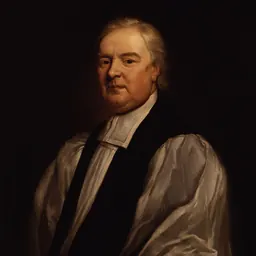

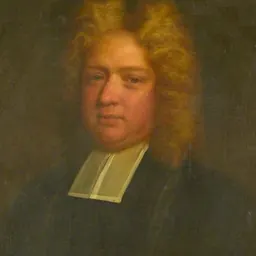



Related people
Same field, nearest in time
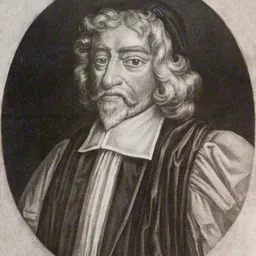


Contemporaries
People whose lives overlapped William Sancroft's




Frequently asked questions
Who was William Sancroft?
Archbishop of Canterbury (1617-1693)
When was William Sancroft born?
William Sancroft was born on 30 January 1617 in Suffolk.
When did William Sancroft die?
William Sancroft died on 24 November 1693 in Suffolk.
What was William Sancroft's occupation?
William Sancroft was an anglican priest and archbishop.
What nationality was William Sancroft?
William Sancroft was British.
Sources & further reading
Cite this page
APA: Biography.guide. (2026). William Sancroft. https://biography.guide/william-sancroft/
MLA: "William Sancroft." Biography.guide, https://biography.guide/william-sancroft/.
Chicago: "William Sancroft." Biography.guide. https://biography.guide/william-sancroft/.
Data last updated: 2026-09-21 · Spot an error? Report a correction.
Portrait: Wikimedia Commons · author & licence
Page generated 2026-09-27 05:00 UTC