
About Robert Atherton
Lived 1801 – 1855 (aged 53–54). Robert Atherton was a civil servant.
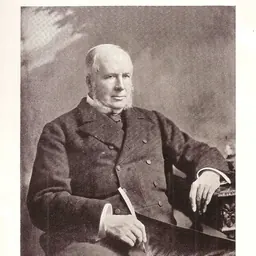
Robert Atherton CCS, JP (1801 – 1855) was a 19th-century British colonial official in British Ceylon (present-day Sri Lanka), where he served for more than 25 years. After a distinguished career in the Royal Navy, during which he was awarded the Burma Medal, he held a series of administrative and judicial posts in the Northern Province of Ceylon from 1825 to 1835. He was appointed Assistant Government Agent (A.G.A.) of the Eastern Province in 1835, 1839, and 1845, and of the Northern Province in 1836. He also served as District Judge of Batticaloa in 1841 and as Justice of the Peace (JP) for the Eastern Province from 1848 until his death in 1855. In addition to his official career, Atherton was also an author, best known for his 1835 legal publication Thasawalamy: Or, The Laws and Customs of the Malabars of Jaffna.
Early life Robert Atherton was born on 8 December 1801 at Walton on the Hill, Liverpool, the fourth son of Colonel John Joseph Atherton (1761–1809) of the Second Lancashire Regiment of Fencible Light Dragoons. His father was associated with Walton Hall, Liverpool, and Street Court, Kingsland, Herefordshire.
His mother was Marianne Mitford (1777-1856), the eldest daughter of Bertram Mitford (1748-1800) of Mitford Old Manor House.
Atherton was christened in Walton on the Hill, Liverpool a year after his birth on 17 December 1802. His ancient paternal family home, Walton Hall, Liverpool was sold two years later after multiple generations of occupancy. Street Court, a manor in Kingsland, Herefordshire became his new home in a rural setting. Shortly before his eighth birthday, his military father died.
Aspects of Atherton’s schooling and early life in England prior to his naval service remain obscure. Following the death of his father in 1809, he grew up with his widowed mother at Street Court, Herefordshire. A contemporary critic later noted he “was brought up to the profession of a seaman,” suggesting his education was oriented toward naval rather than academic life.
When coming of age, Atherton did not purchase his commission as an officer in his father's regiment, instead he joined the Royal Navy, in the footsteps of his elder brother, Bertram Mitford Atherton (1800-1858).
Naval Career Atherton served for two years under Captain Frederick Marryat on board the HMS Larne (1814), a 20-gun sixth rate small warship in the First Anglo-Burmese War (1824–1825). As the acting purser onboard, he was the officer responsible for all administrative duties, including managing ship’s supplies, such as food and drink, clothing, bedding and candles. Pursers at the time received no fixed salary but were entitled to profits generated through their business activities. A recipient of the Burma Medal, Atherton was honourably mentioned for bravery in Captain Frederick Marryat's despatches at the time.
On the 2 April 1824, the British expedition under the command of Sir Archibald Campbell, proceeded against Rangoon, home of the Konbaung dynasty, with HMS Larne, the fleet of transports (for land forces), and East India Company cruisers assembling at Port Cornwallis, in the Andaman Islands.
The detachment including Atherton landed under the fort of Syriam, and found the bridge across the nullah removed: to make another, with planks sent for the occasion, provided the Royal Navy an opportunity of displaying their usual activity, skill, and steady courage. On this point the enemy kept up a heavy and well-directed fire, by which nearly 30 men were killed and wounded, including among the latter Atherton, and five sailors. In a few minutes, however, the bridge was laid, by the blue jackets swimming across with the planks; two of the gun-boats were also brought up the creek. On the soldiers gaining the opposite bank, and rushing upon the works, the enemy instantly fled, although the place was as strong as considerable art and indefatigable labour could render it, and was capable of making a most formidable resistance.
On 3 June 1825, Atherton was slightly wounded during a successful attack on the stockades near the village of Kemmindine. This expedition resulted in the loss of the quartermaster, Peter Knox. Atherton is mentioned the despatches of Captain Coe, who transmitted a report of the attack from the recently promoted Captain George Frederick Ryves of HMS Sophie.
During December 1825, Atherton was honourably mentioned in both the despatches of Captain Thomas Alexander and Captain Henry Ducie Chads, who both served as commanders of HMS Alligator. Atherton was recognised for his valiant efforts in the 11-12 January naval expedition in cooperation with land forces under the command of Sir Archibald Campbell. Having been wounded twice during the 2 year campaign, and often sick, Atherton was discharged from further service, joining the Ceylon Civil Service. Mr Jones, the clerk on HMS Boadicea was appointed purser on HMS Larne, vice Atherton in December 1825.
Ceylon Civil Service
1825-1835
As a commissioned officer in the Ceylon Civil Service (C.C.S), he initially performed the duties of District officer, replacing E. Nolan, who retired. Atherton’s first C.C.S civil appointment was to be based at the north of the Island, as Superintendent of Stud, Sitting Magistrate, and Fiscal of Delft from 5 December 1825.
While holding the appointment of Superintendent of Delft Island, he married at Kayts, on 24 April 1826. During these early years on the island Atherton served in the Ceylon Rifles. He went on to serve as the Assistant Collector of Customs, Jaffna from 1 January 1831.
On 12 March 1839, the Wesleyan missionary and educator, Peter Percival gave positive account of various speeches at the Wesleyan Methodist Mission, North Ceylon in Jaffna, including one delivered by Atherton, following the successful visit of James Alexander Stewart-Mackenzie, the seventh Governor of Ceylon to Jaffna, which included a tour of the Wesleyan school on 4 March 1839.
View of St. Paul's School, Jaffna, Ceylon
He was appointed as Acting District Judge, Batticaloa in November 1839 and again in 1841, and becoming A.G.A at Batticaloa from 16 September 1845.
Plan of Batticaloa, June 1762 / publ. by Alexander Dalrymple (1737-1808)
During 1841, the Colombo Observer published a letter to the editor where an unnamed individual vented their frustration towards the Mackenzie administration, criticising Atherton's legal credentials, by stating: He worked closely with Reverend Ralph Stott of the Wesleyan Mission of Batticaloa to direct the good work towards the Vedda Mission. Stott was fluent in Tamil and the son of Ralph Stott (1839-1877), the inventor. Atherton was of the belief that Christianity would serve as a means of civilisation, so he took missionaries with him into the jungle, where many of the Vedda lived in poor conditions. For Atherton and his wife, Eleanor, Reverend Ralph Stott had nothing but the highest praise.
Atherton was a religious man. He and his wife joined the Wesleyan Congregation in Batticaloa during 1841. This coincided with the erection of the first monument to commemorate the landing of the first Methodist missionary, Reverend William Ault in 1814. Contemporarily known as Batticaloa Gate, the design has a distinct resemblance to the Gateway of India in Mumbai.
Atherton’s position at the head of local government was advantageous to the Wesleyan’s. He became a very enthusiastic lay worker and was described as zealous and highly enthusiastic in this role. His faith became intertwined with his role as the leading colonial government official in the region where he promoted social advancement of the Coast Veddas and an isolated group known as the Bintenne Veddas who had been marginalised by other ethnic groups. Atherton introduced both groups to new farming methods, in tandem with his missionary work.
In November 1842, Atherton wrote to the English Wesleyan Mission informing them that the Vedda mission had made substantial progress:
At the time of writing this letter, Atherton was making preparations to establish a third Vedda village with its own school, and to settle another 40 to 60 families over the course of 1843.
1845-1855 Atherton was the first to recognise that the abolishment of the practice of Rājākariya by the British administration had an adverse effect on paddy fields. Although the colonial government had good intentions, cultivation and production dramatically decreased due to improper maintenance of the ancient irrigation system. It would take until the 1860s (a few years after Atherton's untimely death) to rectify and restore the region to its previous position as "granary of the east".
Atherton was A.G.A. for the Eastern Province during the cyclone of 1845, which hit Batticaloa and its environs. Coconut plantations and many acres were destroyed, however his home "Burleigh House" would survive for another 120 years, until it was severely damaged a century later by the cyclone of 1978.
Atherton (as A.G.A.), had ultimate control and oversight of regional infrastructure works. An example being the provision of fresh water supply, and the ability to replenish the river supply during seasons of drought by closing the mouth of the Veeready Aar, so it flooded the land of Ackerepattu and numerous fields along the Sangapadda Aar, to raise the munmarie field crops. Inspection of the cutcherry records (the local court of justice public offices), supplemented by sight of Atherton’s diary by H.G. Ward in 1857, revealed that in 1849 the repair required a total of 200 men for 2 weeks to restore functionality of the dam upstream from Batticaloa.
Atherton was widely respected in his work for the colonial administration. The 5th Colonial Secretary, Sir James Emerson Tennent stated in his work published in 1859 that Atherton, as the A.G.A., in conjunction with Wesleyan Methodist Missionaries, had attempted to enhance the living conditions of the Veddas. During 1838 "cottages were built for them in their own district, rice land assigned to them, wells dug, coconuts planted, two communities were speedily settled in Vippam-madoo." A school was founded and two other settlements formed in Oomany and Villengelavelly. However the enterprise was soon abandoned owing to the misconduct of some of the teachers. “But” continues Tennent, "the good effects of even this temporary experiment were apparent; not one of the Veddas returned to his cave and savage habits".
When he visited Atherton in Batticaloa during 1848, Tennent saw on the esplanade, in front of Government House, the remains of what had formerly been a Dutch garden, with a reservoir in the centre, abounding with tortoises.
Atherton is also mentioned in the Memorials of James Chapman, the first bishop of Colombo.
For a number of decades the Eastern Province of Ceylon was considered far too remote, with limited access and communication. However, Reverend Chapman travelled from the capital; Colombo to Batticaloa, via Badulla on horseback in February 1850. Upon arriving on the outskirts of Batticaloa, Atherton as the A.G.A. hosting his visit, rowed Chapman, and his party of two catechists along the lagoon in his canoe the last three miles to his A.G.A‘s residence.
By 1850, the Wesleyan community of Batticaloa became hugely divided, resulting in the loss of Atherton to the Anglican Communion. This was a particularly grievous blow to the Wesleyans, for much of their success in the Eastern Province was due to Atherton’s exertions on their behalf. With all the fervour of the recently converted, Atherton now worked for the Anglicans, and against the Wesleyans.
The Ceylon Almanac of 1851 records Atherton as the A.G.A. of the Eastern Province based in Batticaloa, whilst the Ceylon Almanac of 1855 records Atherton under the Customs Department as acting collector of the Eastern Province based in Trincomalee. The Ceylon Savings Bank records him on page 136 as a member of this institutions branch committee, along with the capacity to receive and remit deposits.
Both his sons, Robert and Edward followed him into the Ceylon Civil Service. His daughter, Marianne also married a civil servant.
Contribution to Batticaloa
As A.G.A, Atherton made several contributions to the Eastern Province initiating a number of reforms. He encouraged improvements to agriculture, opened up job opportunities, funded schools, and improved infrastructure.
Atherton’s presence in the District of Batticaloa, earned him considerable respect. Vol XXIII of the Journal of the Dutch Burgher Union of Ceylon (July 1933) describes Batticaloa during the early years of the British administration (pages 15–17):
Outside of his official capacity, Atherton also undertook private enterprise, having established himself as a pioneer planter in Batticaloa, and was the proprietor of several estates in Ceylon. The first Atherton owned systematic cultivation of coconuts took place opposite the Batticaloa obelisk around 1846 at the Kalmunai Estate. This was the second systematic coconut plantation in the Batticaloa area, and was subsequently sold onto his cousin, Philip Meadows Taylor, the novelist. Another of Atherton plantation’s was called Mylemphaville, a estate.
Death and legacy Atherton died at the age of 54 in Trincomalee in 1855, while in service, as acting G.A. of the Eastern Province.
His annual salary at the time of his death was £950 (worth £128,217.09 as of September 2024).
Legal publications Atherton is notable, in a historical setting, for outlining or codifying a Customary law of British Ceylon, relatable to the Sri Lankan Mukkuvar. His legal publication of 1835 was titled “Thasawalamy”, which acknowledged the laws and customs of the Malabars of Jaffna.
Further research in the 1890’s stated that these ancient laws outlined by Atherton in the 1830’s were previously promulgated by the Dutch Colonial government of Ceylon and referred to as Tésawalamai. The contemporary name is now Thesavalamai.
Family background Atherton was born into an influential Lancashire family with connections to both the Atlantic slave trade and the wider triangular trade.
His grandfather, John Atherton, served as High Sheriff of Lancashire in 1780. Atherton spent his early years at Walton Hall in Liverpool before later residing at Street Court in Herefordshire.
Atherton’s Cambridge-educated father served in the court of King George III and for many years acted as the monarch’s personal aide-de-camp (A.D.C.). He enjoyed a distinguished military career, during which he was captured as a prisoner of war under the French Directory and later released on parole at Valenciennes in 1796.
His maternal aunt, Lewis Tabitha Mitford (1782–1859), was married to Prideaux John Selby, an ornithologist, botanist and natural history artist. His maternal uncle was Rear Admiral Robert Mitford (1781-1870), an ornithological engraver. His cousin was Robert Mitford (1782-1836), a colonial official in Bengal for the East India Company from 1816 to 1828. He was a cousin to Mary Russell Mitford.
In 1828, Atherton’s elder brother, Lieutenant Bertram Mitford Atherton, toured southern France with Commander Edwin Felix of the Royal Navy. Six years later, Atherton’s sister Marianne married the same family friend, Commander Edwin Felix. Their son, Robert Atherton Edwin, later became a renowned meteorologist and weather forecaster in New Zealand.
While Atherton followed his elder brother, into the Navy, his two other brothers pursued military careers in the Army. His eldest brother, Lieutenant John Atherton of the 13th Light Dragoons, died in July 1827 while travelling from Madras to England aboard the Rockingham
His younger brother, Captain Edward Atherton of the 22nd Regiment of Foot, died in India and was buried at St Mary’s Church, Madras, on 1 August 1837. Three years earlier, Edward’s wife had also died at sea while sailing from Bombay aboard the Elora. By this period, Atherton himself was firmly established in Ceylonese society and residing in Batticaloa.
Personal His wife, Eleanor Toler Burleigh (1810–1893), was the fourth daughter of the late Dr. George Burleigh M.D. and at the time was fifteen years old. His brides’ late father was a Methodist minister who had died in Jaffna, 16 days prior to their wedding day. The wedding ceremony took place in Kayts on 24 April 1826 in the presence his new mother in law, Rebecca Burleigh of Jaffna and Eleanor's siblings. Four healthy children followed. He joined the C.C.S and for a time worked for the Forestry Department in Chilaw. By 1889 he was a full time planter in Batticaloa, and his younger brother, a surveyor. In his later days, Robert was the Batticaloa correspondent of the Ceylon Examiner and contributed exhaustively to that paper, not only prose articles, but also topical verses, as well as exhaustive descriptions of the habits and use of vegetables within regional cuisine. He established the Atherton tea plantation in Ambagamuwa, Central Province.
His third son, Edward Newnham (1831–1907), began his career in the C.C.S in 1851, obtaining a Writership in 1853, and retired in 1883 after 32 years’ residence without a break on the island and had served as A.G.A in Kurunegala. In 1869, in what became known as the "Mannar fracas", Edward was found guilty for illegally interfering with a case and of insubordinate conduct. He was demoted, and sent to Colombo to perform the role of landing surveyor. Edward relocated to England and died in Weymouth in 1907. At the time of his father's death he was a writer to the Government Agent (G.A) in Jaffna, his place of birth.
His two sons, Robert and Edward were widely respected by the people of Batticaloa that they were spoken of generally by the local community as "Bob Pillai" and "Ned Pillai". Pillai meaning "Child of King" (Prince) in Tamil.
His eldest daughter was Eleanor Burleigh Atherton (1833–1893), who married Dr James Cornish Sortain M.D. on 24 July 1854 in Batticaloa. Sortain was the brother of the nonconformist minister, Joseph Sortain. Sortain was a well known planter, medical physician and philanthropist, and the first to cultivate coconuts in the early 1840s. As Mrs Sortain, she took over the Tannamunai estate. His son in law was much respected by the people of Batticaloa, since he was intimately connected with the first systematic cultivation of the coconuts in the early 1840s. This took place 5 miles from the town of Batticaloa, beside the lake. The estate was known as Tannamunai. After Sortain’s death, ownership passed to Atherton’s daughter, Sortain’s widow.
Atherton died on 23 June 1855 and was put to rest in the burial ground on the Esplanade in Trincomalee, now referred to as St. Stephen's Church Cemetery. His marble headstone has been restored and is in close proximity to that of Rear Admiral Charles John Austen (1779–1852), the brother of the novelist Jane Austen; Charles died at sea of cholera prior to Atherton. The circumstances of Atherton’s death in service of the crown are unknown. His tombstone reads:
His wife and children remained in Ceylon after his death. A cousin Betram Mitford RN, age 32, paymaster on HMS Cossack drowned in Trincomalee harbour on 10 July 1869 while trying to swim back to his vessel after dining on shore.
His widow, Eleanor, died on 24 July 1893 as a result of a carriage accident, and was buried in the old cemetery in Batticaloa. Eleanor was 83 at the time of her death having been a continuous resident of Batticaloa for 52 years. Eleanor was referred to as the widow of Rodney Atherton, Ceylon Civil Service. Lewis, J. P. “NOTES ON DELFT.”The Journal of the Ceylon Branch of the Royal Asiatic Society of Great Britain & Ireland, vol. 21, no. 62, 1909, pp. 341–60. JSTOR,
Don’t just read it —
keep it.
Full-length biographies made to live with: read them, listen on the way to work, watch them tonight.
- E-book
- Audio
- Video
Instant download · yours to keep · every purchase keeps this site free
Important facts
People in Robert Atherton's life
Named in this biography and alive at the same time




Related people
Same field, nearest in time

Contemporaries
People whose lives overlapped Robert Atherton's





Frequently asked questions
Who was Robert Atherton?
British colonial official
When was Robert Atherton born?
Robert Atherton was born in 1801.
When did Robert Atherton die?
Robert Atherton died in 1855.
What was Robert Atherton's occupation?
Robert Atherton was a civil servant.
Sources & further reading
· DBpedia: Robert Atherton (civil servant)
Cite this page
APA: Biography.guide. (2026). Robert Atherton. https://biography.guide/robert-atherton-civil-servant/
MLA: "Robert Atherton." Biography.guide, https://biography.guide/robert-atherton-civil-servant/.
Chicago: "Robert Atherton." Biography.guide. https://biography.guide/robert-atherton-civil-servant/.
Data last updated: 2026-09-20 · Spot an error? Report a correction.
Page generated 2026-09-27 05:33 UTC