
James Emerson Tennent
Irish politician and traveller
About James Emerson Tennent
Lived 1804 – 1869 (aged 64). James Emerson Tennent was a British politician, lawyer, scientific collector, botanist and art collector.
Sir James Emerson Tennent, 1st Baronet, FRS (born James Emerson; 7 April 1804 – 6 March 1869) was a Conservative Member of the United Kingdom Parliament for the Irish seats of Belfast and of Lisburn, and a resident Colonial Secretary in Ceylon. Opposed to the restoration of a parliament in Dublin, his defence of Ireland's union with Great Britain emphasised what he conceived as the liberal virtues of British imperial administration. In Ceylon, his policies in support the growing plantation and wage economy met with peasant resistance in the Matale Rebellion of 1848. In recognition of his encyclopedic surveys of the colony, in 1862 he was elected a Fellow of the Royal Society.
Early life He was born in North Street, Belfast, on 7 April 1804, third and only surviving son of William Emerson (d. 1821), of Ardmore, County Armagh, a wealthy tobacco merchant, and Sarah, youngest daughter of William Arbuthnot of Ardmore, County Armagh. He was educated at the Belfast Academy and at Trinity College.
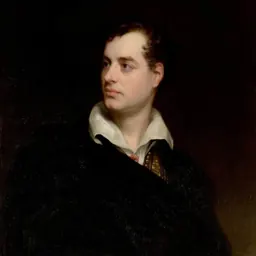
Volunteer in Greek War of Independence With his college friend, Robert James Tennent, he took up the cause of Greek independence. At the beginning of 1824 he travelled to Greece, and when he arrived in Messolonghi, joined the artillery corps formed by Lord Byron. He was to remain at the side of the poet until his death in April. After a respite of some months in England, he returned to Greece in March 1825. Appointed a captain of artillery, some sources place him in the battle to break the Siege of the Acropolis in Athens.
In 1826 he published in London his first book entitled Picture of Greece, which contributed to the development of the philhellenic sentiment in Great Britain. It was followed by Letters from the Aegean (1829), and a History of Modern Greece (1830). He also authored a series of unsigned articles in the British press, supporting the Greek struggle. That same year, he married his friend's cousin, Letitia, co-heiress to the mercantile fortune of her father, the Belfast merchant-patrician (and former United Irishman) William Tennent. After his father-in-law's death in 1832, by royal licence Emerson added Tennent to his family name.
Enters Parliament for Belfast Following the Reform Act 1832, both he and Robert Tennent decided to contest the first open election for the two-seat Belfast constituency, previously in the "pocket" of the town's proprietor, Lord Donegall. Emerson choose to stand as an Independent Whig in the Donegall interest, while (consistent with both is father's and his uncle's democratic politics) stood as a Whig on a platform of further reform. Emerson Tennent and a Tory candidate prevailed in a victory that Protestant loyalists celebrated with an attack on the central Catholic district (Hercules Street) and with an attempt to ransack Robert Tennent's house.
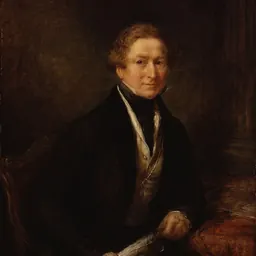
Once in Parliament, Emerson Tennent took the Tory whip. He supported Sir Robert Peel in his first ministry (1834–35), but broke with his "liberal Conservatives" over the repeal of the Corn Laws in his second (1841–46). He joined the moderate Conservative followers of Edward Smith-Stanley, the Earl of Derby.
Replying to Daniel O'Connell in the 1834 Commons debate on Repeal of the Union, Emerson Tennent sought to eschew the Protestant sectionalism and fear of Catholicism, generally assumed to be the central elements of unionist thought. Instead, he raised issues close to O'Connell heart as a campaigning abolitionist. Reflecting on the recent vote to suppress slavery in the British Empire, he remarked: Following apparent defeat in the August 1837 general election, he was only seated on petition. In the July 1841 general election his victory was disputed, and a new writ issued; he regained the seat in the ensuing by-election (August 1842). where he remained until 1850. In a response to an economic depression that severely affected growers and merchants for coffee and cinnamon, he persuaded Earl Grey, Secretary of State for Colonies in London to shift the burden of the colony's tax revenue from export duties to imposts on guns, dogs, carts, and shops, and to a tax to be paid in lieu of compulsory labour on plantation roads. The policy sharpened the plight of the progressively dispossessed peasantry and increased the pressure upon them to submit to wage labour, their resistance to which had forced cash-crop planters to import large numbers of Tamil "coolies" from southern India. The resulting tensions contributed to the Matale Rebellion of 1848.
Last years On his return to the United Kingdom, he became member for Lisburn, and under Lord Derby was secretary to the Poor Law Board in 1852. From 1852 until 1867 he was permanent secretary to the Board of Trade. In this he was adjudged a failure by Disraeli, the Tory leader in the House of Commons, who wrote in 1866: "He has turned out to be the most inefficient & useless of our public servants: no business in him: no sound information: his dept. in a disgraceful state & himself a mere club gossip & office lounger". On his retirement he was created a baronet of Tempo Manor in the Chapelry of Tempo in the County of Fermanagh. In 1862, he was elected a Fellow of the Royal Society.
Emerson Tennent died in London on 6 March 1869. His family consisted of two daughters and a son, Sir William Emerson Tennent, who was an official in the Board of Trade, and at whose death the baronetcy became extinct.
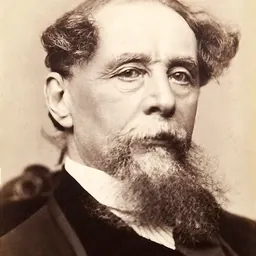
Besides the books above mentioned, Emerson Tennent wrote Belgium in 1840 (1841), and Wine: its Duties and Taxation (1855), Sketches of the Natural History of Ceylon (1861), The Wild Elephant and The Method Of Capturing It in Ceylon (1867), and was a contributor to magazines and a frequent correspondent of Notes and Queries. He was a friend of both Charles Dickens and it was to Emerson Tennent that Dickens dedicated his last completed novel Our Mutual Friend (1865).
James Emerson Tennent is commemorated in the scientific name of a species of Sri Lankan lizard, Ceratophora tennentii.
Don’t just read it —
keep it.
Full-length biographies made to live with: read them, listen on the way to work, watch them tonight.
- E-book
- Audio
- Video
Instant download · yours to keep · every purchase keeps this site free
Important facts
more
Sir TennentPeople in James Emerson Tennent's life
Named in this biography and alive at the same time


Related people
Same field, nearest in time




Contemporaries
People whose lives overlapped James Emerson Tennent's






Frequently asked questions
Who was James Emerson Tennent?
Irish politician and traveller (1804–1869)
When was James Emerson Tennent born?
James Emerson Tennent was born on 7 April 1804 in Belfast.
When did James Emerson Tennent die?
James Emerson Tennent died on 6 March 1869 in London.
What was James Emerson Tennent's occupation?
James Emerson Tennent was a politician, lawyer, scientific collector, botanist and art collector.
What nationality was James Emerson Tennent?
James Emerson Tennent was British.
Sources & further reading
· Wikipedia: James Emerson Tennent
· DBpedia: James Emerson Tennent
Cite this page
APA: Biography.guide. (2026). James Emerson Tennent. https://biography.guide/james-emerson-tennent/
MLA: "James Emerson Tennent." Biography.guide, https://biography.guide/james-emerson-tennent/.
Chicago: "James Emerson Tennent." Biography.guide. https://biography.guide/james-emerson-tennent/.
Data last updated: 2026-09-26 · Spot an error? Report a correction.
Page generated 2026-09-27 05:13 UTC