
About Robben Wright Fleming
Lived 1916 – 2010 (aged 93). Robben Wright Fleming was an American writer.
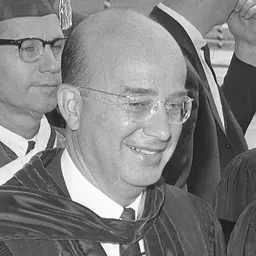
Robben Wright Fleming (December 18, 1916 – January 11, 2010), also known in his youth as Robben Wheeler Fleming, was an American lawyer, legal scholar, and academic administrator.
Fleming was born in Paw Paw, Illinois, in 1916, he studied at Beloit College and later received his legal education at the University of Wisconsin Law School. During World War II, Fleming served as a U.S. Army lawyer specializing in labor negotiation and labor arbitration.
Fleming later transitioned into academic leadership, serving as chancellor of the University of Wisconsin–Madison (1964–1967) before becoming president of the University of Michigan (1968–1979). During a decade marked by the Civil rights movement and protests against the Vietnam War, he was credited with leading the institution through significant campus unrest. He returned as Michigan's interim president in 1988 and also served as president of the Corporation for Public Broadcasting. He died in Ann Arbor, Michigan, in 2010 at age 93.
Early life and education
Robben Wright Fleming was born in Paw Paw, Illinois, on December 18, 1916, to Edmund P. Fleming and Emily Jeannette Wheeler. He was of Scottish descent on his father's side, while his mother's Dutch ancestors had come to the U.S. in 1652. His brother Teddy contracted spinal meningitis in 1926, and died after a two-week illness. To remember his brother, Fleming began using Teddy's middle name—Wheeler—as his own middle name, and did so until the Army made him revert to his legal name; his own first name was a concatenation of his uncle Robert's and grandfather Beniah's names. His father ran a general store and an indoor recreational facility, but the businesses fell apart during the Great Depression and his father died in 1933 of tuberculosis, leaving the family with no income, so his mother took a job in a one-room school house outside of town.
In high school, Fleming participated in forensics and drama and also played sports, principally basketball and baseball. He graduated as valedictorian and received a scholarship to Beloit College, where he enrolled in 1934. After graduating in 1938, he chose to go to the University of Wisconsin Law School in Madison. Fleming received his law degree and was admitted to both the Wisconsin and federal bars in June 1941. He had already secured a job offer from the Securities and Exchange Commission (SEC), though he was aware he was likely to be called up in the draft in the near future due to the increasing likelihood of war.
Family
Fleming met Aldyth Louise "Sally" Quixley, a fellow student from Rockford, Illinois, in 1935, when they were both working in the dining hall at Beloit College, and they dated seriously his final two years of school. She worked a variety of jobs in Illinois while he was at law school and joined him in Washington, D.C., after he started his job with the SEC. He proposed to her in Lafayette Square over Christmas 1941, and they were married by Rev. Peter Marshall at New York Avenue Presbyterian Church on April 3, 1942. The Flemings had two daughters, Nancy Jo and Carolyn Elizabeth, and one son, James Edmund.
Although he was recommended for promotion at Wisconsin, he felt unsure of the prospect for tenure while in his role at the center. When the University of Illinois offered a position as a full professor and director of the Institute of Labor and Industrial Relations, he accepted, effective September 1952. In 1957 he became a professor of law and continued to have time off to perform arbitration work, and in 1963, the president of the University of Wisconsin system called to offer him a new position. The Wisconsin system was being reorganized with a provost at each campus under the overall direction of the president, Fred Harrington, and Harrington wanted Fleming for the position in Madison; Fleming accepted, effective September 1964.
Chancellor of University of Wisconsin–Madison (1964–1967)
At their January 10, 1964, meeting, the board of regents of the University of Wisconsin named Fleming a professor of law and provost of the Madison campus, effective that September 1. A few months into his tenure, the regents revived the century-old title of chancellor for Fleming. The University of Wisconsin system was expanding rapidly at this time, and part of Fleming's job was ensuring that the Madison campus, which generated most of the revenue, kept an appropriate share of money for its own needs. The first significant student protests against the Vietnam War took place during Fleming's tenure, and his handling of these is the most notable aspect of his administration.
In May 1966, Students for a Democratic Society organized an anti-draft sit-in in a campus building. Rather than forcibly eject the protestors, Fleming allowed them to occupy the building for five days provided they remained peaceful, and he allowed their representatives to address a faculty meeting on the topic. His restraint was widely praised at the time, with the Milwaukee Journal saying the university had "shown the nation that a student protest can be a legitimate exercise in democracy, not a disruptive episode in bitterness". Protest leaders viewed the sit-in as a failure because the university continued to cooperate with the Selective Service Administration.
On February 22, 1967, police arrested seventeen protestors who refused to leave an engineering building at the end of a sit-in protesting Dow Chemical's on-campus recruiting. Fleming personally paid $1,155 in bail for eleven of them who did not have money to pay their own, an action which drew criticism for being too lenient. He later explained that he did not want the students to become martyrs by remaining in jail during a student rally planned for that evening, and he was confident that if they were present in person, he could make a more persuasive argument than they could. The plan worked, and the protest was muted; students began to call Fleming the "Silver Fox" because they felt he was outwitting them.
He also expanded university projects in Nigeria, France, Germany and Japan.
President of the University of Michigan (1968–1979)
After President Harlan Hatcher announced his retirement from the University of Michigan, the board of regents formed a presidential selection committee assisted by three advisory committees representing students, faculty, and alumni. The student panel voiced concerns related to campus diversity, the university's role in the military draft, and classified research programs with military applications; they also demanded an increased voice in decision-making and respect from the new president. Roger Heyns, then serving as chancellor of the University of California–Berkeley, was the early front-runner for the position. Regents Robert Briggs and Albert Bentley traveled to California in January 1967 to meet with him, but came away unimpressed with his demeanor in the wake of Governor Ronald Reagan's just-announced firing of University of California president Clark Kerr.
Fleming was one of four or five candidates on the regents' shortlist, and after a member of the University of Minnesota's presidential search committee leaked news that the school had already made an offer to Fleming to fill its own open position, Michigan quickly invited him to meet with the advisory committees before the end of March. Following a meeting at Detroit's Hotel Ponchartrain that was almost entirely occupied by discussion of how to handle student protests, Briggs offered Fleming the position while driving him to the airport. Fleming accepted, later saying the choice between Michigan and Minnesota was difficult, but was decided by Michigan's academic reputation, his and Sally's preference to live in a smaller city, and a desire not to move further north to even colder weather than Madison's. Afterwards, Fleming said of the students' demands, "We're interested in what they're interested in; we're not really at odds," and said he felt the timing was appropriate "in this period of terrible emotional stress following the insane assassination of Dr. King". He also defended their behavior, saying, "These kids have not been hostile. We've had this terrible, terrible tragedy. You can't expect the normal rules to apply." A similar building occupation later that month at Columbia University was resolved through police intervention that left hundreds of students and faculty members injured.
In dealing with campus protests, Fleming favored a strategy of not letting minor differences become major incidents that would in turn serve as recruitment material for demonstrators. When an anti-war group's plan to dig a "bomb crater" on the Diag, the main campus square, raised concerns over damage to plumbing and wiring, Fleming found them a safe site to dig it and explained, "Why not let them dig one? Everybody else is digging holes for new buildings ... It's not a big job to throw the dirt back in the hole ..." Fleming himself described the Vietnam War as a "colossal mistake" at a teach-in September 1969 and called for the unilateral withdrawal of U.S. forces. This led Vice President Spiro Agnew to call him "gutless", though Fleming wrote that Agnew was "immensely unpopular with both students and faculty and nothing could have helped me more than his remarks".
The threat of violence
Fleming viewed vandalism and destruction of property as behavior he could not tolerate, threatening to delist Students for a Democratic Society (SDS) as an approved student organization if it did not reimburse the university for damages caused at an SDS-sponsored sit-in in November 1968. Recognizing that escalating protests nationwide might lead to more serious incidents in the future, in May 1969 he sought assurances that the police would cooperate with his strategy to avoid violence in the event buildings needed to be cleared of protestors; he proposed that he would always enter the building himself, that any police accompanying him would always be unarmed, that arrests would only be made if he deemed necessary, and that the police would retreat in the face of resistance rather than respond with force. Ann Arbor's chief of police, Walter Krasny, broadly agreed with Fleming's flexible approach, later writing:
A bomb placed under an Army staff car parked outside the campus ROTC offices in June 1969 caused damage but no injuries. Later that month, two nights of impromptu partying that blocked off South University Street near the president's house was met with teargas fired by sheriff's deputies. Sources differ on what happened next. In his autobiography, Fleming says students came to his house with teargas in their eyes, which he let them into the kitchen to wash out, after which he went out and persuaded the deputy chief of police to withdraw, saying the sheriff, Douglas Harvey, had been "itching for a confrontation" and reacted beyond what was necessary. Newspaper accounts say Fleming became angry with the police and Harvey was dismissive of his concerns, while the city police agreed to a fifteen-minute delay to allow the crowd to disperse, but when a deputy was hit by a thrown rock, the police charged the crowd and used tear gas and pepper spray to clear the street.
Details that emerged afterwards confirmed Fleming's view that university students were not responsible for the violence. The press treated the affair as a conflict between the president and the sheriff, treating Fleming as a hero; the Detroit Free Press wrote in an editorial, "Mr. Fleming has had far more experience, with far greater success, in handling these affairs than has Harvey. ... Mr. Fleming kept his campus calm. Now his best-laid plans have been undermined by one dumb cop."
Black Action Movement
In February 1970, a coalition of students called the Black Action Movement (BAM) presented Fleming with a list of demands that included a minimum of 10% Black students by the 1973–1974 school year, the hiring of full-time recruiters to promote Black enrollment, a Black student center, and a variety of modifications to the financial aid program. Fleming delivered the administration's response to BAM in March, hoping to open negotiations, but BAM leaders found some of the wording offensive, particularly a passage about admissions criteria that concluded, "We do not know how much further deviation we can make in the criteria and still accomplish anything. At some point it is clear that the student is far better off to enter a college where the competition is less severe and where the course options are less academically oriented." Faculty member and BAM supporter Madison Foster wrote of Fleming's response, "I don't know if Fleming drafted the letter, but he certainly signed it. ... We'll catch him in his color, symbolically, and jam him to the wall. He will not talk to us like that."
Fleming and the administration resisted committing to a 10% enrollment target, citing uncertainty over how to fund the effort. The regents approved a compromise in March that called the 10% number a "goal"; BAM called the proposal "repugnant" and called for a campus strike. White supporters of BAM disrupted an honors convocation and attempted to block access to classrooms before BAM leaders told them to stop and take no further actions unless Black student leaders instructed. BAM protestors picketed outside buildings, addressed classes, and engaged in protest actions such as blocking intersections and stopping drivers entering parking garages to discuss the strike's demands. Minor property damage and shoving matches also occurred. Bomb threats were made, although BAM leadership had ruled out such actions.
Fleming reiterated that 10% Black enrollment remained a "goal" but that there was no guarantee of funds being available to achieve it, and said getting any further concessions would be "nearly impossible". On March 25, the faculty senate adopted a resolution calling for individual schools and colleges to adopt budget cuts to secure the funds to achieve the 10% goal, which allowed Fleming to announce that the funds had been secured on March 27. Further negotiation between Fleming and BAM leader Ed Fabre resulted in an agreement; BAM leaders organized a celebration, and the board of regents issued a statement that praised both the Black students and Fleming while directing a barb at other protestors:
Vice President Agnew accused Fleming of "surrender" to militants for agreeing to the 10% goal, and the Muskegon Chronicle said the university was discriminating in favor of Black students and using a quota system to admit unqualified students. Fleming categorically denied the existence of a quota, citing the fact that the university would, in fact, fall short of its 10% goal because it was only a goal and not a quota. He later said the admissions department told him the agreement was generating a higher quality of applicants rather than lower, and he felt such policies "enrich rather than erode the quality of education".
University administration By 1971, the campus unrest had largely dissipated, and other matters came to occupy Fleming's administration. One was finances, as cuts in public financing meant tuition and student fees made up a larger portion of revenues, from 25% in 1966–1967 to 33% in 1976–1977, leading him to worry that lower-income students would be unable to attend. In spite of budget concerns, Fleming was able to make some changes to the undergraduate program, adding a Residential College and securing legislative approval for turning the University of Michigan campuses at Dearborn and Flint into four-year institutions with independent chancellors, rather than branches that only offered upper-division courses in conjunction with local junior colleges. He also oversaw changes to the financing of the athletic department, so that it would be fully responsible for financing its operations, without support from the university's general fund.
His administration promoted two departments to full schools: the School of Information and Library Studies and the School of Art. He oversaw the introduction of affirmative action programs, a campus-wide restructuring of salaries and compensation to address gender inequalities, and the construction of several major campus buildings, including the Hatcher Graduate Library, the Bentley Historical Library, the Power Center for the Performing Arts, and a building for the schools of architecture and art.
In the fall of 1977, Fleming was approached with job offers to lead the State University of New York and the Center for the Study of Democratic Institutions in Santa Barbara, but declined. Charles J. Hitch, president of the University of California system, said Fleming was under consideration as his successor; a visit to California turned into a job interview, but a conversation with Governor Jerry Brown left him unconvinced of Brown's commitment to continuing California's existing system of higher education, and he informed the board he was not interested. Another offer, from the chairman of the board of the Corporation for Public Broadcasting, was more interesting to the Flemings, and he announced his resignation from Michigan effective in the new year of 1979. Allan F. Smith served as interim president until Harold T. Shapiro was selected as a permanent successor.
Later career
Fleming and his wife spent two years in Washington, D.C., before returning to Ann Arbor permanently.
Corporation for Public Broadcasting
Fleming began his tenure as president of the Corporation for Public Broadcasting (CPB) in January 1979, and in his memoirs he described the public broadcasting system in the United States as a "badly organized entity" and a "nonsystem" that nonetheless did some good work. He lamented that there was "none of the discipline that made the British Broadcasting Corporation the model for excellence", because the system consisted of independent stations who would never agree to consistent programming or time schedules. Early in his tenure, he convinced the board to give up direct control over which programming CPB funded, in favor of a professionally run program fund.
His primary accomplishment was negotiating a $150 million grant from philanthropist Walter Annenberg for the purposes of educational programming. To rectify Annenberg's desire to participate in the programming with the requirements of tax laws and the reluctance of the CPB board to accept outside interference, he proposed the creation of an Annenberg Council, with members from CPB, NPR, PBS, the Annenbergs themselves, as well as two outside members. This became the Annenberg/CPB Project, with Fleming serving as its first director. The project was delayed following the election of Ronald Reagan who, despite being a close friend of Annenberg, wanted to eliminate the CPB; his own party in Congress turned out not to support such a move, so the project moved forward once its future was secure. Fleming's first project as director was to enlist former CBS News president Fred Friendly to produce a series of televised seminars on the Constitution. Historian Nat Hentoff called the Fred Friendly Seminars, which began with that 13-part series, The Constitution — That Delicate Balance, "the most valuable, quintessential American television I have ever seen".
Midway through his tenure at CPB, Fleming was diagnosed with a malignant lymphoma. He underwent chemotherapy and decided to retire by the end of 1981, when he would be 65, and made plans to return to Ann Arbor. He served as interim director of Annenberg/CPB on a part-time basis after returning to Michigan, until a permanent director was found.
Return to Michigan
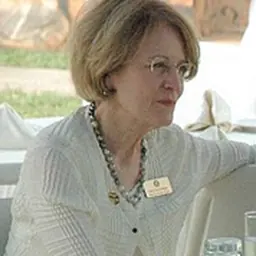
Fleming returned to the University of Michigan as a professor of law until December 1985, when the regents named him professor emeritus and president emeritus. Former University of Michigan president Mary Sue Coleman said he "will be remembered in the same breath as Henry Tappan and James Angell as one of the truly great presidents of the University of Michigan". At the ACLU's 50th Anniversary Dinner in 1970, the organization awarded Fleming a citation for "complete commitment to the protection and enlargement of civil liberties on the university campus", and said in awarding it that, "Perhaps more effectively than any other American educator he had defended the duty of the university to serve as the arena for the clash of ideologies and to do so not timidly but proudly."
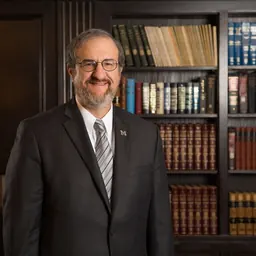
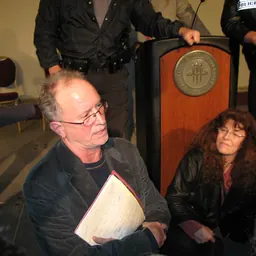
The assessment of his behavior and legacy from those who participated in the protests themselves is mixed. Some agree with the popular description of him as a thoughtful and courteous interlocutor, among them Bill Ayers of SDS, who wrote, "He always wanted to know what you thought ... he was a pretty reasonable guy and I think he believed in the power of reason and the importance of evidence", Chicago Seven defendant Rennie Davis, who wrote, "His spirit to see humanity in any side is a legacy that will inspire us always", and Jim Toy of the Ann Arbor Gay Liberation Front, who wrote, "If he got riled, he continued to be polite." is named the . The board of regents approved an infrastructure plan in 2016 that will result in the demolition of the Fleming Building, but university president Mark Schlissel said the school would find another way to continue commemorating Fleming, whom he called one of his personal heroes.
Demolition began in August, 2022. The building was considered functionally obsolescent.
Books by Robben Fleming (Chronological Order) The Labor Arbitration Process (1965) (Illini Press). A foundational text on labor arbitration procedures and practices. The Politics of Human Nature (1971) ISBN 9781138537552 Explores the intersection of political theory and human behavior. The Uses of the University (1973, contributor) Fleming contributed to this influential series of lectures initiated by Clark Kerr. The University and National Defense (1974) Examines the role of universities in national defense and policy. Tempests into Rainbows: Managing Turmoil in Universities (1996) A reflective memoir on his experiences as president of the University of Michigan during the turbulent 1960s and 1970s.
Don’t just read it —
keep it.
Full-length biographies made to live with: read them, listen on the way to work, watch them tonight.
- E-book
- Audio
- Video
Instant download · yours to keep · every purchase keeps this site free
Important facts
People in Robben Wright Fleming's life
Named in this biography and alive at the same time




Related people
Same field, nearest in time


Contemporaries
People whose lives overlapped Robben Wright Fleming's



Frequently asked questions
Who was Robben Wright Fleming?
American lawyer and professor (1916–2010)
When was Robben Wright Fleming born?
Robben Wright Fleming was born on 18 December 1916 in Paw Paw.
When did Robben Wright Fleming die?
Robben Wright Fleming died on 11 January 2010 in Ann Arbor.
What was Robben Wright Fleming's occupation?
Robben Wright Fleming was a writer.
What nationality was Robben Wright Fleming?
Robben Wright Fleming was American.
Sources & further reading
· Wikipedia: Robben Wright Fleming
· DBpedia: Robben Wright Fleming
Cite this page
APA: Biography.guide. (2026). Robben Wright Fleming. https://biography.guide/robben-wright-fleming/
MLA: "Robben Wright Fleming." Biography.guide, https://biography.guide/robben-wright-fleming/.
Chicago: "Robben Wright Fleming." Biography.guide. https://biography.guide/robben-wright-fleming/.
Data last updated: 2026-09-20 · Spot an error? Report a correction.
Page generated 2026-09-27 05:19 UTC