
About Richard Wetherill
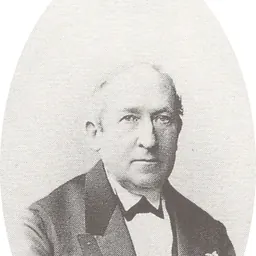
Lived 1858 – 1910 (aged 51). Richard Wetherill was an American anthropologist and archaeologist.
Richard Wetherill (1858–1910), a member of a Colorado ranching family, was an amateur archaeologist who discovered, researched and excavated sites associated with the Ancient Pueblo People. He is credited with the rediscovery of Cliff Palace in Mesa Verde in Colorado and was responsible for initially selecting the term Anasazi, Navajo for ancient enemies, as the name for these ancient people. He also excavated Kiet Seel ruin, now in Navajo National Monument in northeastern Arizona, and Pueblo Bonito in Chaco Canyon, New Mexico.
Wetherill was fascinated by the ruins and artifacts of the Southwestern United States and made a living as a rancher, guide, excavator of ancient ruins, and trading post operator. He was criticized as a "pot hunter" by his archaeologist competitors, although many of the artifacts he found were sold or donated to prominent museums and his work was often financed or overseen by museums. In 1910, he was murdered in mysterious circumstances by a Navajo in Chaco Canyon.
Wetherill's work was important in securing the designation of Mesa Verde as a National Park and Chaco Canyon as a National Monument.
Early life and family Richard Wetherill was born June 12, 1858, the oldest of five sons and two daughters of Quaker parents Benjamin Kite (B.K.) Wetherill and Marion Tompkins, in Chester, Pennsylvania. When Richard was one year old, his family moved to Fort Leavenworth, Kansas. In 1876 the family moved to Joplin, Missouri and three years later to Rico, Colorado. In 1880 the family settled in the valley of the Mancos River in Colorado. In 1882, the family founded the Alamo Ranch, south of the town of Mancos on homesteaded land. By 1895 the family owned of heavily mortgaged land.
Richard Wetherill married Marietta Palmer on December 12, 1896, in Sacramento, California. The couple had five children: Richard, Elizabeth, Robert, Marion, and Ruth.
Mesa Verde
The Wetherill family grazed their cattle along the Mancos River south of their ranch. The ancient ruins in the canyon were known to travelers and the Wetherill brothers were enthusiastic seekers of ruins and artifacts. A Ute Indian named Acowitz told Richard Wetherill of a large ruin in Cliff Canyon. On 18 December 1888 Wetherill and his brother in law, Charlie Mason, first saw the Cliff Palace from the top of the mesa. Cliff Palace, named by Wetherill, is the largest cliff dwelling in the United States and had been undisturbed for almost 700 years since abandoned by the Ancestral Puebloans. Richard Wetherill along with his father B.K. Wetherill, brothers Al, John and Win, extended family, and neighbors explored Cliff Palace, digging, excavating, cataloging, photographing, and gathering artifacts. The Wetherills sold some of their finds to the Historical Society of Colorado. B. K. Wetherill offered a collection of artifacts to the Smithsonian Institution, but funds to purchase them were not available.
News of Wetherill's find spread rapidly. Among the people who stayed with the Wetherills to explore the cliff dwellings was mountaineer, photographer, and author Frederick H. Chapin who visited the region during 1889 and 1890. He described the landscape and ruins in an 1890 article and later in an 1892 book, The Land of the Cliff-Dwellers, which he illustrated with hand-drawn maps and personal photographs. The Wetherills also hosted Gustaf Nordenskiöld, a Swede and the son of polar explorer Adolf Erik Nordenskiöld, in 1891. Nordenskiöld continued excavations begun by the Wetherills on the impressive Cliff Palace. In 1893, Nordenskiöld published an illustrated and scientific account of his investigations called The Cliff Dwellers of the Mesa Verde. Nordenskiöld had his artifacts sent to his home country, sparking antagonism and lawsuits against him and the Wetherills in the United States. The furor ultimately resulted in the adoption of the U.S. Antiquities Act, forbidding the export of antiquities without a license, and the designation of Mesa Verde as a National Park in 1906.
Nordenskiöld taught Wetherill the rudimentary archeological techniques of the day (which essentially were to dig with a trowel not a shovel, and to make copious notes on findings). He called Wetherill a cowboy "with a surprising degree of education."
In 1905 Richard, his brother Win, and his wife Marietta built an exhibition at the St. Louis World's Fair, bringing 16 Navajos with them. In 1907 Richard relinquished his claim on the ruins in Chaco Canyon, contingent on its becoming a National Park. Often described as a wealthy or prosperous man, Wetherill's only asset at the time of his death was ranch property worth five thousand dollars. He was owed more than eleven thousand dollars by Navajos, Hispanics, and Anglos. Little of the money owed Wetherill was ever collected by his widow who lived in modest circumstances, dying in Albuquerque in 1954.
Wetherill and his wife Marietta are buried in the small cemetery west of Pueblo Bonito along with several Navajos. The cemetery lies just over a hundred meters west of Bonito behind a wooden fence. Richard Wetherill's heirs donated a large collection of artifacts to the University of New Mexico in 1954.
Footnotes
Don’t just read it —
keep it.
Full-length biographies made to live with: read them, listen on the way to work, watch them tonight.
- E-book
- Audio
- Video
Instant download · yours to keep · every purchase keeps this site free
Important facts
People in Richard Wetherill's life
Named in this biography and alive at the same time




Related people
Same field, nearest in time





Contemporaries
People whose lives overlapped Richard Wetherill's



Frequently asked questions
Who was Richard Wetherill?
American archaeologist (1858–1910)
When was Richard Wetherill born?
Richard Wetherill was born on 12 June 1858 in Chester.
When did Richard Wetherill die?
Richard Wetherill died on 10 June 1910 in Chaco Canyon, New Mexico.
What was Richard Wetherill's occupation?
Richard Wetherill was an anthropologist and archaeologist.
What nationality was Richard Wetherill?
Richard Wetherill was American.
Sources & further reading
· Wikipedia: Richard Wetherill
Cite this page
APA: Biography.guide. (2026). Richard Wetherill. https://biography.guide/richard-wetherill/
MLA: "Richard Wetherill." Biography.guide, https://biography.guide/richard-wetherill/.
Chicago: "Richard Wetherill." Biography.guide. https://biography.guide/richard-wetherill/.
Data last updated: 2026-09-20 · Spot an error? Report a correction.
Page generated 2026-09-27 05:27 UTC