
About Richard Weiner
Lived 1884 – 1937 (aged 52). Richard Weiner was a Czech journalist, chemist, novelist, writer, poet and critic.
Richard Weiner (6 November 1884 – 3 January 1937) was a Czech writer, poet, and journalist. He is considered one of the most notable 20th century Czech authors, and influenced the literary work of many of his peers, as well as younger writers. His works, however, are little known outside of the Czech Republic. Because of his enigmatic writings, he has often been likened to Franz Kafka, although mutual influences can be ruled out with near certainty. He has been called "the poet of anxiety", others spoke of him as "the Odd-man out" of Czech literature. Karel Čapek, his contemporary, dubbed him "the man of pain."
He was a cousin of lawyer and member of the Czechoslovak government-in-exile Rudolf Rabl.
Life Weiner was born in Písek, South Bohemian Region, Austria-Hungary (now the Czech Republic). His parents ran a distillery and confectionery and Richard, the oldest of five children, was destined to take over the family's business. He studied chemistry at the Technical University in Prague and after graduating in 1906 with a degree in Chemical engineering he went on to take further studies in Zurich and Aachen. In 1908 he served in the military and in 1909 he began working as a chemist in the Bohemian city of Pardubice, and in Freising and Allach (near Munich, Germany).
In 1919 Weiner returned to Paris once again as a correspondent for Lidové noviny. He was to stay in Paris for nearly the rest of his life, only returning to Prague in 1936 when he had fallen seriously ill with stomach cancer. He died in a Prague sanatorium on 3 January 1937.
Work
Journalist Weiner's journalistic work focused on French and particularly Parisian politics and culture, but covered everyday life and sensational crimes as well. He reviewed plays, literature, and exhibitions and even wrote a regular column on fashion under a female pseudonym. His style has been described as "impressionist" by contemporaries. For this reason his work may be difficult to understand now, because Weiner presupposed familiarity with the news of his day. "But is not his journalistic writing of that time a wonderful source of study of this time-period?" his friend and fellow correspondent Gustav Winter asked in his obituary of 1937. "This time period with its special fragrance Weiner perceived and interpreted however more by an intuition than hard study. He was proud of it - and rightly so."
Writer Weiner's literary work is generally divided into two distinct phases. His first poems and short stories appear to be influenced by the modernist literature of the early 20th century. At the same time he developed his own new poetics under the influence of Charles Vildrac and Georges Duhamel. Between 1927 and 1933 Weiner published three more volumes of poetry, the prose work Lazebník (The Barber; 1929) and the novel Hra doopravdy (A Game for Real; 1933).
Weiner used literature as a means to explore the depths of being, while at the same time consciously reflecting the limits of language as a means of communication. Alfred Thomas argues: "Weiner's subtle fiction exposes – not the defunct status of language per se – but the fragmentation of a unified discourse subtended by a monistic, morally unambiguous truth." Referring to Weiner's homosexuality Thomas has also stressed, that Weiner's language is not emptied of meaning as some critics had insisted, but that his stories "explore the relationship between identity understood in terms of social morality and identity conceived in the subjective terms of sexuality."
With his prose Weiner reached an extreme degree of abstraction. Taking Hra doopravdy for an example, Walter Schamschula has pointed out that this novel consists of two distinct parts which are seemingly not connected to each other. But whereas the content of the first part might be accessible to the reader by viewing it as a dream, the plot is increasingly atomized in the second part. According to Schamschula critics have argued that a rational understanding of this novel is not possible, but he claims that it can nonetheless be accessed by recognizing its elaborate stage of abstraction. In particular, Schamschula stresses Weiner's commitment to the optical and to geometrical structures. Weiner's philosophy might be described as existentialism.
In his lifetime, Weiner was already viewed as a literary outsider. founder of the Group 42, he became recognized as an important author only in the wake of the Prague Spring and particularly after 1989. Until recently, he has not been translated into English. In 2015, an English translation (by Benjamin Paloff) of Hra doopravdy (as The Game For Real) appeared on Two Lines Press.
Works
Netečný divák a jiné prósy. Fr. Borový, V Praze 1917. Rozcestí. Básně. Fr. Borový, V Praze 1918. Lítice. 2nd edition, Praha 1928. Mnoho nocí. Básně. Vydal Ot. Štorch-Marien, Praha 1928. Hra doopravdy. New edition, Mladá Fronta, Praha 1967. Lazebník Hra doopravdy. Odeon, Praha 1974. Sluncem svržený sok. Československý spisovatel, Praha 1989. Škleb. ARGO, Praha 1993. Spisy. (Works). 5 Vols., ed. by Zina Trochová. Torst, Praha 1996ff.
Don’t just read it —
keep it.
Full-length biographies made to live with: read them, listen on the way to work, watch them tonight.
- E-book
- Audio
- Video
Instant download · yours to keep · every purchase keeps this site free
Important facts
People in Richard Weiner's life
Named in this biography and alive at the same time

Related people
Same field, nearest in time



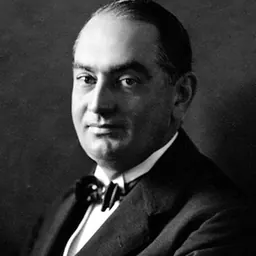

Contemporaries
People whose lives overlapped Richard Weiner's
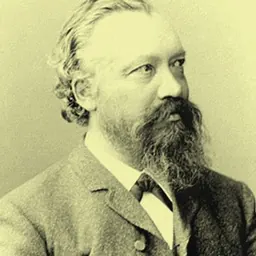
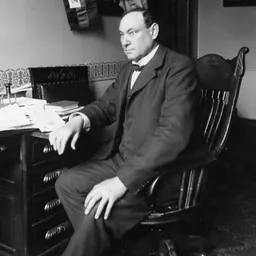
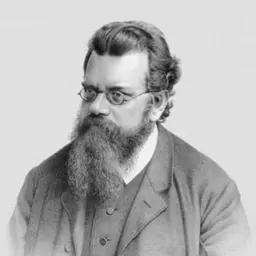
Frequently asked questions
Who was Richard Weiner?
Czech poet and publicist (1884-1937)
When was Richard Weiner born?
Richard Weiner was born on 6 November 1884 in Písek.
When did Richard Weiner die?
Richard Weiner died on 3 January 1937 in Prague.
What was Richard Weiner's occupation?
Richard Weiner was a journalist, chemist, novelist, writer, poet and critic.
What nationality was Richard Weiner?
Richard Weiner was Czech.
Sources & further reading
· DBpedia: Richard Weiner (Czech writer)
Cite this page
APA: Biography.guide. (2026). Richard Weiner. https://biography.guide/richard-weiner/
MLA: "Richard Weiner." Biography.guide, https://biography.guide/richard-weiner/.
Chicago: "Richard Weiner." Biography.guide. https://biography.guide/richard-weiner/.
Data last updated: 2026-09-20 · Spot an error? Report a correction.
Page generated 2026-09-27 05:33 UTC