
About Karel Čapek
Lived 1890 – 1938 (aged 48). Karel Čapek was an Austrian and Czech translator, novelist, director, photographer, playwright and journalist.
World War I and the interwar period
Exempted from military service due to the spinal problems that would haunt him his whole life, Čapek observed World War I from Prague. His political views were strongly affected by the war, and as a budding journalist he began to write on topics like nationalism, totalitarianism and consumerism. Through social circles, the young author developed close relationships with many of the political leaders of the nascent Czechoslovak state, including Tomáš Garrigue Masaryk, Czechoslovak patriot and the first President of Czechoslovakia, and his son Jan Masaryk, who would later become minister of foreign affairs. T. G. Masaryk was a regular guest at Čapek's "Friday Men" garden parties for leading Czech intellectuals. Čapek was also a member of Masaryk's Hrad political network. Their frequent conversations on various topics later served as the basis for Čapek's book Talks with T. G. Masaryk.
Čapek began his writing career as a journalist. With his brother Josef, he worked as an editor for the Czech paper Národní listy (The National Newspaper) from October 1917 to April 1921. Upon leaving, he and Josef joined the staff of Lidové noviny (The People's Paper) in April 1921.
Čapek's early attempts at fiction were short stories and plays for the most part written with his brother Josef. His first international success was R.U.R., a dystopian work about a bad day at a factory populated with sentient androids. The play was translated into English in 1922, and was being performed in the UK and America by 1923. Throughout the 1920s, Čapek worked in many writing genres, producing both fiction and non-fiction, but worked primarily as a journalist.
In the 1930s, Čapek's work focused on the threat of brutal national socialist and fascist dictatorships; by the mid-1930s, Čapek had become "an outspoken anti-fascist". While repairing flood damage to his family's summer house in Stará Huť, he contracted a common cold. His brother Josef was arrested in September and eventually died in the Bergen-Belsen concentration camp in April 1945. Karel Čapek and his wife are buried at the Vyšehrad Cemetery in Prague. The inscription on the tombstone reads: "Here Josef Čapek, painter and poet, would have been buried. Grave far away." Čapek is renowned for his work with the Czech language.
He is known as a science-fiction author who wrote before science fiction became widely recognized as a separate genre. Many of his works also discuss ethical aspects of industrial inventions and processes already anticipated in the first half of the 20th century. These include mass production, nuclear weapons and intelligent artificial beings such as robots or androids. His most productive years were during the First Republic of Czechoslovakia (1918–1938).
Čapek also expressed fear of social disasters, dictatorship, violence, human stupidity, the unlimited power of corporations, and greed. He tried to find hope, and a way out. From the 1930s onward his work became increasingly anti-fascist, anti-militarist, and critical of what he saw as "irrationalism".
Ivan Klíma, in his biography of Čapek, notes his influence on modern Czech literature, as well as on the development of Czech as a written language. Čapek, along with contemporaries like Jaroslav Hašek (1883-1923), spawned part of the early 20th-century revival in written Czech thanks to their decision to use the vernacular. Klíma writes, "It is thanks to Čapek that the written Czech language grew closer to the language people actually spoke".
His most important works attempt to resolve problems of epistemology, to answer the question: "What is knowledge?" Examples include Tales from Two Pockets, and the first book of the trilogy of novels Hordubal, Meteor, and An Ordinary Life. He also co-wrote (with his brother Josef) the libretto for Zdeněk Folprecht's opera Lásky hra osudná in 1922.
After World War II, Čapek's work was only reluctantly accepted by the communist government of Czechoslovakia (in office 1948–1989), because during his life he had refused to accept communism as a viable alternative. He was the first in a series of influential non-Marxist intellectuals who wrote a newspaper essay in a series called "Why I am not a Communist".
In 2009 (70 years after his death), a book was published containing extensive correspondence by Karel Čapek, in which the writer discusses pacifism and his conscientious objection to military service with lawyer Jindřich Groag from Brno. Until then, only a portion of these letters were known.
Arthur Miller wrote in 1990: I read Karel Čapek for the first time when I was a college student long ago in the Thirties. There was no writer like him ... prophetic assurance mixed with surrealistic humour and hard-edged social satire: a unique combination...he is a joy to read.
Etymology of robot
Karel Čapek introduced and made popular the frequently used international word robot, which first appeared in his play R.U.R. in 1920. While it is frequently thought that he was the originator of the word, he wrote a short letter in reference to an article in the Oxford English Dictionary etymology in which he named his brother, painter and writer Josef Čapek, as its actual inventor.
In an article in the Czech journal Lidové noviny in 1933, he also explained that he had originally wanted to call the creatures laboři (from Latin labor, work). However, he did not like the word, seeing it as too artificial, and sought advice from his brother Josef, who suggested roboti (robots in English).
The word robot comes from the word robota. The word robota means literally "corvée", "serf labor", and figuratively "drudgery" or "hard work" in Czech. It also means "work", "labor" in colloquial Slovak, archaic Czech, and many other Slavic languages (e.g., Bulgarian, Russian, Serbian, Polish, Macedonian, Ukrainian, etc.). It derives from the reconstructed Proto-Slavic word *orbota, meaning "work, hard work, obligatory work for the king, or a short form used for plowing".
Awards and honours The asteroid 1931 Čapek, discovered by Luboš Kohoutek was named after him.
Čapek received the Order of Tomáš Garrigue Masaryk, in memoriam, in 1991.
Richard E. Pattis named the Karel computer programming language for Čapek.
Selected works
Plays 1920 – The Outlaw (Loupežník) 1920 – R.U.R. (Rossum's Universal Robots), (Rossumovi univerzální roboti) – play with one of the first examples of artificial intelligence human-like beings in art and literature. 1921 – Pictures from the Insects' Life (Ze života hmyzu), also known as The Insect Play or The Life of the Insects, with Josef Čapek, a satire in which insects stand in for various human characteristics: the flighty, vain butterfly, the obsequious, self-serving dung beetle. 1922 – The Makropulos Affair (Věc Makropulos) – play about human immortality, not really from a science-fiction point of view. Leoš Janáček's opera is based on that. 1927 – Adam the Creator (Adam stvořitel), with Josef Čapek – The titular hero tries to destroy the world and replace it with a better one. Letters from England (Anglické listy, 1924) Letters from Spain (Výlet do Španěl, 1930) Letters from Holland (Obrázky z Holandska, 1932) Travels in the North (Cesta na Sever, 1936)
Other works
Stories from a Pocket and Stories from Another Pocket, (Povídky z jedné a z druhé kapsy) – a common name for a cycle of short detective stories (5–10 pages long) that shared common attitude and characters, including The Last Judgement. How it is Made (Jak se co dělá) – satiric novels on the life of theater, newspaper and movie studio. The Gardener's Year (Zahradníkův rok, 1929) is exactly what it says it is: a year-round guide to gardening, charmingly written, with illustrations by his brother Josef Čapek. Apocryphal Tales (Kniha apokryfů, 1932, 2nd edition 1945) – short stories about literary and historical characters, such as Hamlet, a struggling playwright, Pontius Pilate, Don Juan, Alexander arguing with his teacher Aristotle, and Sarah and Abraham attempting to name ten good people so Sodom can be saved.' The Punishment of Prometheus (1932) Times Aren't What They Were (1931) As in the Good Old Days (1926) Thersites (1931) Agathon, or Concerning Wisdom (1920) Alexander the Great (1937) The Death of Archimedes (1938) The Roman Legions (1928) The Ten Righteous (1931) Pseudo Lot, or Concerning Patriotism (1923) Christmas Eve (1930) Martha and Mary (1932) Lazarus (1932) The Fives Loaves (1937) Benchanan (1934) The Crucifixion (1927) Pilate's Evening (1934) Pilate's Creed (1920) The Emperor Diocletian (1932) Attila (1932) The Idol Breakers (1936) Brother Francis (1932) Ophir (1932) Goneril (1933) Hamlet, Prince of Denmark (1934) Don Juan's Confession (1932) Romeo and Juliet (1932) Master Hynek Rab of Kufstejn (1933) Napoleon (1933) Nine Fairy Tales: And One More Thrown in for Good Measure (Devatero Pohádek a ještě jedna od Josefa Čapka jako přívažek, 1932) – a collection of fairy tales, aimed at children. Dashenka, or the Life of a Puppy (Dášeňka čili Život štěněte, 1933) The Shirts (short story)
Selected bibliography
The Absolute at Large, 1922 (in Czech), 1927, The Macmillan Company, New York, translator uncredited. Also published 1975, Garland Publishing , Apocryphal Tales, 1945 (in Czech), 1997, Catbird Press Paperback , Translated by Norma Comrada An Atomic Phantasy: Krakatit or simply Krakatit, 1924 (in Czech) Believe in People : the essential Karel Čapek : previously untranslated journalism and letters 2010. Faber and Faber. Selected and translated with an introduction by Šárka Tobrmanová-Kühnová; preface by John Carey. The Cheat. Allen and Unwin, 1941. Cross Roads, 2002, Catbird Press, cloth; trade paperback. Translation by Norma Comrada of "Boží muka" (1917) and "Trapné povídky" (1921). I Had a Dog and a Cat. Allen & Unwin, 1940. Nine Fairy Tales: And One More Thrown in for Good Measure, 1996, Northwestern Univ Press Paperback Reissue Edition. Illustrated by Josef Capek, Translated by Dagmar Herrmann R.U.R., 1970, Pocket Books Tales from Two Pockets 1928–29 (in Czech), 1994, Catbird Press Paperback. Translation by Norma Comrada. Talks With T. G. Masaryk (non-fiction). Biography of T. G. Masaryk, founder of Czechoslovakia. Three Novels: Hordubal, Meteor, An Ordinary Life, 1933–34, Translated by M. and R. Weatherall, 1990, Catbird Press Toward the Radical Center: A Karel Capek Reader. Collection of stories, plays and columns. Edited by Peter Kussi, Catbird Press War with the Newts 1936 (in Czech), 1967, Berkley Medallion Edition Paperback. Translated by M. & R. Weatherall, March 1990, Catbird Press paperback, , October 1996, Northwestern University Press paperback . Another English translation by Ewald Osers
Don’t just read it —
keep it.
Full-length biographies made to live with: read them, listen on the way to work, watch them tonight.
- E-book
- Audio
- Video
Instant download · yours to keep · every purchase keeps this site free
Important facts
Family & relationships
People in Karel Čapek's life
Named in this biography and alive at the same time


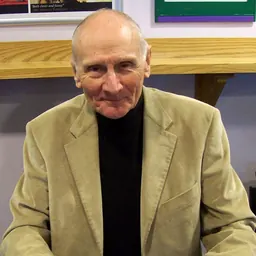


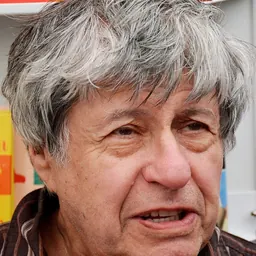
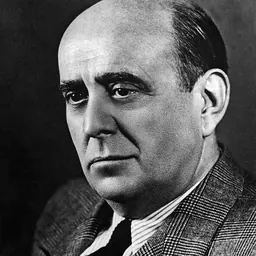

Related people
Same field, nearest in time


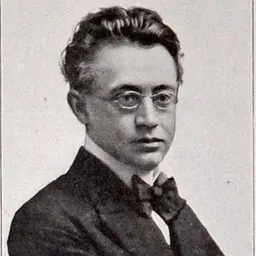
Contemporaries
People whose lives overlapped Karel Čapek's


Frequently asked questions
Who was Karel Čapek?
Czech writer (1890–1938)
When was Karel Čapek born?
Karel Čapek was born on 9 January 1890 in Malé Svatoňovice.
When did Karel Čapek die?
Karel Čapek died on 25 December 1938 in Prague, Vinohrady.
What was Karel Čapek's occupation?
Karel Čapek was a translator, novelist, director, photographer, playwright and journalist.
What nationality was Karel Čapek?
Karel Čapek was Austrian and Czech.
Sources & further reading
Cite this page
APA: Biography.guide. (2026). Karel Čapek. https://biography.guide/karel-capek/
MLA: "Karel Čapek." Biography.guide, https://biography.guide/karel-capek/.
Chicago: "Karel Čapek." Biography.guide. https://biography.guide/karel-capek/.
Data last updated: 2026-09-26 · Spot an error? Report a correction.
Page generated 2026-09-27 05:13 UTC