
About Josef Čapek
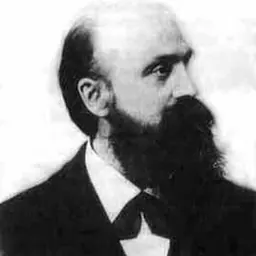
Lived 1887 – 1945 (aged 57–58). Josef Čapek was a Czech and Austrian translator, painter, photographer, playwright, journalist and writer.
Josef Čapek (; 23 March 1887 – April 1945 ) was a Czech artist who was best known as a painter, but who was also noted as a writer and poet. He invented the word 'robot', which was introduced into literature by his brother, Karel Čapek.
Life Čapek was born in Hronov, Bohemia, Austria-Hungary, (now the Czech Republic) in 1887. First a painter of the Cubist school, he later developed his own playful, minimalist style. He collaborated with his brother Karel on a number of plays and short stories; on his own, he wrote the utopian play Land of Many Names and several novels, as well as critical essays in which he argued for the art of the unconscious, of children, and of 'savages'. He was named by his brother as the true inventor of the term robot. As a cartoonist, he worked for Lidové noviny, a newspaper based in Prague.
His illustrated stories Povídání o Pejskovi a Kočičce (English translation as The Adventures of Puss and Pup ) are considered classics of Czech children's literature.
Death Due to his critical attitude towards national socialism and Adolf Hitler, he was arrested after the German invasion of Czechoslovakia in 1939. He wrote Poems from a Concentration Camp in the Bergen-Belsen concentration camp, where he died in 1945. In June 1945 Rudolf Margolius, accompanied by Čapek's wife Jarmila Čapková, went to Bergen-Belsen to search for him. His remains were never found. In 1948, the court officially set 30 April 1947 as the date that he could not survive.
Selected literary works Lelio, 1917; Ze života hmyzu (Pictures from the Insects' Life), 1921 – with Karel Čapek; Povídání o pejskovi a kočičce (The Adventures of Puss and Pup), 1929; Stín kapradiny, 1930, novel; Kulhavý poutník, essays, 1936; Land of Many Names; Básně z koncentračního tabora (Poems from a Concentration Camp), published posthumously 1946; Adam Stvořitel (Adam the Creator) – with Karel Čapek; Dášeňka, čili život štěněte (Dashenka, consequently the life of a Puppy) – with Karel Čapek, illustrated by Josef.
Gallery
Literature Ivan Margolius, "The Robot of Prague", Newsletter, The Friends of Czech Heritage no. 17, Autumn 2017, pp. 3–6. https://czechfriends.net/images/RobotsMargoliusJul2017.pdf Marie Šulcová. Čapci, Ladění pro dvě struny, Poločas nadějí, Brána věčnosti, Prague: Melantrich 1993-1998 Marie Šulcová. Prodloužený čas Josefa Čapka, Prague: Paseka 2000
Don’t just read it —
keep it.
Full-length biographies made to live with: read them, listen on the way to work, watch them tonight.
- E-book
- Audio
- Video
Instant download · yours to keep · every purchase keeps this site free
Important facts
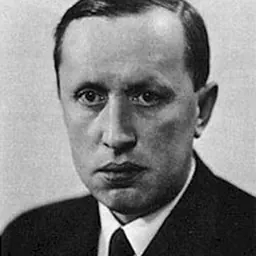
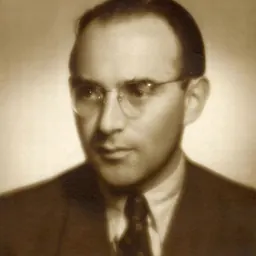
People in Josef Čapek's life
Named in this biography and alive at the same time
Related people
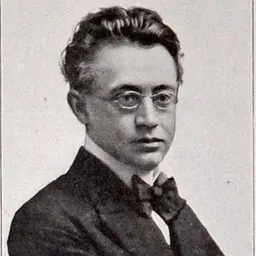
Same field, nearest in time



Contemporaries
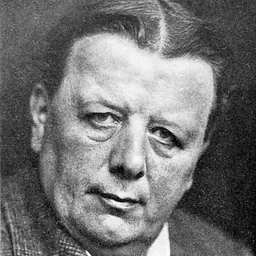
People whose lives overlapped Josef Čapek's




Frequently asked questions
Who was Josef Čapek?
Czech painter and writer (1887–1945)
When was Josef Čapek born?
Josef Čapek was born on 23 March 1887 in Hronov.
When did Josef Čapek die?
Josef Čapek died in 1945 in Bergen-Belsen concentration camp.
What was Josef Čapek's occupation?
Josef Čapek was a translator, painter, photographer, playwright, journalist and writer.
What nationality was Josef Čapek?
Josef Čapek was Czech and Austrian.
Sources & further reading
Cite this page
APA: Biography.guide. (2026). Josef Čapek. https://biography.guide/josef-capek-translator/
MLA: "Josef Čapek." Biography.guide, https://biography.guide/josef-capek-translator/.
Chicago: "Josef Čapek." Biography.guide. https://biography.guide/josef-capek-translator/.
Data last updated: 2026-09-20 · Spot an error? Report a correction.
Page generated 2026-09-27 05:19 UTC