
About Richard W. Guenther
Lived 1845 – 1913 (aged 67). Richard W. Guenther was an American politician and pharmacist.
Richard William Guenther (November 30, 1845 – April 5, 1913) was a German American immigrant, pharmacist, and Republican politician from Oshkosh, Wisconsin. He served eight years in the U.S. House of Representatives, representing central Wisconsin from 1881 to 1889. Before that, he served as the 8th State Treasurer of Wisconsin. Later in life, he served as an American consul general in Mexico City, Frankfurt, Germany, and Cape Town, South Africa.
Early life and education Richard Guenther was born November 30, 1845, in the city of Potsdam, in what was then the Province of Brandenburg, in the Kingdom of Prussia (now Germany). He was raised and educated in the schools of Potsdam, then attended the Royal Pharmacy, where he studied chemistry and pharmacy.
Arrival in America He initially settled in New York City, in January 1867. There he partnered with fellow pharmacist in establishing a plaster business, which ultimately grew into the conglomerate . Through his growing role in local politics, Guenther also became active in the Republican Party of Wisconsin.
State treasurer Guenther was first mentioned as a potential candidate for statewide office in 1875, when he was discussed as an alternative for Henry Baetz as a candidate for state treasurer of Wisconsin. At the time, both parties tried to build their statewide tickets with at least one representative of Wisconsin's large German immigrant population.
Guenther's prominence in Wisconsin's German American population continued to grow, as he became president of the Oshkosh Turnverein, and later had Oshkosh established as the state headquarters of the state turnverein organization. Guenther was widely expected to become president of the state turnverein in 1876, but was thwarted at the state convention by Democratic members.
In 1877, Guenther was again discussed as a candidate for state treasurer, as Baetz had lost the 1875 election. At the 1877 Republican state convention in September, Guenther's name was placed in nomination by James H. Foster in a highly complimentary speech. After a brief informal ballot, Guenther was nominated by acclamation. Guenther won the election with 45% of the vote, along with the entire state Republican ticket. Two years later, Guenther was re-elected with nearly 54% of the vote.
Congress
During his time as state treasurer, Guenther's reputation grew beyond the state of Wisconsin, and he accepted invitations from neighboring state Republican organizations to travel and campaign in those states' German American communities. During his third year in office, his name began appearing in newspaper editorials as a potential candidate for U.S. House of Representatives in Wisconsin's 6th congressional district. At the time, the 6th congressional district comprised much of the northeast quadrant of Wisconsin, including Guenther's home county, Winnebago, along with Brown, Door, Kewaunee, Outagamie, Calumet, Green Lake, Waushara, and Waupaca counties. In September 1880, Guenther responded to the talk of a congressional run, stating that he'd be willing to accept the nomination if it were offered to him.
Almost immediately after declaring his willingness to be a candidate for Congress, Democrats in the state began making an issue of Guenther's citizenship status. At the time, the law required two years to lapse between a person's declaration of their intention to become a citizen and their achieving citizenship. An Oshkosh Northwestern article reporting of Guenther's citizenship paperwork appeared to indicate that he had only declared his intention to become a citizen in April 1873, less than a year before he received his citizenship in December of that year. Guenther's allies however, asserted that the newspaper had erred, and that he had actually declared his intention to become a citizen in April 1870.
At the Republican district convention in September 1880, Guenther was nominated on the first ballot without serious opposition. In the general election, he faced the Democratic incumbent, Gabriel Bouck, who was seeking his third term in office. Guenther won the election with 52% of the vote.
He represented Wisconsin's 6th congressional district for three terms (March 4, 1881March 3, 1887). After redistricting, he represented Wisconsin's 2nd congressional district for one term (March 4, 1887March 3, 1889). Overall, Guenther represented Wisconsin from the 47th through the 50th Congresses.
Later years Guenther was appointed consul general in three different locations: in Mexico City, Mexico by President Benjamin Harrison in 1890, serving until 1893; in Frankfurt, Germany by President William McKinley in 1898, serving until 1910; and in Cape Town, South Africa by President William Howard Taft in 1910, serving until his death in Oshkosh, Wisconsin, on April 5, 1913. He was interred at Riverside Cemetery in Oshkosh.
Personal life and legacy Richard Guenther was the youngest of 11 children born to Theodore and Augusta ( Lietze) Guenther. His father was a musician in Potsdam, both parents remained in Germany for their entire lives. Only one of Richard's siblings emigrated to America, his elder brother August, who died at Saint Louis, Missouri, in 1912.
Electoral history Wisconsin State Treasurer (1877, 1879)
U.S. House, Wisconsin's 6th district (1880, 1882, 1884) Year Election Date Elected Defeated Total Plurality 1880 General Republican 20,168 52.47% Dem. 16,807 43.73% 38,435 3,361 Gbk. 1,437 3.74% 1882 General Republican 10,303 44.14% Dem. 9,265 39.69% 23,344 1,038 Proh. 3,275 14.03% Gbk. 496 2.12% 1884 General Republican 16,425 49.92% Dem. 15,197 46.19% 32,903 1,228 Proh. 955 2.90% Gbk. 323 0.98%
U.S. House, Wisconsin's 2nd district (1886) Year Election Date Elected Defeated Total Plurality 1886 General Republican 15,366 55.67% Dem. 11,138 40.36% 27,600 4,228 Proh. 1,074 3.89%
Don’t just read it —
keep it.
Full-length biographies made to live with: read them, listen on the way to work, watch them tonight.
- E-book
- Audio
- Video
Instant download · yours to keep · every purchase keeps this site free
Important facts
People in Richard W. Guenther's life
Named in this biography and alive at the same time

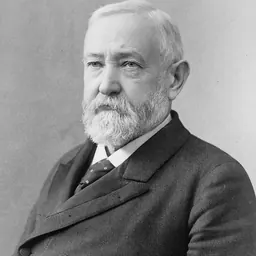

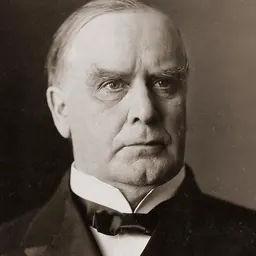

Related people
Same field, nearest in time


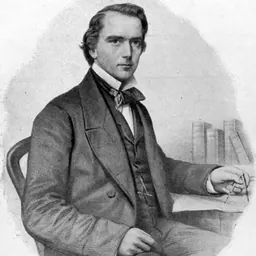



Contemporaries
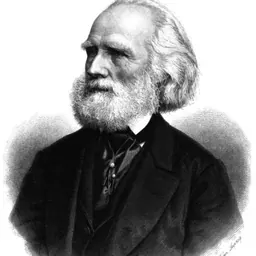
People whose lives overlapped Richard W. Guenther's

Frequently asked questions
Who was Richard W. Guenther?
American politician-Congressman (1845–1913)
When was Richard W. Guenther born?
Richard W. Guenther was born on 30 November 1845 in Potsdam.
When did Richard W. Guenther die?
Richard W. Guenther died on 5 April 1913 in Oshkosh.
What was Richard W. Guenther's occupation?
Richard W. Guenther was a politician and pharmacist.
What nationality was Richard W. Guenther?
Richard W. Guenther was American.
Sources & further reading
· Wikipedia: Richard W. Guenther
· DBpedia: Richard W. Guenther
Cite this page
APA: Biography.guide. (2026). Richard W. Guenther. https://biography.guide/richard-w-guenther/
MLA: "Richard W. Guenther." Biography.guide, https://biography.guide/richard-w-guenther/.
Chicago: "Richard W. Guenther." Biography.guide. https://biography.guide/richard-w-guenther/.
Data last updated: 2026-09-26 · Spot an error? Report a correction.
Page generated 2026-09-27 05:14 UTC