
About Richard Theodore Greener
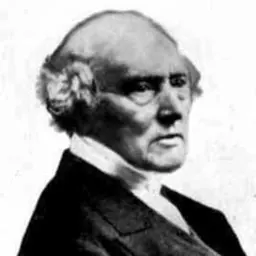
Lived 1844 – 1922 (aged 78). Richard Theodore Greener was an American librarian, diplomat, lawyer and classical scholar.
Richard Theodore Greener (January 30, 1844 – May 2, 1922) was a pioneering African-American scholar, excelling in elocution, philosophy, law and classics in the Reconstruction era. In 1870, he became the first black undergraduate at Harvard University to receive a bachelor's degree.
After graduating with honors from Harvard, Greener worked as a high school teacher and principal. In 1873, he was recruited by the University of South Carolina (USC) to become the school's first black professor. While on the USC faculty, he enrolled in and graduated from USC's Law School. He also served as associate editor for the New National Era, a newspaper owned and edited by Frederick Douglass.
In 1898, he became America's first black diplomat to a white country, serving in Vladivostok, Russia. In 1902, the Chinese government honored him for his service to the Boxer War, and his assistance to Shansi famine sufferers. His parents were Mary Ann LeBrune, and Richard Wesley Greener, a seaman. a “Spaniard from Puerto Rico”. and attended Broadway Grammar School. Seeking fortune in California during the Gold Rush migration, his father left the family and never returned to Cambridge. to help support his family by working odd jobs in the Boston-Cambridge area.
Richard Theodore Greener, a young colored man and a member of the senior class of Harvard College, is giving public readings in Philadelphia. Mr. Greener's history is that of a persevering young man who has succeeded in living down the prejudices against his race and color, and attaining by industry, ability, and good character, a position of which he may well feel proud. He was awarded last year, at Harvard College, the prize for reading, and this year he has drilled two young white men who have likewise obtained prizes in the same branch. His course at Harvard has throughout been honorable. He is the first colored youth who has ever passed through that college.
Academic career After graduating from Harvard, Greener served as a principal at the Institute for Colored Youth (today Cheyney University) in Philadelphia from September 1870 until December 1872. While at Sumner, Greener worked part-time in the U.S. Attorney's office where he first began his legal studies.
At USC, Greener also served as a university librarian, helping to "reorganize and catalog the library's holdings which were in disarray after the Civil War" and wrote a monograph on the rare books of the library. In 1875, Greener became the first black elected member of the American Philological Association (APA), the primary academic society for classical studies in North America. In 1876, his paper, “The Library of the University of South Carolina: Its Rare and Curious Books,” was accepted for presentation. Greener, who nonetheless still respected Douglass's achievements, helped organize a major convention to present Black grievances to the nation. Decades had passed since the Civil War, the Emancipation Proclamation, and years since the passage of the Fourteenth and Fifteenth Amendments, but these advances had been rolled back or left unenforced, while Jim Crow laws spread in the South. Greener joined younger Black leaders in questioning Douglass, who remained loyal to the Republican Party that had first fought for Black freedom but then abandoned the cause. Douglass accused Greener of writing anonymous attacks motivated by "ambition and jealousy" that charged the older leader with "trading off the colored vote of the country for office." Greener wrote that there were two Douglasses, "the one velvety, deprecatory, apologetic — the other insinuating, suggestive damning with shrug, a raised eyebrow, or a look of caution." From 1885 to 1892, Greener served as secretary of the Grant Monument Association, where he led the initial fundraising effort that brought in donations from 90,000 people worldwide to construct Grant's Tomb. From 1885 to 1890, he was chief examiner of the civil service board for New York City and County. In the 1896 election, he served as the head of the Colored Bureau of the Republican Party in Chicago.
After 1892 he continued to work out of an office at 146 Broadway (comer of Liberty Street) formerly used by The Grant Monument Association, undertaking various business ventures including a gold mining company based in Nova Scotia. The couple had at least five children: Russell Lowell, Mary Louise, and Belle Marion; primarily for her role as J. P. Morgan's personal librarian.
In 1898, while working as an American consular official in Vladivostok, Russia, Greener became reacquainted with Mishi Kawashima, a diplomatic assistant who was fluent in Russian, English and Japanese. The common-law couple had three children together, a daughter and two sons.
Later life and death
By 1907, Greener was in semi-retirement and residing at 5237 Ellis Avenue in Chicago, Illinois. (“Olive”), and the University of South Carolina Libraries (1876–1919). The following is a partial list of his legacy recognitions.
1983—The University of South Carolina Alumni Association's Black Alumni Council establishes the Richard T. Greener Scholarship for incoming freshman. 1984 --Larry Francis Lebby painted a portrait of Greener, which is on display at the University of South Carolina. 1989 -- Phillips Andover established the Richard T. Greener 1865 Endowed Scholarship for underrepresented students of color. 2009—Greener's Harvard diploma and other personal papers were rediscovered in an attic of an abandoned home on the South Side of Chicago by a member of a demolition crew. February 21, 2018 -- University of South Carolina unveiled a nine-foot statue of Greener that stands outside the Thomas Cooper Library. 2018 -- The University of South Carolina School of Law presented the exhibit "Documents of Richard T. Greener, an Early African-American Lawyer in South Carolina" in the law library. 2018—Harvard established the Greener Scott Scholars Mentorship Program in honor of Greener and Alberta Virginia Scott, the first Black graduate of Radcliffe College. 2021—The Cook County Board of Commissioners (Illinois) passed a resolution to salute Greener for his contributions.
Don’t just read it —
keep it.
Full-length biographies made to live with: read them, listen on the way to work, watch them tonight.
- E-book
- Audio
- Video
Instant download · yours to keep · every purchase keeps this site free
Important facts
Family & relationships
People in Richard Theodore Greener's life
Named in this biography and alive at the same time




Related people
Same field, nearest in time


Contemporaries
People whose lives overlapped Richard Theodore Greener's

Frequently asked questions
Who was Richard Theodore Greener?
Scholar, diplomat, attorney, and the first African-American graduate of Harvard University and Phillips Academy Andover (1844–1922)
When was Richard Theodore Greener born?
Richard Theodore Greener was born on 30 January 1844 in Philadelphia.
When did Richard Theodore Greener die?
Richard Theodore Greener died on 15 May 1922 in Chicago.
What was Richard Theodore Greener's occupation?
Richard Theodore Greener was a librarian, diplomat, lawyer and classical scholar.
What nationality was Richard Theodore Greener?
Richard Theodore Greener was American.
Sources & further reading
· Wikipedia: Richard Theodore Greener
· DBpedia: Richard Theodore Greener
Cite this page
APA: Biography.guide. (2026). Richard Theodore Greener. https://biography.guide/richard-theodore-greener/
MLA: "Richard Theodore Greener." Biography.guide, https://biography.guide/richard-theodore-greener/.
Chicago: "Richard Theodore Greener." Biography.guide. https://biography.guide/richard-theodore-greener/.
Data last updated: 2026-09-20 · Spot an error? Report a correction.
Page generated 2026-09-27 05:26 UTC