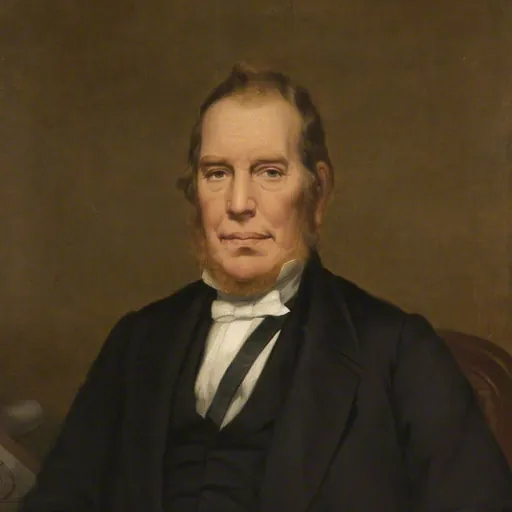
About Richard Roberts
Lived 1789 – 1864 (aged 74). Richard Roberts was a British engineer and inventor, known for Machine tool.
Richard Roberts (22 April 1789 – 11 March 1864) was a Welsh patternmaker and engineer whose development of high-precision machine tools contributed to the birth of production engineering and mass production.
Early life Roberts was born at Llanymynech, Powys, on the border between England and Wales. He was the son of William Roberts, a shoemaker who also kept the New Bridge tollgate. Roberts was educated by the parish priest and early found employment with a boatman on the Ellesmere Canal and later at the local limestone quarries. He received some instruction in drawing from Robert Baugh, a road surveyor, who was working under Thomas Telford.
By 1816, when defeat of Napoleon had removed the threat of the militia, it was safe for him to return north, he had set up at Manchester as a "turner of plain and eccentric work at No 15 Deans Gate". The lathe was upstairs in a bedroom, driven by a big wheel in the basement turned by his wife. Roberts soon moved into New Market Buildings at Pool Fold, and was described as a "Lathe and Tool Maker".
Roberts was elected to membership of the Manchester Literary and Philosophical Society on 18 January 1823. He was, with other members of the Society, a founder of The Mechanics' Institute in Manchester.
Machine tools Roberts built a range of machine tools, some to his own design, the first being a gear-cutting machine. For checking the dimensions of the gears he adapted the sector, which he developed for sale to other engineers. Roberts adopted rotary cutters, which he had seen used at Maudslays. This is one of the earliest records of a milling cutter used in engineering. In 1816 he made the first reliable wet gas meter. This was made entirely of iron and being precision-made was able to operate at high speed. They were turned out at the rate of 4,000 per year by 1825. In 1824 he invented his most famous machine, the self-acting spinning mule, and patented it in March 1825.
Sharp, Roberts & Co. When developing his textiles machines, Roberts took as partners Thomas Sharp, an iron merchant, and his brother John Sharp, Robert Chapman, Thomas Jones Wilkinson and James Hill. They formed two firms, Sharp Hill & Co and Roberts, Hills & Co, and in May 1826 these were amalgamated to form Sharp, Roberts & Co. The firm later became well known for making locomotives. In 1834 Charles Beyer joined the firm and contributed to its success in locomotive building as Roberts soon delegated most of the locomotive design work to Beyer.
Roberts was a prolific inventor and manufacturer, ranging over turret clock-making, to road vehicles, to iron ship building, to a punching machine, operating on the same system as the Jacquard loom, for punching the rivet holes in the iron plates making up the railway bridge over the river Conwy in North Wales.
His Alpha turret clock won a prize medal at the Great Exhibition of 1851. He was not a particularly successful businessman, and Sharp, Roberts & Co. closed in June 1852 (by which time the more successful Sharp, Stewart and Company were formed).
Death and legacy Roberts continued as a consulting engineer and inventor until his death, taking out 18 patents. In 1860, aged 71, he moved to London, where he became financially distressed. Various friends, almost all engineers, raised a fund to help him, but he died in his daughter's arms in London on 11 March 1864, aged 74. He was buried at Kensal Green Cemetery, London. His daughter later received a civil list pension in recognition of her father's achievements.
He has been described as the most important British mechanical engineer of the 19th century. According to biographer Richard Leslie Hills, his main contribution was the introduction of improved machine tools, without which high standards of accuracy could not be achieved. This laid the foundation of production engineering as we know it today, leading to the interchangeability of standard parts and mass production. The Roberts mechanism, a linkage for generating approximate straight-line movement, is named after him.
Don’t just read it —
keep it.
Full-length biographies made to live with: read them, listen on the way to work, watch them tonight.
- E-book
- Audio
- Video
Instant download · yours to keep · every purchase keeps this site free
Important facts
People in Richard Roberts's life
Named in this biography and alive at the same time
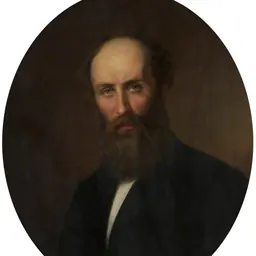



Related people
Same field, nearest in time
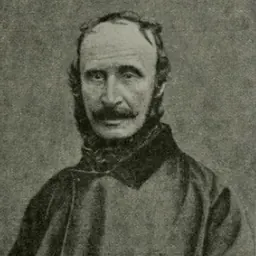
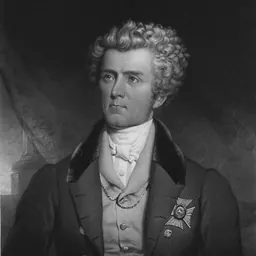

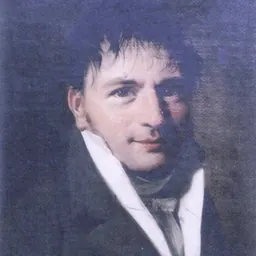
Contemporaries
People whose lives overlapped Richard Roberts's



Frequently asked questions
Who was Richard Roberts?
Welsh patternmaker and engineer (1789–1864)
When was Richard Roberts born?
Richard Roberts was born on 22 April 1789 in Llanymynech.
When did Richard Roberts die?
Richard Roberts died on 11 March 1864 in Adelphi.
What was Richard Roberts's occupation?
Richard Roberts was an engineer and inventor.
What was Richard Roberts known for?
Richard Roberts was known for Machine tool.
What nationality was Richard Roberts?
Richard Roberts was British.
Sources & further reading
· DBpedia: Richard Roberts (engineer)
Cite this page
APA: Biography.guide. (2026). Richard Roberts. https://biography.guide/richard-roberts-engineer/
MLA: "Richard Roberts." Biography.guide, https://biography.guide/richard-roberts-engineer/.
Chicago: "Richard Roberts." Biography.guide. https://biography.guide/richard-roberts-engineer/.
Data last updated: 2026-09-22 · Spot an error? Report a correction.
Page generated 2026-09-27 05:10 UTC