
About John Sharp
Lived 1828 – 1919 (aged 90–91). John Sharp was a New Zealand politician.
John Sharp (1828 – 4 June 1919) was a 19th-century Member of Parliament from Nelson, New Zealand and Mayor of Nelson.
Early life Sharp was born in Maidstone, Kent, England, in 1828. He was educated at Chatham House College, Ramsgate, for the Navy for four years. However, he joined the merchant service. He was an honorary member of Lodge Southern Star, No. 735, E.C., of the New Zealand Freemasons.
The house at 193 Milton Street, was named "Fellworth" after an old English family residence. It was constructed from Rimu, Totara, Matai, and Kauri timber, had an English slate tile roof, and African back basalt steps at its main entrance. Following Sharp's death there on 4 June 1919, the house was sold to the Cawthron Trust Board. From 1920 to 1970 the house was transformed into a series of labs, a library, and a museum. It is now privately owned.
Political life Provincial Council Sharp was representative for Waimea East for two years and then representative for Amuri. He held the position of Provincial Treasurer for three years. During Sharp's term in Parliament he enabled Nelson to purchase from the Government the Nelson waterworks and gasworks. The Government had taken these over when the provinces were abolished.
Mayor Sharp was the Mayor of Nelson from 1887 until 1890. He was first elected to replace Charles Fell who had resigned.
Militia When the war broke out in the North in 1845, and after the destruction of Kororaraka the Governor, Captain FitzRoy, ordered the militia to be called out in Wellington, New Plymouth and Nelson A hundred men were to be balloted for in Nelson and divided into two companies of fifty each.
No 1 Company was under Captain Dr Greenwood, Lieutenant Dr Renwick, Ensign Charles Thorpe of Motueka, and Sergeant, Gibson. No 2 Company was under Captain Dr Monro, Lieutenant, Dillon Bell, Ensign A.L.G. Campbell and Sergeant, Plumbridge. The Nelson militia Adjutant was Major Newcombe, a British Army officer and Quarter-master, Mr Seymour.
Sharp was one of those balloted. He was placed in No 2 Company. Sharp was made a Corporal because he had had four years drill at college. The militia had a fife and drum band. Its leader was Knapp, father of Constable Knapp, of Spring Grove. The drummer was FitzRoy, an old drummer of the Life Guards.
The reveille was at 5.30 am and drill twice daily from 6 am to 8 am and 5 pm to 6 pm so that the men could attend work during the day. The militia later became the Nelson Rifles. Sharp was one of its Captains and later an honorary member.
He was also a volunteer firefighter, a member of the Nelson Bowling Club, and had the reputation as an excellent cricketer.
Don’t just read it —
keep it.
Full-length biographies made to live with: read them, listen on the way to work, watch them tonight.
- E-book
- Audio
- Video
Instant download · yours to keep · every purchase keeps this site free
Important facts
People in John Sharp's life
Named in this biography and alive at the same time


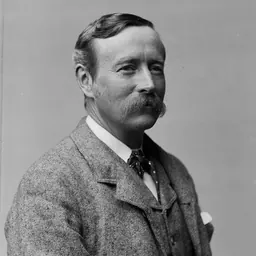
Related people
Same field, nearest in time





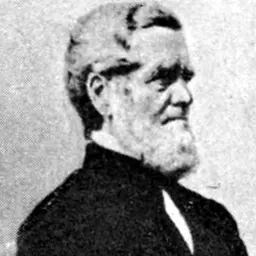
Contemporaries
People whose lives overlapped John Sharp's





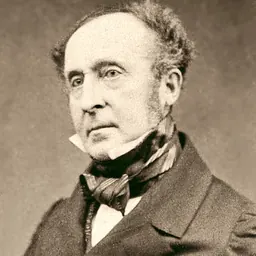
Frequently asked questions
Who was John Sharp?
New Zealand politician
When was John Sharp born?
John Sharp was born in 1828.
When did John Sharp die?
John Sharp died on 4 June 1919.
What was John Sharp's occupation?
John Sharp was a politician.
What nationality was John Sharp?
John Sharp was New Zealand.
Sources & further reading
· DBpedia: John Sharp (New Zealand politician)
Cite this page
APA: Biography.guide. (2026). John Sharp. https://biography.guide/john-sharp-politician-1828/
MLA: "John Sharp." Biography.guide, https://biography.guide/john-sharp-politician-1828/.
Chicago: "John Sharp." Biography.guide. https://biography.guide/john-sharp-politician-1828/.
Data last updated: 2026-09-20 · Spot an error? Report a correction.
Page generated 2026-09-27 05:26 UTC