
About Richard Rado
Lived 1906 – 1989 (aged 83). Richard Rado was a German and British mathematician and university teacher, known for Erdős–Ko–Rado theorem, Erdős–Rado theorem and Milner–Rado paradox.
Richard Rado FRS He earned two PhDs: in 1933 from the University of Berlin, and in 1935 from the University of Cambridge. He was interviewed in Berlin by Lord Cherwell for a scholarship given by the chemist Sir Robert Mond which provided financial support to study at Cambridge. After he was awarded the scholarship, Rado and his wife left for the UK in 1933. He was appointed Professor of Mathematics at the University of Reading in 1954 and remained there until he retired in 1971.
Contributions Rado made contributions in combinatorics and graph theory including 18 papers with Paul Erdős.
In graph theory, the Rado graph, a countably infinite graph containing all countably infinite graphs as induced subgraphs, is named after Rado. He rediscovered it in 1964 after previous works on the same graph by Wilhelm Ackermann, Erdős, and Alfréd Rényi.
In combinatorial set theory, the Erdős–Rado theorem extends Ramsey's theorem to infinite sets. It was published by Erdős and Rado in 1956. Rado's theorem is another Ramsey-theoretic result concerning systems of linear equations, proved by Rado in his thesis. The Milner–Rado paradox, also in set theory, states the existence of a partition of an ordinal into subsets of small order-type; it was published by Rado and E. C. Milner in 1965.
The Erdős–Ko–Rado theorem can be described either in terms of set systems or hypergraphs. It gives an upper bound on the number of sets in a family of finite sets, all the same size, that all intersect each other. Rado published it with Erdős and Chao Ko in 1961, but according to Erdős it was originally formulated in 1938.
In matroid theory, Rado proved a fundamental result of transversal theory by generalizing the Marriage Theorem for matchings between sets S and X to the case where X has a matroid structure and matchings must match to an independent set in the matroid on X.
The Klarner–Rado Sequence is named after Rado and David A. Klarner.
Awards and honours In 1972, Rado was awarded the Senior Berwick Prize.
Don’t just read it —
keep it.
Full-length biographies made to live with: read them, listen on the way to work, watch them tonight.
- E-book
- Audio
- Video
Instant download · yours to keep · every purchase keeps this site free
Important facts
People in Richard Rado's life
Named in this biography and alive at the same time


Related people
Same field, nearest in time
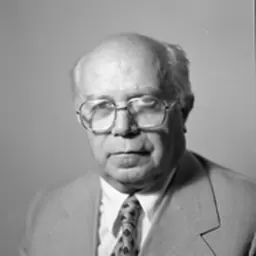
Contemporaries
People whose lives overlapped Richard Rado's
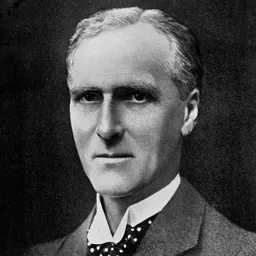
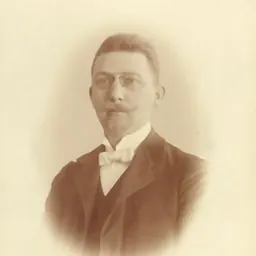
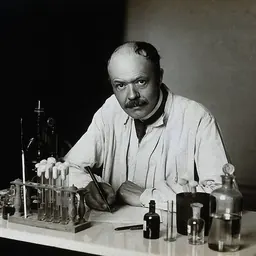
Frequently asked questions
Who was Richard Rado?
mathematician (1906–1989)
When was Richard Rado born?
Richard Rado was born on 28 April 1906 in Berlin.
When did Richard Rado die?
Richard Rado died on 23 December 1989 in Reading, Henley-on-Thames.
What was Richard Rado's occupation?
Richard Rado was a mathematician and university teacher.
What was Richard Rado known for?
Richard Rado was known for Erdős–Ko–Rado theorem, Erdős–Rado theorem and Milner–Rado paradox.
What nationality was Richard Rado?
Richard Rado was German and British.
Sources & further reading
Cite this page
APA: Biography.guide. (2026). Richard Rado. https://biography.guide/richard-rado/
MLA: "Richard Rado." Biography.guide, https://biography.guide/richard-rado/.
Chicago: "Richard Rado." Biography.guide. https://biography.guide/richard-rado/.
Data last updated: 2026-09-20 · Spot an error? Report a correction.
Page generated 2026-09-27 05:25 UTC