
About Richard M. Upjohn
Lived 1828 – 1903 (aged 74). Richard M. Upjohn was an American architect.
Richard Michell Upjohn, FAIA, (March 7, 1828 – March 3, 1903) was an American architect, co-founder and president of the American Institute of Architects.
Early life and career Upjohn was born on March 7, 1828, in Shaftesbury, Dorsetshire, England and his family emigrated to the United States in 1829. He was the son of the famous architect Richard Upjohn (1802–1878) and Elizabeth (née Parry) Upjohn (1803–1882).
In 1853, at eighteen years old, he joined his father's New York architectural firm to study architecture and later became his father's partner. The earliest building that architectural scholars credit to him alone is Madison Square Presbyterian Church in New York City, built from 1853 to 1854. He became best known, much like his father, for his High Gothic Revival style of architecture. He, again like his father, was a founding member and president of the American Institute of Architects. A number of buildings that he designed are now listed on the National Register of Historic Places (NRHP). Four are listed as National Historic Landmarks.
Personal life On October 1, 1856, Upjohn was married to Emma Degen Tyng (1836–1906). Together, they were the parents of three daughters and five sons, including Hobart Upjohn, who practiced as a civil engineer and architect. in Brooklyn, New York. He was buried in Green-Wood Cemetery, for which he and his father had done design work many years before.
Works with Richard Upjohn St. John Chrysostom Church (1851) in Delafield, Wisconsin, on the NRHP St. Peter's Episcopal Church (1859) in Albany, New York, a National Historic Landmark Trinity-St. Paul's Episcopal Church (1862–63) in New Rochelle, New York, on the NRHP All Saint's Memorial Church (1864) in Navesink, New Jersey, a National Historic Landmark The third Saint Thomas Church (1865–70) in New York City, destroyed by fire in 1905 Green-Wood Cemetery (1860s) in Brooklyn, New York, a National Historic Landmark Edwin A. Stevens Hall (1871) in Hoboken, New Jersey, on the NRHP St. Paul's Episcopal Church (1871–75) in Selma, Alabama, on the NRHP
Works as Richard M. Upjohn Individual projects include: Madison Square Presbyterian Church (1853–54), at Madison Avenue and 24th Street, New York City, demolished for Stanford White's Madison Square Presbyterian Church (1906) St. James Episcopal Church (1855) in La Grange, Texas, on the NRHP St. Luke's Church (1857) in Clermont, New York, on the NRHP Christ Church Episcopal (1866) in Riverdale, New York, on the NRHP St. Alban's Episcopal Church (1865) in Staten Island, New York, on the NRHP Church of the Covenant (1865–67) in Boston, Massachusetts St. Paul's Church (1866) in Brooklyn, New York, on the NRHP St. John's Protestant Episcopal Church (1869) in Stamford, Connecticut, on the NRHP Trinity Church (1871) in Thomaston, Connecticut, on the NRHP First National Bank (1871) in Salt Lake City, Utah, on the NRHP Connecticut State Capitol (1871–1878) in Hartford, Connecticut, a National Historic Landmark Saint Andrew's Episcopal Church (1873) in Rochester, New York, on the NRHP Fay Club (1883) in Fitchburg, Massachusetts, on the NRHP Church of St. Joseph of Arimathea (1883) in Greenburgh, New York, on the NRHP St. Mark's Episcopal Church (1886) in Augusta, Maine, on the NRHP St. Margaret of Antioch Episcopal Church (1892) in Staatsburg, New York. St. George's Protestant Episcopal Church (1887) in Brooklyn, New York, on the NRHP St. Peter's Episcopal Church (1891) in Peekskill, New York, on the NRHP Church of St. John in the Wilderness (1852) in Copake Falls, New York, on the NRHP St. Barnabas Episcopal Church (1883) in Deland, Florida.
Don’t just read it —
keep it.
Full-length biographies made to live with: read them, listen on the way to work, watch them tonight.
- E-book
- Audio
- Video
Instant download · yours to keep · every purchase keeps this site free
Important facts
People in Richard M. Upjohn's life
Named in this biography and alive at the same time

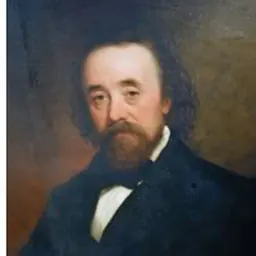
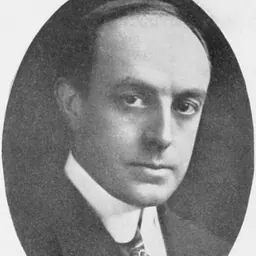


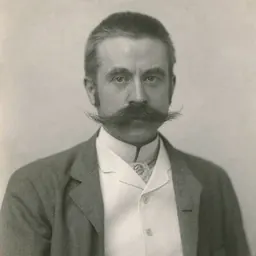
Related people
Same field, nearest in time

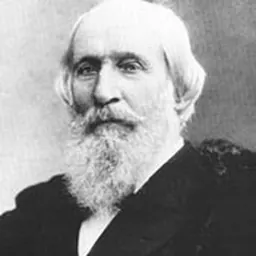
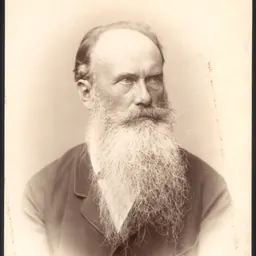


Contemporaries
People whose lives overlapped Richard M. Upjohn's




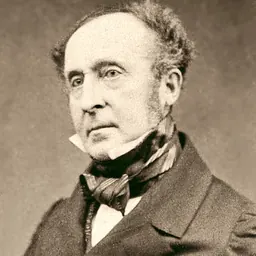
Frequently asked questions
Who was Richard M. Upjohn?
American architect (1828–1903)
When was Richard M. Upjohn born?
Richard M. Upjohn was born on 7 March 1828 in Shaftesbury.
When did Richard M. Upjohn die?
Richard M. Upjohn died on 3 March 1903 in Brooklyn.
What was Richard M. Upjohn's occupation?
Richard M. Upjohn was an architect.
What nationality was Richard M. Upjohn?
Richard M. Upjohn was American.
Sources & further reading
· Wikipedia: Richard M. Upjohn
Cite this page
APA: Biography.guide. (2026). Richard M. Upjohn. https://biography.guide/richard-m-upjohn/
MLA: "Richard M. Upjohn." Biography.guide, https://biography.guide/richard-m-upjohn/.
Chicago: "Richard M. Upjohn." Biography.guide. https://biography.guide/richard-m-upjohn/.
Data last updated: 2026-09-20 · Spot an error? Report a correction.
Page generated 2026-09-27 05:33 UTC