
About Richard Lucae
Lived 1829 – 1877 (aged 48). Richard Lucae was a German architect.
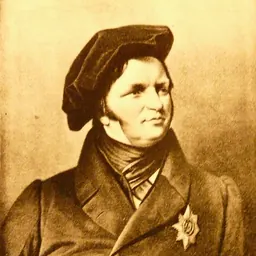
Richard Lucae (12 April 1829 – 26 November 1877; full name: Johannes Theodor Volcmar Richard Lucae) was a German architect and from 1873 director of the Berliner Bauakademie.
Early life Richard Lucae came from an old Berlin pharmacy family. His father was Dr. Phil. h.c. August Friedrich Theodor Lucae (1800 – 1848), pharmacist and owner of the . His mother was Caroline Lucae, born Wendel (1803 – 1870), daughter of Johann Georg Wendel (1754 – 1834), a professor of drawing arts at the Gymnasium in Erfurt. One of Richard's siblings was noted otologist Dr. August Lucae. Richard's early diverse artistic inclinations were greatly influenced by his uncle, August Soller, a Prussian government construction officer and an important architect of the Schinkel school.
Education Lucae received training as a surveyor 1847–49. In 1850 he began studies in plasterwork at the Bauakademie at the instigation of Johann Gottfried Schadow. He could not pass the entrance examination, so Schadow asked him to simply paint a human ear from memory. When Lucae was able to do it with ease, Schadow admitted him to the class contrary to all the rules. Lucae completed his studies in 1852 and then received practical experience in the construction of Cologne Cathedral from 1853 to 1855. He then returned to the for advanced studies (1855–1859), taught there from 1859 onward, joined the academic committee in 1863, and in 1873 became its director. Its walls, enlivened with sculpted window aediculae, also marked a new period in Berlin's architectural history. In 1874 Lucae began plans for the complete reconstruction of the interiors of the Bauakademie itself, which were complete in 1875.
In 1876 the new German government initiated plans to create the Königlich Technische Hochschule Charlottenburg in a merger of the and the (Royal Trade Academy). Richard Lucae was called upon to design the new main building for the university, at that time the largest construction project in Berlin. He completed the grand Neo-Renaissance plans shortly before his death, with architect Friedrich Hitzig and master builder Julius Raschdorff making alterations during execution of the project. The new university opened in 1879.
Other work Lucae was a prolific lecturer and writer. He became a critic of the existing architectural styles and deplored housing of the era for its lack of natural lighting, ventilation, and functionality. In particular he was fascinated by the new iron and glass buildings exemplified by the Crystal Palace. In contrast to conservative architects of the day, Lucae embraced this technology as a new way of defining architectural space.
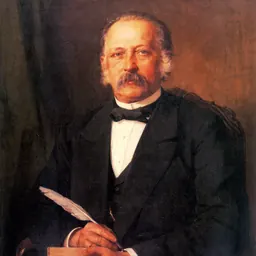
By 1877 he was also serving as a Privy Councillor in the Prussian government's Technical Construction Department and was a member of both the Prussian Academy of Arts and the Art Association . He was friends with Theodor Fontane and F. Kugler through his membership in the literary club , which influenced literary life in Berlin for more than seventy years.
One of Lucae's students at the Bauakademie was Alfred Messel, who became one of the most well-known German architects at the turn of the 20th century He created new architectural style which bridged the transition from historicism to modernism, reflected in his designs for such buildings as the Pergamon Museum and Wertheim department store.
Legacy Several of Richard Lucae's buildings went on to lead interesting lives in the history of Germany. Many were subsequently damaged or destroyed during World War II, with a few repaired or restored. His most notable buildings and their current status include:
Alte Oper and the Lucae Fountain, Frankfurt, destroyed in 1944 and rebuilt in 1981. Full-sized canvas model of the Bauakademie in 2013. Reconstruction begins 2017. The parades in front of the Institute for Sexual Research on 6 May 1933, before hauling out the contents to be burned in the streets. Post-war ruins of the central facade of Technische Universität Berlin, 1951. All of the private homes and villas Lucae built in Berlin were destroyed. Reconstruction proceeded slowly and the restored, modernized building was reopened on 28 August 1981 with a gala concert featuring Gustav Mahler's Symphony No. 8 attended by the President of Germany. On 11 November 2016 the released EUR 62 million to reconstruct the Bauakademie. Borsig Palace never served as a residence for Albert Borsig since he died shortly after its completion. By 1904 it was the headquarters of the Prussian Mortgage Bank . The German government purchased the palace in 1933 to house the offices of Vice-Chancellor of Germany Franz von Papen. One year later, dramatic scenes relating to the Night of the Long Knives played out in its rooms. The building became the new headquarters for the SA (Sturmabteilung) and in 1938 it was incorporated into Adolf Hitler's New Reich Chancellery by Albert Speer. The entire complex was destroyed during the Battle of Berlin in 1945 and the ruins were demolished by Soviet occupation forces in 1947. Villa Joachim was rededicated as the new home of Magnus Hirschfeld’s Institute for Sexual Research on 6 July 1919. It was the first, and until after the war, the only such institution of its kind. The Institute was visited by 20,000 people each year and contained a unique library on sexuality. In May 1933 the attacked the Institute, hauling the library and archives out to be burned in the streets. The building was then seized by the Nazi government for its own uses. It was destroyed in a bombing raid on the night of 22–23 November 1943, and the rubble was cleared away in 1950. The Technische Hochschule Berlin was also severely damaged in the bombing of 22–23 November 1943. The central northern wing was a ruin and replaced by a flat office block in the 1960s. The rear wings and internal courtyards were externally restored to their original appearance. The tombstone Richard Lucae designed for himself and his family in the Stahnsdorf South-Western Cemetery had been swept away by 1946. In 2012 a new memorial to him and his wife was dedicated by the non-profit society "Friends of the Ivy", funded by the International Building Academy Berlin, the Technische Universität Berlin Museum of Architecture, and others. The new memorial stone is located on his original grave.
List of works 1856–58: Church of the Resurrection, Katowice (extant) 1861–62: Villa Heckmann, Berlin (destroyed) 1861–63: Villa Stoltmann, Berlin (destroyed) 1868–70: Villa Henschel, Kassel (demolished during the depression, 1932) 1870–71: Villa Joseph Joachim, Berlin (damaged 1945, demolished 1950) 1872–73: Home of Dr. August Lucae, Lützowplatz, Berlin (destroyed 1943) 1872–76: State Theatre in Magdeburg (destroyed 1944) 1873–74: Villa von Heyden, Berlin 1873–74: Villa Werner Siemens, Berlin-Charlottenburg (destroyed 1944) 1873–80: Alte Oper, Frankfurt am Main (destroyed 1944, rebuilt 1981) 1874–75: Reconstruction of the Bauakademie, Berlin (damaged 1943, partially restored 1951, demolished 1962) 1875–78: Borsig Palace at Voßstraße 1, Berlin (damaged 1945, demolished 1947) 1875–78: Extension for the Prussian Ministry of Public Works, Voßstraße 35, Berlin (destroyed 1944) 1876–77: Technische Hochschule Charlottenburg (damaged 1943, partially rebuilt 1965) Chemistry Laboratory, Gewerbeakademie, Berlin (destroyed) Schloss von Homeyer, Ranzin Schloss Kuhnau Schloss Schönfeld
Writings Lucae, Richard (1869): "About the Power of Space in Architecture." Zeitschrift für Bauwesen (Journal of Construction). 19. Berlin: Ernst and Korn. pp. 295–306.
Don’t just read it —
keep it.
Full-length biographies made to live with: read them, listen on the way to work, watch them tonight.
- E-book
- Audio
- Video
Instant download · yours to keep · every purchase keeps this site free
Important facts
People in Richard Lucae's life
Named in this biography and alive at the same time





Related people
Same field, nearest in time

Contemporaries
People whose lives overlapped Richard Lucae's




Frequently asked questions
Who was Richard Lucae?
German architect (1829–1877)
When was Richard Lucae born?
Richard Lucae was born on 12 April 1829 in Berlin.
When did Richard Lucae die?
Richard Lucae died on 26 November 1877 in Berlin.
What was Richard Lucae's occupation?
Richard Lucae was an architect.
What nationality was Richard Lucae?
Richard Lucae was German.
Sources & further reading
Cite this page
APA: Biography.guide. (2026). Richard Lucae. https://biography.guide/richard-lucae/
MLA: "Richard Lucae." Biography.guide, https://biography.guide/richard-lucae/.
Chicago: "Richard Lucae." Biography.guide. https://biography.guide/richard-lucae/.
Data last updated: 2026-09-20 · Spot an error? Report a correction.
Page generated 2026-09-27 05:28 UTC