
About Richard Langhorne
Lived 1624 – 1679 (aged 54–55). Richard Langhorne was an English barrister.
Richard Langhorne (c. 1624 – 14 July 1679) was an English barrister and Catholic martyr, who was executed on a false charge of treason as part of the fabricated Popish Plot. He fell under suspicion because he was a Roman Catholic and because he had acted as legal adviser to the Jesuits at a time of acute anti-Catholic hysteria.
Background and early life He was the third son of William Langhorne, a barrister, and his wife Lettice Needham, of Little Wymondley in Hertfordshire. He was admitted to the Inner Temple in May 1647 and called to the bar in November 1654. He was a Roman Catholic, and provided legal and financial advice for the Jesuits. He was forced to defend himself, as a person charged with treason had no right then to defence counsel (this rule was not changed until the passage of the Treason Act 1695). His main defence consisted of an attack on the character of the Crown's principal witnesses, Oates and Bedloe, but since the judges were well aware of the deplorable past lives of both men, this seems to have made little impression. He also called a number of students from St Omer to prove that Oates had been at the college on the crucial dates when he claimed to be in London, but the public mood was so hostile to Catholics that the witnesses were barely able to make themselves heard over the roar of the crowd, and some of them were assaulted as they left the Court. Ironically, some of the same witnesses appeared for the prosecution at Oates' own trial for perjury in 1685, where the crowd treated them courteously, and the jury was told to weigh their evidence with the greatest seriousness.
William Scroggs, the Lord Chief Justice, although violently prejudiced against Catholic priests, was relatively tolerant of Catholic laymen; his summing up was reasonably fair by the standards of the time, and he did warn the jury that on no account should an innocent man's life be taken away. Nonetheless, Langhorne was found guilty of High Treason. He also wrote a lengthy religious meditation in verse, which was later published.
There is a stained glass window of Langhorne in Our Lady of Lourdes in Harpenden, Hertfordshire.
Don’t just read it —
keep it.
Full-length biographies made to live with: read them, listen on the way to work, watch them tonight.
- E-book
- Audio
- Video
Instant download · yours to keep · every purchase keeps this site free
Important facts
People in Richard Langhorne's life
Named in this biography and alive at the same time
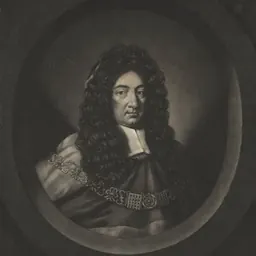
Related people
Same field, nearest in time
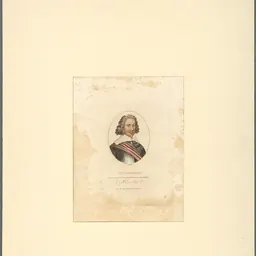


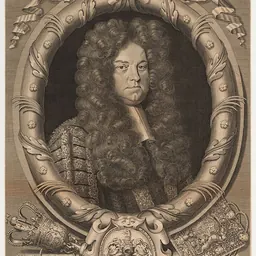


Contemporaries
People whose lives overlapped Richard Langhorne's





Frequently asked questions
Who was Richard Langhorne?
English lawyer and Roman Catholic martyr
When was Richard Langhorne born?
Richard Langhorne was born in 1624 in Little Wymondley.
When did Richard Langhorne die?
Richard Langhorne died on 14 July 1679 in Tyburn.
What was Richard Langhorne's occupation?
Richard Langhorne was a barrister.
What nationality was Richard Langhorne?
Richard Langhorne was English.
Sources & further reading
· Wikipedia: Richard Langhorne
Cite this page
APA: Biography.guide. (2026). Richard Langhorne. https://biography.guide/richard-langhorne/
MLA: "Richard Langhorne." Biography.guide, https://biography.guide/richard-langhorne/.
Chicago: "Richard Langhorne." Biography.guide. https://biography.guide/richard-langhorne/.
Data last updated: 2026-09-20 · Spot an error? Report a correction.
Page generated 2026-09-27 05:05 UTC