
About Jerome Alexander
Lived 1590 – 1670 (aged 79–80). Jerome Alexander was a barrister, judge and politician.
Sir Jerome Alexander (c.1585–1670) was an English-born barrister, judge and politician, who spent much of his career in Ireland (after he had been professionally ruined in England), and became a substantial Irish landowner. He was a noted benefactor of Trinity College Dublin. As a judge, he was so ruthless in securing guilty verdicts in criminal cases, and in imposing the death penalty on the guilty party, that for many years after his death "to be Alexandered" was an Irish synonym for being hanged.
Early career
His precise date of birth is uncertain, but he was stated in 1637 to be several years older than Sir Maurice Eustace, who was born in the early 1590s. He was born at Gressenhall, Norfolk, the eldest son of Jerome Alexander senior of Thorpland, an employee of Thomas Howard, 21st Earl of Arundel; the younger Jerome was also employed for a time as steward and bailiff to the Earl, and remained on friendly terms with him in later life. Elrington Ball states that the Alexander family were of Jewish origin. He was educated at Aylsham before attending Gonville and Caius College, Cambridge, where he matriculated in 1609. He entered Furnivall's Inn and then proceeded to Lincoln's Inn in 1617, and was called to the bar in 1623.
The ostensible reason was that only Sir Maurice Eustace, the King's Serjeant, was qualified to act as an extra judge, but Strafford's references to Eustace as a "man of integrity" can also be read as an attack on Alexander's character. He refused him leave to go to England, and when Alexander went anyway he was imprisoned in the Fleet Prison, nor following his release was he able to return to Ireland until after Strafford's downfall. Given the enmity between the two men, it is not surprising that Alexander was active in the impeachment and subsequent attainder of Strafford in 1641.
However, Alexander's attitude to Roman Catholics was perhaps more complex than this: he was, for example, on friendly terms with the well-known Catholic barrister Patrick D'Arcy and reportedly offered to act as D'Arcy's second in the abortive duel with Sir William Aston. Through marriage Alexander himself had Catholic connections. His wife, Elizabeth Havers, belonged to a staunchly Roman Catholic family. Her ancestor, Mr Havers of Thelton (or Thelveton) Hall, built a chapel on the grounds of Thelton Hall which became the hub of the Catholic community in and around Diss, Norfolk, before, during and after the period of the Penal Laws. Elizabeth's elder brother William Havers, who inherited Thelton in 1651, and who died in 1670, was a known recusant. This suggests that Alexander, like many Protestants of his time, was prepared to turn a blind eye to recusancy when it was practised by his own friends or relatives, and even to marry into an openly Catholic family himself.
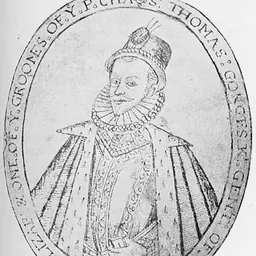
"Alexandered" The Duke of Ormonde, who was a merciful man by the standards of the time, is known to have disapproved of Alexander's notorious severity in criminal trials, and this is said to have ended their friendship. This attitude was in notable contrast to the conduct of most other Irish judges of the time who were, like Ormonde, inclined to clemency. Where Ormonde would always reprieve a man where he could, Alexander, it was said, would hang as many men as he could: on one occasion he sentenced fourteen men to death at a single assize, though it is not clear how many of them were actually hanged. His reputation for severity became such that for many years after his death "to be Alexandered" was widely used in Ireland as a synonym for "to be hanged". the King's Inns, of which he was a senior member, had no facilities for storing books at the time, and had to wait till 1788 for the foundation of its own library. His friend, Sir Edward Massey, received many of his personal valuables and curiosities, such as "my cane with the silver head of a rhinoceros". a staunch Catholic and the daughter of John Havers of Shelfhanger, Norfolk, a noted recusant (who, like Alexander's father, was an employee of the Earl of Arundel), and his wife, Elizabeth Tindal, of Banham. Elizabeth, Lady Alexander, died in 1667. They had sixteen children but only three daughters survived their father: Jeromina, who married Humphrey Langham, and had at least five children; Rose, who married firstly Roger Mallock of Cockington, Devon, and secondly Thomas Gorges, Deputy Governor of Maine, and died in April 1671, leaving a son and a daughter; Elizabeth, who heeded her father's warning that he would disinherit her if she married an Irishman: her (English) husband was Sir William Barker (died c.1719), first of the Barker baronets of Bocking Hall, Essex. She died in 1702, leaving issue, including Sir William Barker, 2nd Baronet.
Personality
Elrington Ball describes Alexander as a "strongly complex character".
Published works A Breviate of a sentence given against Jerome Alexander, utter-barrister of Lincoln's Inn, in the Court of Star Chamber... with exceptions taken to the said sentence to unfold the iniquity thereof. Published in London in 1644.
Don’t just read it —
keep it.
Full-length biographies made to live with: read them, listen on the way to work, watch them tonight.
- E-book
- Audio
- Video
Instant download · yours to keep · every purchase keeps this site free
Important facts
People in Jerome Alexander's life
Named in this biography and alive at the same time




Related people
Same field, nearest in time




Contemporaries
People whose lives overlapped Jerome Alexander's




Frequently asked questions
Who was Jerome Alexander?
Judge and politician
When was Jerome Alexander born?
Jerome Alexander was born in 1590 in Norfolk.
When did Jerome Alexander die?
Jerome Alexander died in 1670 in Dublin.
What was Jerome Alexander's occupation?
Jerome Alexander was a barrister, judge and politician.
Sources & further reading
Cite this page
APA: Biography.guide. (2026). Jerome Alexander. https://biography.guide/jerome-alexander/
MLA: "Jerome Alexander." Biography.guide, https://biography.guide/jerome-alexander/.
Chicago: "Jerome Alexander." Biography.guide. https://biography.guide/jerome-alexander/.
Data last updated: 2026-09-20 · Spot an error? Report a correction.
Page generated 2026-09-27 05:07 UTC