
About Richard Evans Schultes
Lived 1915 – 2001 (aged 86). Richard Evans Schultes was an American anthropologist, botanist, ethnobotanist, botanical collector, scientific collector and biologist, known for Curare, Indigenous peoples of the Americas and Psychedelics, dissociatives and deliriants.
Richard Evans Schultes (SHULL-tees; January 12, 1915 – April 10, 2001) was an American biologist, considered to be the father of modern ethnobotany. He is known for his studies of the uses of plants by indigenous peoples, especially the indigenous peoples of the Americas. He worked on entheogenic or hallucinogenic plants, particularly in Mexico and the Amazon, involving lifelong collaborations with chemists. He had charismatic influence as an educator at Harvard University; several of his students and colleagues went on to write popular books and assume influential positions in museums, botanical gardens, and popular culture.
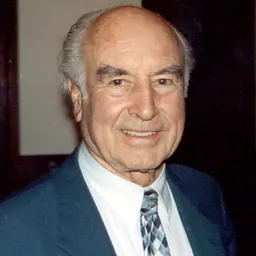
His book The Plants of the Gods: Their Sacred, Healing, and Hallucinogenic Powers (1979), co-authored with chemist Albert Hofmann, the discoverer of LSD, is considered his greatest popular work: it has never been out of print and was revised into an expanded second edition, based on a German translation by Christian Rätsch (1998), in 2001.
Early life and education Schultes was born in Boston, Massachusetts, on January 12, 1915. The son of a plumber, His interest in South America's rain forests traced back to his childhood: while he was bedridden, his parents read him excerpts of Notes of a Botanist on the Amazon and the Andes, by the 19th-century English botanist Richard Spruce. Ames became a mentor, and Schultes became an assistant in the Botanical Museum; his undergraduate senior thesis studied the ritual use of peyote cactus among the Kiowa of Oklahoma, obtaining a degree in biology in 1937. In his travels he lived with the indigenous peoples and viewed them with respect and felt that tribal chiefs were gentlemen; he understood the languages of the Witoto and Makuna peoples.
Influences
Schultes was led to study psychoactive drugs by Heinrich Kluver, a leading scholar of this subject (personal communication from Schultes). This interest evolved by way of Schultes' field observations on peyote, studying the peyote cult among the Plains Indians in his travels with Weston LaBarre in the early 1930s (in 1938, LaBarre based The Peyote Cult on these travels and observations).
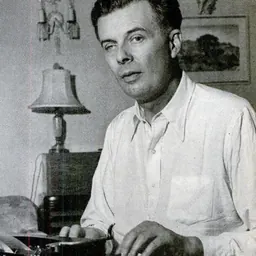
In Western culture, Schultes' discoveries influenced writers who considered hallucinogens as the gateways to self-discovery, such as Aldous Huxley, William Burroughs and Carlos Castaneda. Boyaca Cross (Cruz de Boyacá) 1986, highest award from the government of the Republic Of Colombia.
Schultes is one of the leading characters in the prestigious Colombian film El abrazo de la serpiente (Embrace of the Serpent) (2015), directed by Ciro Guerra and critically acclaimed. The film depicts Schultes' search for a mysterious plant through the Amazon jungle, and he was played by actor Brionne Davis. The film specifically credits both his diaries and those accounts of an earlier Amazonian explorer, the German scientist Theodor Koch-Grünberg.
In 1962, botanist Harold E. Moore published Resia, which is a genus of flowering plants from South America, in the family Gesneriaceae and named in his honour. Then in 1977, botanist Hunz. published Schultesianthus which is also a genus of flowering plants from South America, but belonging to the family Solanaceae and also named in Moore's honour.
Selected works
Don’t just read it —
keep it.
Full-length biographies made to live with: read them, listen on the way to work, watch them tonight.
- E-book
- Audio
- Video
Instant download · yours to keep · every purchase keeps this site free
Important facts
People in Richard Evans Schultes's life
Named in this biography and alive at the same time

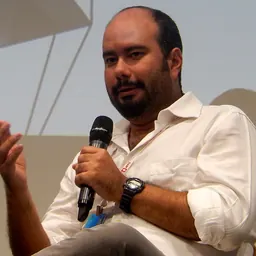

Related people
Same field, nearest in time


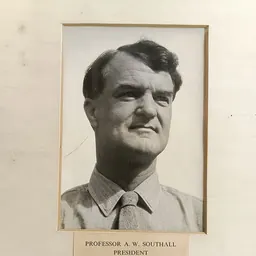
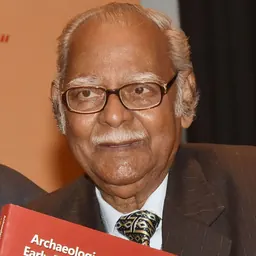

Contemporaries
People whose lives overlapped Richard Evans Schultes's

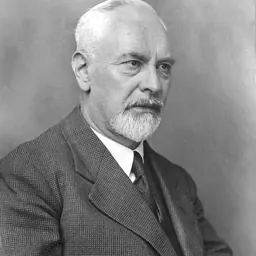



Frequently asked questions
Who was Richard Evans Schultes?
American ethnobotanist (1915-2001)
When was Richard Evans Schultes born?
Richard Evans Schultes was born on 12 January 1915 in Boston.
When did Richard Evans Schultes die?
Richard Evans Schultes died on 10 April 2001 in Boston.
What was Richard Evans Schultes's occupation?
Richard Evans Schultes was an anthropologist, botanist, ethnobotanist, botanical collector, scientific collector and biologist.
What was Richard Evans Schultes known for?
Richard Evans Schultes was known for Curare, Indigenous peoples of the Americas and Psychedelics, dissociatives and deliriants.
What nationality was Richard Evans Schultes?
Richard Evans Schultes was American.
Sources & further reading
· Wikipedia: Richard Evans Schultes
· DBpedia: Richard Evans Schultes
Cite this page
APA: Biography.guide. (2026). Richard Evans Schultes. https://biography.guide/richard-evans-schultes/
MLA: "Richard Evans Schultes." Biography.guide, https://biography.guide/richard-evans-schultes/.
Chicago: "Richard Evans Schultes." Biography.guide. https://biography.guide/richard-evans-schultes/.
Data last updated: 2026-09-20 · Spot an error? Report a correction.
Page generated 2026-09-27 05:19 UTC