
About Richard Bowen
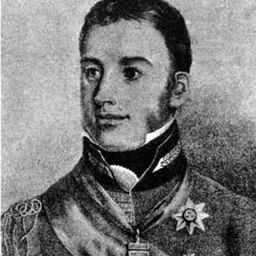
Lived 1761 – 1797 (aged 35–36). Richard Bowen was a British military officer.
Richard Bowen (1761 – 25 July 1797) was an officer of the Royal Navy who served during the American War of Independence and the French Revolutionary Wars. Bowen saw service with Horatio Nelson, and was killed fighting alongside him at the Battle of Santa Cruz de Tenerife.
Bowen was born into a naval family, and first saw service alongside several distinguished naval figures, including John Jervis, who would become a long-standing friend and patron to Bowen. Bowen rose to prominence after distinguishing himself in several actions, but was unable to gain a commission by the end of the war with America, and spent several years in the Caribbean, hoping to receive promotion. He took the opportunity to carry out a resupply mission to the colonies in Australia during the interwar years, a task he completed successfully, even though it involved a circumnavigation of the globe. Away from Britain for a considerable length of time while carrying this out, he found on his return that war had broken out with France. Reuniting with his old patron Jervis, Bowen returned to the Caribbean and after distinguishing himself in actions against the French colonies there, finally received his own commands. He followed Jervis to the Mediterranean and took part in several hard-fought frigate actions, and even went so far as to attack the Santísima Trinidad, the largest warship in the world at the time, in his 32-gun frigate. He was operating off Tenerife in 1797 when he came under the command of Rear-Admiral Horatio Nelson, who was quickly impressed by Bowen's zeal and ability. Bowen was given the task of leading the first wave of the assault on the town of Santa Cruz de Tenerife, but the attack went badly. The defenders poured grapeshot onto the attacking British, killing and wounding many, Bowen was killed while Nelson was badly wounded.
Bowen's body was recovered and buried at sea. His friends and relations pressured the authorities for the erection of a memorial in one of the main London churches, but their requests were turned down.
Family and early life Bowen was born in Ilfracombe, Devon in 1761. The Bowens were a seafaring family, with Richard's older brother James and two other siblings, George and Thomas, all serving in the navy. Richard went to sea at the age of thirteen, joining his father, who was captain of merchant ship. After two years with his father Richard joined his elder brother James' merchant ship and made trading voyages between England and Jamaica. He was at Jamaica in 1778 when news reached him of the outbreak of war with the American colonies. Caldwell and Bowen sailed to England in 1779, whereupon Caldwell was appointed to command the 50-gun . Finding her to be unready for sea, Bowen and a number of the officers from Emerald joined the guardship at the Nore.
Bowen served with Jervis aboard Foudroyant for several years. On 29 July 1781 Foudroyant was part of Vice-Admiral Sir George Darby's fleet when two French warships were sighted. The wind made prevented the British from approaching, causing Darby to order boats to tow into range. Bowen also received a sword from his friend Robert Calder. He went out to the West Indies on the advice of his brother James, and his patron Jervis, and with their recommendations he was able to secure the attention of the commander of the station Commodore Sir Peter Parker. Bowen's friend Robert Calder then requested his services aboard the 64-gun . Stately was paid off after the easing of tensions and Bowen applied to the Navy Board for a posting. Bowen set off on the voyage, dropping King and his family at Norfolk Island on the way, and sailed east past New Caledonia, the Isle of Pines and Terra Arsacides, a route never before sailed.
French Revolutionary Wars
Caribbean By the time of Bowen's arrival war had broken out between France and Britain. He was offered a chance to perform a similar to mission to his earlier voyages to the colonies in Australia, but turned in down in order to serve under Jervis, now commander-in-chief of an expedition to attack the French colonies in the Caribbean. Jervis placed Bowen in command of the guard and gunboats after the fleet's arrival at Fort de France Bay, and instructed him to prepare an assault on a large French frigate, the Bien Venu, chained to the walls of the fort protecting the city. The frigate was rumoured to hold a number of captured English prisoners, whom the French were threatening to kill by blowing up the frigate, should the British attempt to storm the fort.
Promotion Bowen received a mention in Jervis's despatches, where he was credited for convincing the commanders to carry out their assault on the fortified French positions. Bowen and the gunboats supported the landings, which resulted in a British victory. Bowen's former quarry, the Bien Venu, was captured and commissioned as under the command of Captain Robert Faulknor, who had distinguished himself in the battle while commanding . Faulknor was given command of Undaunted on 20 March 1794, the same day the Bowen was promoted to master and commander, and succeeded Faulknor in command of Zebra. Bowen was promoted to post-captain in April, and briefly took command of the 64-gun , before moving to the 32-gun . He was sent out in the Terpsichore to North America, where he learnt that , under Captain Sir Charles Knowles, was being blockaded in the Chesapeake by two French frigates. Bowen set out to relieve him, an act he accomplished on 17 May, when the two British ships escaped to sea. The French attempted to pursue, but broke off when the British offered battle. He received notes of praise from Rear-Admiral Charles Thompson and Vice-Admiral Benjamin Caldwell of the navy, and General Sir John Vaughan and Lieutenant-General Robert Prescott from the army. The wound however became dangerous in the Caribbean climate, and he was sent home with the despatches.
North Sea and Mediterranean
Gibraltar and Mahonesa Bowen soon recovered, and spent some time in the North Sea, until December 1795, when his old patron, Jervis, replaced Admiral William Hotham as commander of the Mediterranean Fleet. This was instantly met with a broadside, and a general action began. After an hour and forty minutes the frigate surrendered, and was discovered to be the Spanish Mahonesa. She was taken into service with the British as . Bowen received a piece of plate valued at 100 guineas.
Spanish ship and Vestale Bowen refitted Terpsichore and departed on another cruise, capturing several small vessels on 12 and 13 November, sending them to Gibraltar, and on 22 November he learned from an American brig that he had encountered off Cape St. Mary's, that a Spanish ship bound for Cádiz from Montevideo was in the area. Bad weather prevented Bowen from locating the Spanish vessel at first, and he also had to escape from a Spanish ship of the line that appeared and chased the Terpsichore for a while. The Spanish ship was found to be anchored in Cádiz, and at 10 am the next day Bowen entered the harbour, captured the ship and brought her out. She had lost her captain and 40 men killed, while her second captain and another 50 men were wounded. The Terpsichore had casualties of a quartermaster and three seamen killed, and nineteen wounded. After the frigates lost sight of the ship in bad weather, Bowen hurried to report the sighting to Jervis. While returning to his station he again fell in with the Santísima Trinidad, and determined to see if she would surrender to him. He opened fire on the massive Spanish vessel, at the time the world's largest warship, carrying 136-guns on four decks, over a hundred more guns than the Terpsichore.
The Spanish retreat Terpsichore was in harbour, tied alongside the Mole in late May, and taking advantage of her apparent unreadiness to put to sea, two Spanish frigates carrying troops and money, attempted to leave Algeciras on 29 May. Principe Fernando, sailing and towing her to sea while under fire from shore batteries for two hours.
Santa Cruz and death Bowen took part in the first bombardment of Santa Cruz de Tenerife on 5 July, and worked with Rear-Admiral Horatio Nelson to prepare plans for an assault on the town. In the Battle of Santa Cruz de Tenerife on 24 July Bowen was assigned to lead the landing parties onto the mole. At the head of forty or fifty of his men he gained the mole, took the battery covering the harbour by storm and spiked its guns, and was advancing into the town in pursuit of the fleeing Spanish. Both his brother, Rear-Admiral James Bowen, and Sir John Jervis pressured the First Lord of the Admiralty Lord Spencer, while Nelson wrote to Jervis; Why is not a monument voted in St. Paul's, to perpetuate the memory of the gallant Bowen? I put it strongly to Lord Spencer. If you have an opportunity, pray express my surprise, that no mention has been made in either House of Parliament. in honour of Richard Bowen, who had been killed in July of that year.
Don’t just read it —
keep it.
Full-length biographies made to live with: read them, listen on the way to work, watch them tonight.
- E-book
- Audio
- Video
Instant download · yours to keep · every purchase keeps this site free
Important facts
People in Richard Bowen's life
Named in this biography and alive at the same time


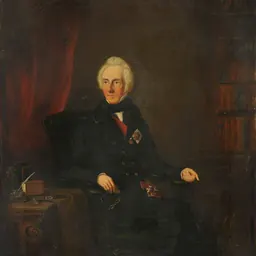
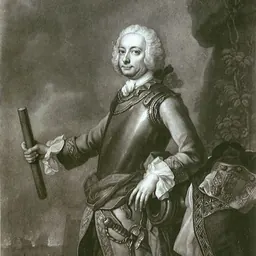

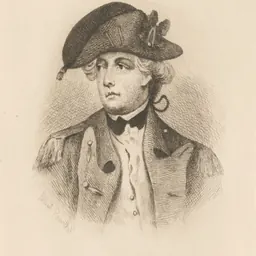
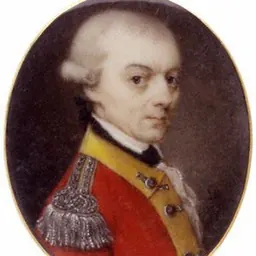
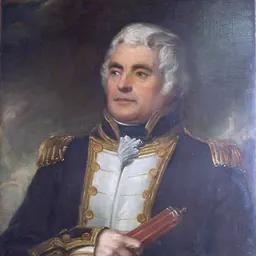
Related people
Same field, nearest in time
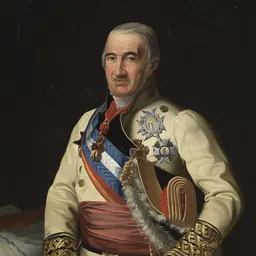
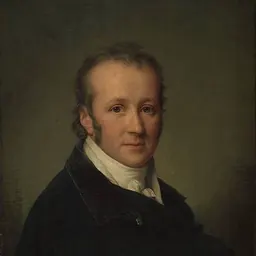
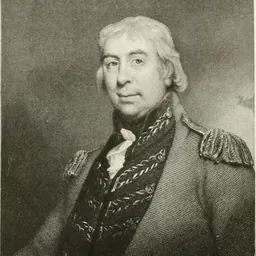

Contemporaries
People whose lives overlapped Richard Bowen's






Frequently asked questions
Who was Richard Bowen?
British Royal Navy officer
When was Richard Bowen born?
Richard Bowen was born in 1761 in Ilfracombe.
When did Richard Bowen die?
Richard Bowen died on 25 July 1797 in Santa Cruz de Tenerife.
What was Richard Bowen's occupation?
Richard Bowen was a military officer.
What nationality was Richard Bowen?
Richard Bowen was British.
Sources & further reading
· DBpedia: Richard Bowen (Royal Navy officer)
Cite this page
APA: Biography.guide. (2026). Richard Bowen. https://biography.guide/richard-bowen/
MLA: "Richard Bowen." Biography.guide, https://biography.guide/richard-bowen/.
Chicago: "Richard Bowen." Biography.guide. https://biography.guide/richard-bowen/.
Data last updated: 2026-09-20 · Spot an error? Report a correction.
Page generated 2026-09-27 05:27 UTC