
Charles Knowles
Royal Navy officer during the War of the Austrian Succession, Seven Years' War, later admiral
About Charles Knowles
Lived 1704 – 1777 (aged 72–73). Charles Knowles was a British naval officer and politician.
Admiral Sir Charles Knowles, 1st Baronet ( – 9 December 1777) was a British naval officer, politician and colonial administrator who served as the governor of Jamaica from 1752 to 1756. Serving in the Royal Navy during the War of Jenkins' Ear, War of the Austrian Succession and Seven Years' War, he also briefly served in the Imperial Russian Navy during the Russo-Turkish War of 1768-1774. Knowles rose to the rank of admiral in a long and varied career, crowned with both success, and at times, controversy.
He was highly educated, and particularly skilled in building and destroying fortifications. His career was mainly centred on the West Indies in the Caribbean Sea, where he commanded ships and squadrons in actions against both Spanish and French ships and settlements. Despite an active naval career in which he reached the rank of Rear-Admiral of Great Britain, Knowles found time to continue his studies. He translated foreign scientific studies, and developed his own inventions. His career at sea was blighted, however, by several failures. This may have been the catalyst for his move to the Russian Empire during the later part of his life to oversee the development of the Russian fleet. He is noted as the catalyst for the Knowles Riot in Boston.
Family and early life Knowles was probably born c. 1704, though some sources date his birth to as early as 1697. He was reputed to be an illegitimate son of Charles Knowles or Knollys, the titular fourth Earl of Banbury. His education was overseen by his half-brother, Lord Wallingford, and Knowles entered the navy in March 1718, having been recommended to Admiral Sir George Byng by Wallingford. He returned to serve aboard the Lion in March the following year, when she went to the West Indies as the flagship of Rear-Admiral Charles Stewart. But the project was assigned for design to another man, and the bridge eventually gave way precisely where Knowles had predicted.
The British capture of Porto Bello. Knowles arrived at the port five days after it was captured.
Knowles had been promoted to commander of the 40-gun in 1732, but the position appears to have been for rank only, as he did not become post-captain until 4 February 1737, when he was appointed to command . Knowles was unable to sail with Vernon when he commanded the fleet to Portobelo, but arrived there on 27 November, five days after Vernon's victory in battle. When the task was completed the British withdrew, and Knowles had impressed Vernon with his competent command of land operations. Vernon ordered the removal of the goods gathered at the port for shipping to Spain, and the sinking of several privateer vessels. Knowles was given the task of demolishing the castle, which he achieved by detonating several mines under the bastions, and burning the apartments.
Vernon and the Battle of Cartagena de Indias
Knowles spent the next few months cruising, before returning to England in company with HMS Torrington as an escort for a 25 ship strong fleet of merchantmen.
Several British ships entered the harbour the next day, including Knowles aboard the Weymouth. Under Vernon's orders Knowles destroyed several enemy batteries, captured the Castillo Grande and navigated further into the harbour to cut off enemy supplies. The failure of the British to take Cartagena led to considerable bitterness between the army and naval forces, and Knowles appears to have been the author of a pamphlet published in 1743 entitled An Account of the Expedition to Carthegena, with Explanatory Notes and Observations, a work that criticised the actions of the army. for his exceptional engineering skills. He became a commodore after this, flying his flag aboard and then . Between 1743 and 1745, he served as the second in command on the Jamaica station under Sir Chaloner Ogle, who had replaced Admiral Edward Vernon. The Spanish governor of Venezuela Gabriel de Zuluaga, well informed of the Royal Navy plans, recruited extra defenders and obtained gunpowder from the Dutch. Consequently, an attack on La Guaira on 2 March 1743 was beaten off by the defenders. Knowles withdrew his force and refitted at Curacao before attempting an assault on Puerto Cabello on 15 April, and again on 24 April, but both assaults were again beaten back. During this period he also found time to design the first British Tower in the west Indies, the 1745 River Fort Barbuda, a very early prototype of the later Martello Tower. Knowles was later appointed as captain of the newly built in 1745. He returned to Britain later that year, and in January 1746 he was aboard as commander of a squadron in the Downs, under Vice-Admiral William Martin. He shifted his pennant to HMS Edinburgh on 21 March, and escorted a convoy from St Helens into the English Channel, after which he moved aboard the 50-gun . He was promoted to rear-admiral of the white on 15 July 1747, and appointed as commander in chief on the Jamaica Station. On taking up his new post he raised his flag aboard HMS Canterbury, but soon shifted it to . He had initially intended to take his squadron and attack Santiago de Cuba, but contrary winds led to him deciding instead to attack Fort Saint Louis de Sud.
Battle of Havana
After having his ships refitted Knowles sailed on a cruise, hoping to intercept a Spanish treasure fleet off Cuba. On 30 September he fell in with HMS Lenox, under Captain Charles Holmes, who reported that he had encountered a Spanish fleet some days earlier. The Maroon town, Charles Town, Jamaica took the first name of Knowles in gratitude for the governor's help in suppressing the revolt. Over his four-year period as governor he took steps to reform the legal system, and also moved the administrative capital from Spanish Town to Kingston, arguing that the latter was more defensible.
Knowles' attempts to ensure the subordination of the Jamaican Assembly to the British government led to calls for his removal as governor, but his policies were subsequently upheld by the British government. He had been promoted to vice-admiral of the red on 4 February 1755.
In 1756 the governor of Cuba Francisco Cajigal de la Vega officially invited Knowles to visit Havana, the strongest military base in Spanish America. Knowles accepted the offer with pleasure and spent much of the visit memorising details of Havana's defences. He subsequently drew up plans for the capture of Havana and submitted them to William Pitt the Elder, which the latter probably laid before the British cabinet at the time of his resignation as British Prime Minister. By 1761 Knowles had shown his plans to the Duke of Cumberland, who championed the idea and wrote to the commander of the British expedition against Cuba sent in 1762, the Earl of Albemarle: "I dread the loss of one single day at present and that not the less for Knowles’ company, who is here croaking every day at dinner. Any bystander would think me the projector and fitter out of the expedition". The expedition captured Havana in August 1762. Knowles successfully took the novelist, Tobias Smollett to court for libel, as the editor of The Critical Review, resulting in a fine and imprisonment for three months.
Later service and Russia
Knowles was second in command under Admiral Edward Hawke in the raid on Rochefort in 1757, during the Seven Years' War, with Knowles flying his flag aboard . Knowles briefly flew his flag aboard HMS Royal Anne in the winter of 1757, but the debacle at Rochefort meant he was soon removed from active service. In the war of 1758 Knowles was offered £20,000 by the French government for his recipe for curing beef and pork but he refused to sell to the French or to receive any compensation from his government. The subsequent publication of this recipe caused an entire revolution in the method of preparing beef and pork for sea use in the prevention of scurvy. He was promoted to full admiral on 3 December 1760, and was created a baronet on 31 October 1765. to advise on the development and revitalisation of the Imperial Russian Navy, which was then in a deplorable state, during the war against Turkey. Amongst other reasons for going, he saw the possibilities of a new Anglo-Russian alliance to balance a Spanish French compact. He served in a mainly administrative role as “General Intendant” the highest position on the administration of all the wharfs, ship construction, workers, and supplies in all ports of the Empire, being based at St Petersburg until 1774, when he returned to England. ...a black sea squadron that had achieved permanent paramountcy over the Turks, a reconstructed dry dock, and a new canal for the fraction of the anticipated cost….
In 1773 he introduced steam technology from Scotland to pump water from the dry dock at Kronstadt a full 26 years before the British Admiralty were persuaded to try out a steam engine at Portsmouth. It was his insistence on the use of a steam engine pump which had a significant impact on the growth of interest of steam application to all facets of Russian industrial life. Sir John Jervis and Captain Samuel Barrington visited Russia in the early 1770s where they spent time in Saint Petersburg and inspected the arsenal and dockyards at Kronstadt and took a tour of the yacht designed by Knowles for Catherine of Russia. Amongst articles devoted to outstanding military figures in the immense and distinguished Military Encyclopaedia of Sytin (the common unofficial name of the multi-volume 'Military Encyclopaedia' published by Ivan Sytin in St Petersburg 1911–1915) his departure is described as undoubtable a major loss to their fleet. The Naval Chronicle called him the Father of the Russian Navy.
Family and personal life
Knowles married Mary, the sister of Rebecca, wife of William Bouverie, 1st Earl of Radnor, and Sir John Alleyne, later a Speaker of the Barbados House of Assembly, on 23 December 1740. He married in 1750 for the second time, Maria Magdalena Therese de Bouget (1733–1796), the daughter of Henri Francois, Compte de Bouget. The couple produced one son, Charles Knowles, and two daughters, one of whom, Anna Charlotte Christiana Knowles (1752–1839) m 1781 Captain John Winder of the Kings Dragoon Guards.
He translated M. de la Croix's Abstract of the Mechanisms of the Motions of Floating Bodies in 1775, noting in his preface that he had carried out experiments that validated de la Croix's findings and adding “…but what proved most satisfactory to me was their answering perfectly well when put into practice, in several line of battle ships and frigates, that I built whilst in Russia.”. He also invented a device for measuring the pressure and velocity of wind, a fact acknowledged by Leonhard Euler as having been discovered before him.
In 1744, William Montagu, a relative of the Earl of Sandwich, discharged a firearm indiscriminately into a boat crewed by Black slaves, one of whom was fatally wounded by William. After learning of the incident, Knowles ordered an unperturbed William back home to face a court-martial. In the Seven Years' War, Knowles was offered £20,000 by the French government for his recipe for curing beef and pork but he refused to sell to the French or to receive any compensation from the British government. The subsequent publication of this recipe caused an entire revolution in the method of preparing beef and pork for sea use in the prevention of scurvy. He proposed a plan to solve the navy's recruiting problem by building hundreds of low rent houses for navy men and their families at dockyards. If implemented, the plan would have dramatically reduced the navy's dependence on impressment. Also attributed to Knowles is AN ESSAY ON THE DUTY and QUALIFICATIONS OF A SEA-OFFICER. Written originally for the Use of TWO YOUNG OFFICERS. 1765 Printed for W. JOHNSTON, in Ludgate-street with profits to the Magdalene and British Lying-in-Hospital. Knowles remained intellectually active until the end, writing months before his death to The Reverend Charles William Tonyn “I must beg you will not give yourself any trouble about seeking for a person to copy my manuscript as I wished for one at that time more for your nephew than myself. He not being able before he want to copy one quarter part of only one volume & I fear I have a heavier task to perform in arranging my crude ideas than I was aware on before I shall want to have them copied. Many of my experiments want repeating before I can venture to publish them; and before I can do this I must find not only an able algebraist & mathematical man, but one used to experiments of the nicest kind, as well as calculation, who must be with me & give me his time. In short live with me. Such a One I should be glad to find, & make a companion of.” His family found that he had left no personal papers at his death, although a reason suggests itself in an intriguing letter from Jeremy Bentham to his son “ Blanket a 2d Lieutt on board the Victory …was intimate with Ad Knowles and was over with him one summer in Russia. He was with him when he died got a great many of his papers and regrets that he did not get more.“ John Blankett, later Admiral, shared Knowles' views on ties with Russia having compiled a detailed report for the Admiralty advocating a close alighnment with Russia following a visit to St Petersburgh after the Peace in 1763.
His posthumous reputation is suggested in “Plain suggestions of a British seaman” 1794, 4: “We had not in England a man more thoroughly conversant in nautical affairs, or who better considered the interest of our navy” Charlestown, New Hampshire and Charles Town, Jamaica are named after him. He died at Bulstrode Street, London on 9 December 1777, and was buried at Guildford, Surrey.
Don’t just read it —
keep it.
Full-length biographies made to live with: read them, listen on the way to work, watch them tonight.
- E-book
- Audio
- Video
Instant download · yours to keep · every purchase keeps this site free
Important facts
People in Charles Knowles's life
Named in this biography and alive at the same time



Related people
Same field, nearest in time

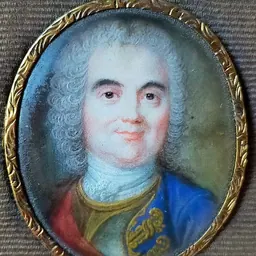
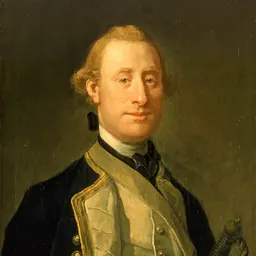

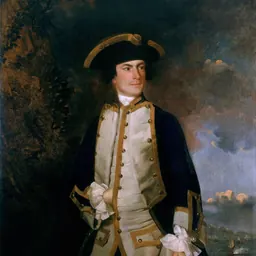
Contemporaries
People whose lives overlapped Charles Knowles's

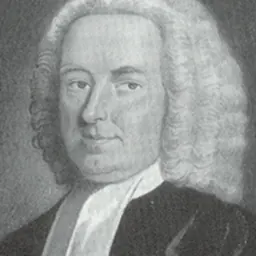




Frequently asked questions
Who was Charles Knowles?
Royal Navy officer during the War of the Austrian Succession, Seven Years' War, later admiral
When was Charles Knowles born?
Charles Knowles was born in 1704 in London.
When did Charles Knowles die?
Charles Knowles died on 9 December 1777 in Guildford.
What was Charles Knowles's occupation?
Charles Knowles was a naval officer and politician.
What nationality was Charles Knowles?
Charles Knowles was British.
Sources & further reading
· DBpedia: Sir Charles Knowles, 1st Baronet
Cite this page
APA: Biography.guide. (2026). Charles Knowles. https://biography.guide/charles-knowles/
MLA: "Charles Knowles." Biography.guide, https://biography.guide/charles-knowles/.
Chicago: "Charles Knowles." Biography.guide. https://biography.guide/charles-knowles/.
Data last updated: 2026-09-27 · Spot an error? Report a correction.
Page generated 2026-09-27 05:17 UTC