
About Richard Blackburn
Lived 1918 – 1987 (aged 69). Richard Blackburn was an Australian judge, lawyer, military officer, academic, legal scholar and aircraft pilot.
Sir Richard Arthur Blackburn (26 July 1918 – 1 October 1987) was an Australian judge, prominent legal academic and military officer. He became a judge of three courts in Australia, and eventually became chief justice of the Australian Capital Territory. In the 1970s he decided one of Australia's earliest Aboriginal Land rights cases. The annual Sir Richard Blackburn Memorial lectures in Canberra commemorate his service to the Australian legal community.
Early years Blackburn was born on 26 July 1918 in Mount Lofty, South Australia. He was the son of Brigadier Arthur Blackburn and Rose Ada Blackburn (née Kelly). His father was at that time a prominent legal practitioner in South Australia, and was later to serve as a Commissioner of the now defunct Commonwealth Court of Conciliation and Arbitration. Blackburn was educated at St Peter's College, Adelaide and was an undergraduate at St Mark's College at the University of Adelaide. He graduated with First Class Honours in English Literature from the University of Adelaide. He won the John Howard Clark Prize as the candidate who was placed highest in the final examination. He was chosen as the Rhodes Scholar for South Australia in 1940, but did not take it up immediately because of the outbreak of the Second World War.
Legal and academic life At the end of the war, he took up his Rhodes Scholarship at Magdalen College, University of Oxford. He and another South Australian, the Honourable Justice Andrew Wells, became the first Dominion students to be awarded the Eldon Law Scholarship. As a result, he attended the University of Oxford in 1949 and graduated with a Bachelor of Civil Law. Blackburn was called to the Bar in the United Kingdom in Inner Temple in 1949.
Blackburn returned to Australia after his Oxford studies. He was admitted as a legal practitioner in South Australia in 1951. He became the Dean of the Faculty of Law in 1951 and served as Dean there until 1957. In 1957 he left full-time academic life to become a partner in the Adelaide law firm Finlaysons; however, he continued as a member of the Faculty until 1965. His daughter and son were born while he was teaching at the Adelaide University.
Judicial career Richard Blackburn left academic life and was appointed a judge of the Supreme Court of the Northern Territory in 1966. During this time, he became President of the Arts Council of the Northern Territory. in which important issues of aboriginal land rights were canvassed. The case led to the eventual introduction of the Aboriginal Land Rights Act 1976.
In May 1971 he was appointed as a judge of the Supreme Court of the Australian Capital Territory. In that same year, he was also appointed a judge of the Federal Court of Australia in 1977 on that court's establishment and served as a judge in that latter court until 1984. He became Chancellor of the Australian National University in 1984.
In May of that year, Blackburn was one of three former chief justices appointed by the Australian Government to be Parliamentary Commissioners in a Special Commission of Inquiry to investigate the conduct of Justice Lionel Murphy concerning allegations that Murphy had attempted to pervert the course of justice in the criminal proceeding involving solicitor Morgan Ryan. He was appointed notwithstanding his ill-health because of his skills and abilities. While the inquiry did not proceed to conclusion because of Murphy's own illness and subsequent death, the commissioners did make a report on what constituted misconduct for a judge under the Australian Constitution. Blackburn concluded:
Blackburn died on 1 October 1987. Blackburn himself gave the first lecture. Michael Black, former Chief Justice of the Federal Court of Australia, is the only person to have given the lecture twice, in 1994 and 2012, although the latter lecture made no reference to having done so previously.
1986 – Sir Richard Blackburn, Chief Justice of the Supreme Court of the Australian Capital Territory: The Courts and the Community. 1987 – Sir Harry Gibbs, Chief Justice of the High Court of Australia: The Powers of the Police to Question and Search. 1988 – Michael Kirby, President of the Court of Appeal of New South Wales: The Politics of Law Reform. 1989 – Sir Anthony Mason, Chief Justice of the High Court of Australia: Administrative Review – the Experience of the First Twelve Years. 1990 – Sir Gerard Brennan, Justice of the High Court of Australia: Courts, Democracy and the Law. 1991 – Sir Zelman Cowen, former Governor-General of Australia: Crown and Representative in the Commonwealth. 1992 – Mary Gaudron, Justice of the High Court of Australia: Equal Rights and Anti-Discrimination Law. 1993 – Jeffrey Miles, Chief Justice of the Supreme Court of the Australian Capital Territory: The State of the Judicature in the ACT. 1994 – Michael Black, Chief Justice of the Federal Court of Australia: Letting the Public Know – The Educative Role of the Courts. 1995 – Dame Roma Mitchell, Governor of South Australia: The External Affairs Power in relation to United Nations Conventions; its effect upon the Balance of Power between Commonwealth and States. 1996 – Paul Finn, Judge of the Federal Court of Australia: The Courts and the Vulnerable. 1997 – Deirdre O'Connor, President of the Australian Industrial Relations Commission: Access to Justice – Technicalities and the Tribunal System. 1998 – Robert French, Judge of the Federal Court of Australia: Courts Under the Constitution. 1999 – John Lehane, Judge of the Federal Court of Australia: Administrative Law – Aspects of Pre-Millennial Judicial Review. 2000 – John Gallop, Supreme Court of the Australian Capital Territory and the List of judges of the Federal Court of Australia: The Attorney-General – A Hybrid Character Who Needs to be Versatile. 2001 – Bettie McNee, President of the Administrative Review Council: Administrative Review – Observations and Reflections. 2002 – Alastair Nicholson, Chief Justice of the Family Court of Australia: Children and Young People – The Law and Human Rights. 2003 – Diana Bryant, Chief Federal Magistrate of Australia: The Contribution of Children to the Jurisprudence of the Federal Magistrates Court and the Relevance of the 'Best Interests of the Child' principle in the Legal Work of the Federal Magistrates Court. 2004 – John Doyle, Chief Justice of the Supreme Court of South Australia: Investing in the Judiciary. 2005 – Stephen Kenny, former lawyer for David Hicks, a Guantanamo Bay detainee: Hicks and the Geneva Convention, Hindmarsh and Native Title. 2006 – Terence Higgins, Chief Justice of the Supreme Court of the Australian Capital Territory: Women in Law – Past Achievements and Future Directions. 2007 – Murray Wilcox, Judge of the Federal Court of Australia: The Rule of Law – Looking behind the icon. It was in this lecture that Wilcox described Australia as becoming an 'elected dictatorship' under the Howard government. 2008 – Ken Crispin, former Judge of the Supreme Court of the Australian Capital Territory: Law and Liberty. 2009 – Lex Lasry, Judge of the Supreme Court of Victoria: Unelected Judges – Out of touch with the Community? 2010 – Julian Burnside, human rights and refugee advocate: Injustice within the law – an update. 2011 – Virginia Bell, Justice of the High Court of Australia: Sentencing and judicial discretion. 2012 – Michael Black, former Chief Justice of the Federal Court of Australia: The Courts and the Community. 2013 – Lt Col Michael (Dan) Mori, former US Military Judge: Reflections on the War on Terror. 2014 – Susan Kiefel, Justice of the High Court of Australia: The Individual Judge. 2015 – George Williams, Professor of Law at the University of New South Wales: The Legal Assault on Australian Democracy. 2016 – John Faulks, Deputy Chief Justice of the Family Court of Australia: Brave New World. 2017 – Justin Gleeson, former Solicitor-General of the Commonwealth of Australia: Law, Morality and the Public Trust. 2018 – John Pascoe, Chief Justice of the Family Court of Australia: Sleepwalking through the minefield: commercial surrogacy and the global response. 2019 – Karen Fryar, former Magistrate of the Australian Capital Territory: Pro bono: For whose benefit? 2020 – No lecture
Published papers “Law School Curricula in Retrospect” 9 Adelaide Law Review 43 (1983–1985)
Don’t just read it —
keep it.
Full-length biographies made to live with: read them, listen on the way to work, watch them tonight.
- E-book
- Audio
- Video
Instant download · yours to keep · every purchase keeps this site free
Important facts
Family & relationships
People in Richard Blackburn's life
Named in this biography and alive at the same time



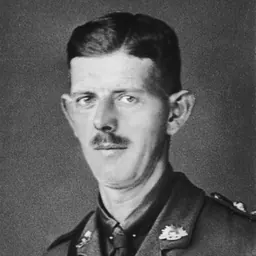


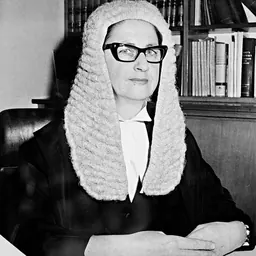

Related people
Same field, nearest in time

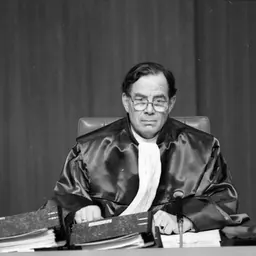
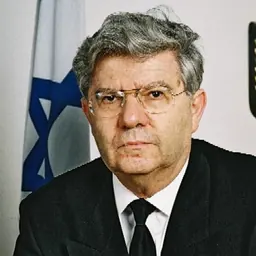
Contemporaries
People whose lives overlapped Richard Blackburn's

Frequently asked questions
Who was Richard Blackburn?
Australian judge (1918-1987)
When was Richard Blackburn born?
Richard Blackburn was born on 26 July 1918 in Mount Lofty.
When did Richard Blackburn die?
Richard Blackburn died on 1 October 1987 in Canberra.
What was Richard Blackburn's occupation?
Richard Blackburn was a judge, lawyer, military officer, academic, legal scholar and aircraft pilot.
What nationality was Richard Blackburn?
Richard Blackburn was Australian.
Sources & further reading
· Wikipedia: Richard Blackburn
Cite this page
APA: Biography.guide. (2026). Richard Blackburn. https://biography.guide/richard-blackburn/
MLA: "Richard Blackburn." Biography.guide, https://biography.guide/richard-blackburn/.
Chicago: "Richard Blackburn." Biography.guide. https://biography.guide/richard-blackburn/.
Data last updated: 2026-09-20 · Spot an error? Report a correction.
Page generated 2026-09-27 05:33 UTC