
About Reuven Feuerstein
Lived 1921 – 2014 (aged 92). Reuven Feuerstein was a Romanian and Israeli pedagogue, educator and psychologist.
Reuven Feuerstein (; August 21, 1921 – April 29, 2014) was a Romanian-born Israeli clinical, developmental, and cognitive psychologist, known for his theory of intelligence. Feuerstein is recognized for his work in developing the theories and applied systems of structural cognitive modifiability, mediated learning experience, cognitive map, deficient cognitive functions, learning propensity assessment device, instrumental enrichment programs, and shaping modifying environments. These interlocked practices provide educators with the skills and tools to systematically develop students’ cognitive functions and operations to build meta-cognition.
Feuerstein was the founder and director of the International Center for the Enhancement of Learning Potential (ICELP) in Jerusalem, Israel. For more than 50 years, Feuerstein's theories and applied systems have been implemented in both clinical and classroom settings internationally, with more than 80 countries applying his work. Feuerstein's theory on the malleability of intelligence has led to more than 2,000 scientific research studies and countless case studies with various learning populations.
Early life and education
Reuven Feuerstein was one of nine siblings born in Botoșani, Romania. He attended the Teachers College in Bucharest (1940–41) and Onesco College in Bucharest (1942–1944). Feuerstein fled the Nazi invasion before obtaining his degree in psychology. After settling in Mandate Palestine in 1945, he taught child survivors of the Holocaust until 1948. Seeing that these children affected by the Holocaust needed attention, he began a career that attended to the psychological and educational needs of immigrant refugee children.
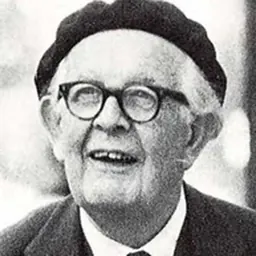
While attending the University of Geneva, Feuerstein studied under Andre Rey and Jean Piaget. He completed his degrees in both General and Clinical Psychology. During this time there were three main schools of thought, psychoanalysis, behaviorism and Gestalt psychology. He attended lectures given by Karl Jaspers, Carl Jung, Bärbel Inhelder, Marguerite Loosli Uster and Léopold Szondi. In 1970, Feuerstein earned his PhD in developmental psychology at the University of Sorbonne, in France. His major areas of study were Developmental, Clinical, and Cognitive Psychology.
The improvements Feuerstein witnessed in victims after they received extra psychological and educational attention made him question current beliefs regarding the stability and innateness of intelligence.
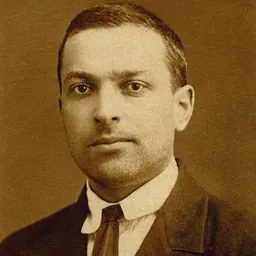
Comparisons have also been made between Feuerstein's theories and those of the Russian psychologist Lev Vygotsky. Vygotsky viewed a child's interaction with the world as mediated by symbolic tools provided by the given culture. Like the social psychologist, Feuerstein gave further insight on cognitive functioning such as logical memory, voluntary attention, categorical perception and self-regulation of behavior.
Unlike previous developmental psychologists, the focus of Feuerstein's theories is the development of normal versus low functioning children. According to Piaget, it is through the normal child's own natural material actions and problem-solving experiences that mind and intelligence eventually evolve toward the development of logic and abstract thinking. Feuerstein illustrates that the key to meaningful instruction for all children, particularly young and low-functioning children, is the mediated relationship.
FIE Standard The FIE Standard program goal is to correct deficiencies in fundamental thinking skills, and to provide students with the concepts, skills, strategies, operations and techniques necessary to function as independent learners. It aims to increase their motivation, meta-cognition. Deliberately free of specific subject matter, the tasks in the instruments are intended to be transferable (bridged) to all educational and everyday life situations.
To date FIE program has been successfully used across the world in the following frameworks: Remedial programs for special needs children. Cognitive rehabilitation of brain injured individuals and psychiatric patients. Learning enhancement programs for immigrant and cultural minority students. Enrichment programs for underachieving, regular and gifted children. Professional training and retraining programs in the industrial, military, and business sectors.
Research on the efficacy of this method has been conducted in several samples including engineers at a Motorola (USA) plant, impoverished students in rural communities (Bahia, Brazil), deaf, non-literate immigrants (Ethiopia), Autistic low-performing high school math students (Cleveland, Ohio, USA), weak readers in middle grades (Portland, Oregon, USA), FIE is considered suitable for individuals with disabilities and those who are considered “normal” and “gifted”; cognitive gains are seen in all three categories of students who undertake FIE.
FIE-BASIC In 2000, Feuerstein added FIE-BASIC to prevent learning problems in younger children (3 to 8 years old) and to help low performing older children. Feuerstein claims that learning problems may be prevented through early, developmentally appropriate, intervention as well as the emerging brain research. In order to achieve these goals, an emphasis is placed on a systematic exposure of selected and necessary content areas. Specific skills are mediated and transformed into working concepts that build subsequent learning and development and the process of how to think.
The FIE- BASIC program includes a total of 7 instruments Holly, Michigan (USA) and in Israel, Britain, Italy, India, and Japan are exploring the applications of the Basic instruments with young children and students with special needs, especially as a way to avoid the over-categorization of students as learning disabled.
Quotes
In 1976, four years before the publication of the first edition of Instrumental Enrichment, the Record, a journal of the NIH-US Department of Health, Education and Welfare, described the "exciting, highly imaginative project by Dr. Feuerstein" then being funded by the National Institute of Child Health and Human Development for showing that "intervention –even in adolescents – is not too late."
In a 1976 issue of the NIH Record, scientists at the National Institute of Child Health and Human Development described the Instrumental Enrichment program as holding promise for improving learning outcomes and supporting more precise educational placement based on students’ learning potential rather than prior achievement. (From N.I.H. Record, September 21, 1976, Vol. XXVIII, no. 19)In a 1980 publication, Michael J. Begab, then head of the Mental Retardation Research Center at the NICHD, wrote that Feuerstein's work proposed a model of cognitive development distinct from Piagetian theory and sought to translate theoretical concepts into instructional practice. He stated that Feuerstein's approach aimed to bridge research and educational application, particularly in work with children from diverse backgrounds."Reuven Feuerstein is one of a handful of educational thinkers and practitioners who has made a significant, lasting contribution to our understanding of human learning.” —Howard Gardner, Harvard Graduate School of Education
“An innovative work addressing key educational themes.” —From the Foreword by John D. Bransford, University of Washington, College of Education
Awards and recognition 1986, Detroit Public Schools, Special Commendation 1990, Médaille d'Or of Aix-les-Bains, France 1992, New York Academy of Sciences 1997, Honor al estudio y la investigacion en el campo de la formación professional. National Organization for Professional Training. Valencia, Spain.
Don’t just read it —
keep it.
Full-length biographies made to live with: read them, listen on the way to work, watch them tonight.
- E-book
- Audio
- Video
Instant download · yours to keep · every purchase keeps this site free
Important facts
People in Reuven Feuerstein's life
Named in this biography and alive at the same time






Related people
Same field, nearest in time



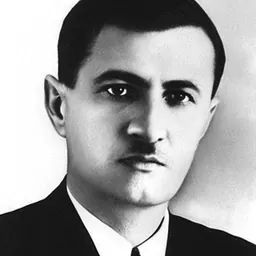
Contemporaries
People whose lives overlapped Reuven Feuerstein's
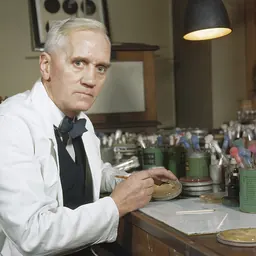
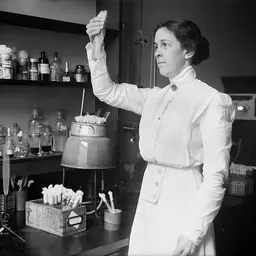


Frequently asked questions
Who was Reuven Feuerstein?
Israeli educator (1921-2014)
When was Reuven Feuerstein born?
Reuven Feuerstein was born on 21 August 1921 in Botoșani.
When did Reuven Feuerstein die?
Reuven Feuerstein died on 29 April 2014 in Jerusalem.
What was Reuven Feuerstein's occupation?
Reuven Feuerstein was a pedagogue, educator and psychologist.
What nationality was Reuven Feuerstein?
Reuven Feuerstein was Romanian and Israeli.
Sources & further reading
· Wikipedia: Reuven Feuerstein
Cite this page
APA: Biography.guide. (2026). Reuven Feuerstein. https://biography.guide/reuven-feuerstein/
MLA: "Reuven Feuerstein." Biography.guide, https://biography.guide/reuven-feuerstein/.
Chicago: "Reuven Feuerstein." Biography.guide. https://biography.guide/reuven-feuerstein/.
Data last updated: 2026-09-26 · Spot an error? Report a correction.
Page generated 2026-09-27 05:15 UTC