
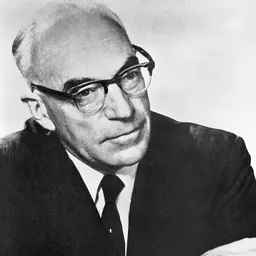
Howard Gardner
American developmental psychologist & academic
About Howard Gardner
Born 1943. Howard Gardner is an American psychologist, university teacher, investigator and pedagogue, known for Theory of multiple intelligences.
Howard Earl Gardner (born July 11, 1943) is an American developmental psychologist and the John H. and Elisabeth A. Hobbs Research Professor of Cognition and Education at Harvard University. He was a founding member of Harvard Project Zero in 1967 and held leadership roles at that research center from 1972 to 2023. Since 1995, he has been the co-director of The Good Project.
Gardner has written hundreds of research articles In 2020, he published his intellectual memoir A Synthesizing Mind. He continues his research and writing, including several blogs. Early life and education Howard Earl Gardner was born July 11, 1943, in Scranton, Pennsylvania, to Ralph Gardner and Hilde (née Weilheimer) Gardner, German-Jewish immigrants who fled Germany in 1938 just prior to World War II.
Gardner described himself as "a studious child who gained much pleasure from playing the piano".
Howard Gardner had a brother named Eric who died at age seven in a sledding accident just before Howard's birth.
Gardner then attended Harvard College, where he studied under the renowned psychoanalyst Erik Erikson. He graduated with highest honors in 1965, with a B.A. in Social Relations. After spending one year at the London School of Economics, where he studied philosophy and sociology, he went on to obtain his Ph.D. in developmental psychology at Harvard, working with psychologists Roger Brown and Jerome Bruner, and philosopher Nelson Goodman. working with neurologist Norman Geschwind. He continued his work there for another 20 years. (Arizona State University, 2022).
In 1967, Professor Nelson Goodman started an educational program called Project Zero at the Harvard Graduate School of Education, which began with a focus in arts education and now spans a wide variety of educational arenas. Howard Gardner and David Perkins were founding Research Assistants and later Co-Directed Project Zero from 1972 to 2000. Project Zero's mission is to understand and enhance learning, thinking, and creativity in the arts, as well as a broad range of humanistic and scientific disciplines at the individual and institutional levels.
For over two decades, in collaboration with William Damon, Mihaly Csikszentmihalyi, and several other colleagues, Gardner has been directing research at The Good Project on the nature of good work, good play, and good collaboration. The goal of his research is to determine what it means to achieve work that is at once excellent, engaging, and carried out in an ethical way. With colleagues Lynn Barendsen, Courtney Bither, Shelby Clark, Wendy Fischman, Carrie James, Kirsten McHugh, and Danny Mucinskas, Gardner has developed curricular toolkits on these topics for use in educational and professional circles.
Since 1995, much of the focus of his work has been on The GoodWork Project, now part of a larger initiative known as The Good Project that encourages excellence, ethics, and engagement in work, digital life, and civic society.
In 2000, Gardner, Kurt Fischer, and their colleagues at the Harvard Graduate School of Education established the master's degree program in Mind, Brain, and Education. This program was thought to be the first of its kind around the world. Many universities in both the United States and abroad have since developed similar programs. Since then, Gardner has published books on a number of topics including Changing Minds: The Art and Science of Changing Our Own and Other People's Minds, Five Minds for the Future, Truth, Beauty and Goodness Reframed, and The App Generation (written with Katie Davis). Information about the study, including several dozen blogs, is available on Gardner's website.
At the start of 2024, Gardner was the most cited Educational Scholar in the United States, according to the Edu-Scholar Public Influence Ratings.
In 2024, Teachers College Press published two collections of Gardner’s papers: The Essential Howard Gardner on Education and The Essential Howard Gardner on Mind.
In September 2025, Bloomberg News reported that Gardner's name was among a sizable group that had turned up in a large cache of Jeffrey Epstein's emails. Gardner, who was one of the many social scientists whose research projects had received funding from Epstein, knew him only as a wealthy philanthropist, and said that he was "horrified" when Epstein was charged with sex trafficking of minors in 2019.
Theory of multiple intelligences According to Gardner's theory of multiple intelligences, humans have several different ways of processing information, and these ways are relatively independent of one another. The theory is a critique of the standard intelligence theory, which emphasizes the correlation among abilities, as well as traditional measures like IQ tests that typically only account for linguistic, logical, and spatial abilities. Since 1999, Gardner has identified eight intelligences: linguistic, logical-mathematical, musical, spatial, bodily/kinesthetic, interpersonal, intrapersonal, and naturalistic. Gardner and colleagues have also considered two additional intelligences, existential and pedagogical. Many teachers, school administrators, and special educators have been inspired by Gardner's theory of multiple intelligences.
Gardner's definition of intelligence has been met with some criticism in education circles as well as in the field of psychology. Perhaps the strongest and most enduring critique of his theory of multiple intelligences centers on its lack of empirical evidence, much of which points to a single construct of intelligence called "g". Gardner has responded that his theory is based entirely on empirical evidence as opposed to experimental evidence, as he does not believe experimental evidence in itself can yield a theoretical synthesis.
Gardner's theory of multiple intelligences can be seen as both a departure from and a continuation of the 20th century's work on the subject of human intelligence. Other prominent psychologists whose contributions variously developed or expanded the field of study include Charles Spearman, Louis Thurstone, Edward Thorndike, and Robert Sternberg.
Achievements and awards In 1981, Gardner was the recipient of a MacArthur Prize Fellowship. In 1990, he received the University of Louisville Grawemeyer Award in Education. In 1985, The National Psychology Awards for Excellence in the Media, awarded Gardner The Book Award for Frames of Mind: The Theory of Multiple Intelligences. In 1987, he received the William James Award from the American Psychological Association. SUNY Plattsburgh inducted Gardner selected Gardner for honoris causa membership in Omicron Delta Kappa in 1998. In 1999, Gardner received the Golden Plate Award of the American Academy of Achievement. In 2000 he received a fellowship from the John S. Guggenheim Memorial Foundation. Four years later he was named an Honorary Professor at East China Normal University in Shanghai. In the years 2005 and 2008 he was selected by Foreign Policy and Prospect magazines as one of the top 100 most influential public intellectuals in the world. In 2011, he won the Prince of Asturias Award in Social Sciences for his development of multiple intelligences theory. In 2020, Gardner received the Distinguished Contributions to Research in Education Award from the American Education Research Association.
He has received honorary degrees from 31 colleges and universities around the world, including institutions in Bulgaria, Canada, Chile, Greece, Hong Kong, Ireland, Israel, Italy, South Korea, and Spain. He is also a member of several honorary societies: American Academy of Arts and Sciences, American Philosophical Society, National Academy of Education, and the American Academy of Political and Social Science.
Association with child sex offender Jeffrey Epstein Gardner had a correspondence with child sex offender Jeffrey Epstein. He first met Epstein at a dinner party in the 1990s. Epstein subsequently supported some of Gardner's research and linked him to other "thought leaders". After Epstein's arrest in 2006, Gardner told Epstein that he would not accept further funding from him, but he remained in touch until 2019. In that same email, Gardner advised Epstein, who was going to jail within a year, to "take a deep breath, take one day at a time, and you'll get through the coming period fine".
Personal life In 1982, Howard Gardner married Ellen Winner, Professor Emerita of Psychology at Boston College. They have one child. Gardner has three children from an earlier marriage.
Publications Howard Gardner has published more than 30 books, many of which have been translated into different languages.
Don’t just read it —
keep it.
Full-length biographies made to live with: read them, listen on the way to work, watch them tonight.
- E-book
- Audio
- Video
Instant download · yours to keep · every purchase keeps this site free
Important facts
Family & relationships
People in Howard Gardner's life
Named in this biography and alive at the same time




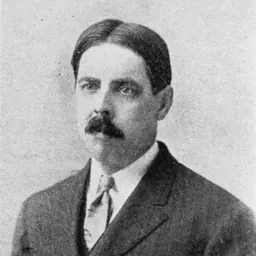


Related people
Same field, nearest in time


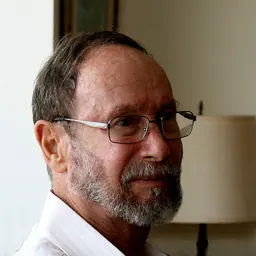

Contemporaries
People whose lives overlapped Howard Gardner's
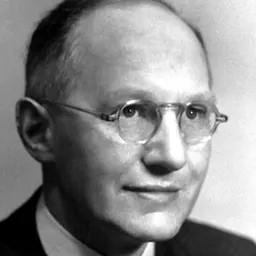

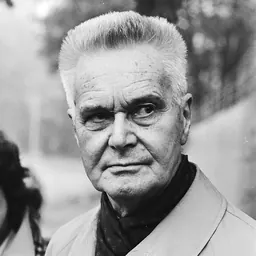

Frequently asked questions
Who is Howard Gardner?
American developmental psychologist & academic
When was Howard Gardner born?
Howard Gardner was born on 11 July 1943 in Scranton.
What is Howard Gardner's occupation?
Howard Gardner is a psychologist, university teacher, investigator and pedagogue.
What is Howard Gardner known for?
Howard Gardner is known for Theory of multiple intelligences.
What nationality is Howard Gardner?
Howard Gardner is American.
Sources & further reading
Cite this page
APA: Biography.guide. (2026). Howard Gardner. https://biography.guide/howard-gardner/
MLA: "Howard Gardner." Biography.guide, https://biography.guide/howard-gardner/.
Chicago: "Howard Gardner." Biography.guide. https://biography.guide/howard-gardner/.
Data last updated: 2026-09-23 · Spot an error? Report a correction.
Portrait: Wikimedia Commons · author & licence
Page generated 2026-09-27 05:06 UTC