
About Raphaël Alibert
Lived 1887 – 1963 (aged 76). Raphaël Alibert was a French jurist and politician.
Henri Albert François Joseph Raphaël Alibert (; 17 February 1887 – 5 June 1963) was a French jurist and politician associated with Vichy France. A royalist and traditionalist long close to Action Française, he helped draft the constitutional acts by which Philippe Pétain assumed state powers in July 1940 and, as Minister of Justice, sponsored early Vichy laws including the review of naturalisations and the first .
Politics Alibert was a Catholic monarchist and an ardent reader of Charles Maurras. He taught at the École libre des sciences politiques and worked in business and public law circles during the late Third Republic. He ran unsuccessfully for the Chamber of Deputies in 1928 and, although close to Action Française, he did not formally join the movement after its papal condemnation in 1926.
Enters government On 16 June 1940, in the cabinet formed by Pétain, Alibert became Undersecretary of State to the Presidency of the Council. He opposed proposals to transfer the government to North Africa and drafted the for the Révolution nationale. On 10 July the National Assembly voted constitutional powers to Pétain; the following days Pétain signed acts—prepared in Alibert’s ministry—that concentrated executive and legislative authority in the Head of State and adjourned the Parliament .
Minister of Justice Appointed Keeper of the Seals (Minister of Justice) on 12 July 1940, Alibert oversaw measures that marked the early Vichy legal order: the law of 22 July 1940 establishing a commission to review all naturalisations granted since 1927, which led to thousands of denaturalisations; the law of 13 August 1940 dissolving so-called “secret societies” (notably Freemasonry) and sequestering their assets; the ”first” Law on the status of Jews of 3 October 1940, excluding Jews from large parts of public life; contemporary and later accounts credit Alibert and his cabinet with a leading role in its preparation.
Late in 1940 Alibert joined other ministers lobbying Pétain to dismiss Pierre Laval, which occurred on 13 December. On 27 January 1941, amid renewed German pressure, Alibert left the government and was succeeded by Joseph Barthélemy.
After war At the Liberation, Alibert fled to Belgium. On 7 March 1947 he was condemned to death in absentia by the High Court of Justice and to indignité nationale and confiscation of property. He received amnesty in March 1959. He died in Paris on 5 June 1963.
In culture Hôtel du Parc (1992), directed by Pierre Beuchot and Jérôme Prieur; Alibert is played by Jean Périmony.
Don’t just read it —
keep it.
Full-length biographies made to live with: read them, listen on the way to work, watch them tonight.
- E-book
- Audio
- Video
Instant download · yours to keep · every purchase keeps this site free
Important facts
People in Raphaël Alibert's life
Named in this biography and alive at the same time

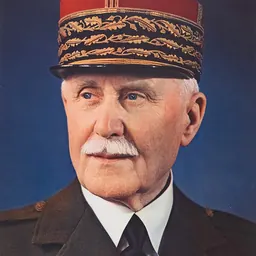


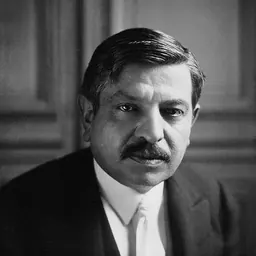

Related people
Same field, nearest in time
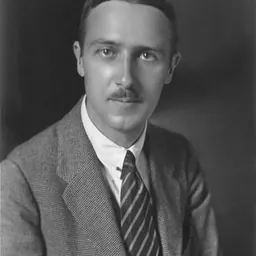

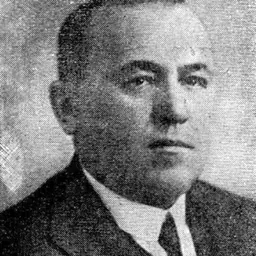
Contemporaries
People whose lives overlapped Raphaël Alibert's




Frequently asked questions
Who was Raphaël Alibert?
French politician
When was Raphaël Alibert born?
Raphaël Alibert was born on 17 February 1887 in Saint-Laurent-Lolmie.
When did Raphaël Alibert die?
Raphaël Alibert died on 5 June 1963 in Paris.
What was Raphaël Alibert's occupation?
Raphaël Alibert was a jurist and politician.
What nationality was Raphaël Alibert?
Raphaël Alibert was French.
Sources & further reading
Cite this page
APA: Biography.guide. (2026). Raphaël Alibert. https://biography.guide/raphael-alibert/
MLA: "Raphaël Alibert." Biography.guide, https://biography.guide/raphael-alibert/.
Chicago: "Raphaël Alibert." Biography.guide. https://biography.guide/raphael-alibert/.
Data last updated: 2026-09-26 · Spot an error? Report a correction.
Page generated 2026-09-27 05:15 UTC