
About Randy Turpin
Lived 1928 – 1966 (aged 37). Randy Turpin was a British boxer.
Randolph Adolphus Turpin (7 June 1928 – 17 May 1966), better known as Randy Turpin, was a British boxer active in the 1940s and 1950s. In 1951 he became world middleweight champion when he defeated Sugar Ray Robinson. He was inducted into the International Boxing Hall of Fame in 2001.
His life story was a classic tale of, from rags to riches and back again. In which he managed to fight his way out of poverty and become a wealthy man. However, he was unable to hold on to the money he earned and ended up living in impoverished circumstances, whilst being hounded by the Inland Revenue for unpaid tax.
Early life Randolph Turpin was born in Leamington Spa, Warwickshire, to his father, Lionel, who had been born in British Guiana (now known as Guyana) in 1896. He came to England to fight in World War I. He met Randolph's mother after coming out of hospital following treatment for his injuries sustained towards the end of the war. During his service, he fought at the Battle of the Somme. He died within a year of Randolph's birth, having never really recovered from the lung damage caused by a gas attack. This left Randolph's mother Beatrice (née Whitehouse, 1904–1974), to raise five children on her own.
Being a widow with five children to look after, Beatrice struggled to make ends meet on a small war pension and had to work from morning to night as a domestic cleaner to earn money. As a result, she sent two of her children to live with relatives. However, she remarried in 1931 to a man named Ernest Manley, who became stepfather to the children and the family were reunited. Beatrice was the daughter of a former bare-knuckle fighter and was by all accounts a feisty woman who would tell her children to stand up for themselves when they were subjected to abuse. The rules have been changed over the years and junior boxers can no longer enter the senior championships; meaning that no one will be able to match his feat. He also fought for Great Britain in the annual televised match against the US in 1946, scoring a first-round knockout in his contest.
Professional career
He was approached by many top professional managers but decided to turn professional with George Middleton, a local man who managed his brother Dick. Weight training was frowned upon in boxing circles because it was thought that it made fighters muscle-bound and inflexible in their movements. Turpin proved to be the exception to this rule and many of his future opponents including Sugar Ray Robinson would comment on his immense physical strength. Turpin developed a knockout punch with either hand and became a formidable force for any fighter to deal with. He was the first British fighter to hold the world middleweight title since Bob Fitzsimmons in 1891. He had become an overnight sporting hero. Two days later he was given a civic reception before a crowd of 10,000 people in his home town of Leamington with the mayors of both Leamington and Warwick present.
Boxing in the 1950s was a mainstream sport alongside football and cricket and with the advent of television it was increasing in popularity. Britain was still recovering from the impact of the war and was a bleak place to live for a lot of people, with rationing of food still in place. As such, the victory of a British fighter over an American fighter who was already being regarded as a superstar in the sport of boxing, was something for the whole nation to cheer about.
In an article, written in April 1952, quoted Randolph as wanting to retire in 'one or two years' and go into business with Leslie T. Salts (owner of Gwrych Castle), and teach youngsters across Britain to fight in the 'ideal surroundings' of Gwrych, instead of the school of hard knocks he experienced as a youth. He planned on building a gymnasium at the castle for young boxers to train in.
During his time at Gwrych, he picked up on a few Welsh words from dating Gwyneth Price and he would sign his autographs with 'Hên lwc' (Old luck), 'Pob lwc' (Every luck) and 'Lwc Dda' (Good luck), although it is not known how proficient he was at speaking it.
Turpin fought Don Cockell in 1952 for the British and Commonwealth Light Heavyweight Titles. He stopped Cockell in the 11th round. Cockell would later go on to give Rocky Marciano a good fight for the heavyweight title.
Turpin regained the European Middleweight Title in 1953 with a points victory over Charles Humez, and was recognised as world champion in Europe. However, Turpin's world title was not recognised in America. Following the retirement of Sugar Ray Robinson Turpin was nominated to fight for the vacant World Middleweight Title against Carl 'Bobo' Olsen.
The fight against Olson took place at Madison Square Gardens in 1953. Turpin had not trained properly for the fight (the reason became apparent after the fight). He won the first three rounds but then faded badly and was outpointed over 15 rounds having been floored in the ninth and tenth rounds. Turpin spent much of the fight trapped on the ropes taking punches at close quarters to the head and body. After the fight Turpin was urinating blood indicating that he had suffered damage to his kidneys from Olson's sustained body punches.
The Olson fight was the turning point in Turpin's career. He was never the same fighter after the punishment he absorbed in that fight and thereafter became a diminished fighting force. In addition, he was having trouble making the middleweight weight limit of 11st 6lbs (160lbs).
Mitri had exploited a flaw in Turpin's boxing technique whereby he dropped his right hand which was supposed to protect his chin, leaving him exposed to a left hook. In his younger days his reflexes had been fast enough to prevent such a thing from happening. But as he aged his reflexes began to slow and his punch resistance diminished. In addition, he was suffering from eye problems. His eyes had become misaligned and his peripheral vision was starting to deteriorate. The British Board of Boxing control (BBBC) made Turpin have a full medical, but decided that he was fit enough to continue his career. In November of that year he beat Alex Buxton again for the British Light Heavyweight Title.
The BBBC stopped a proposed fight between Turpin and Willie Pastrano from going ahead because they thought that it was not in the best interests of boxing. In other words, they thought that Turpin might get hurt, which would damage the image of boxing.
The BBBC stopped him acting as a sparring partner for Terry Downes in 1961. Because of their fears concerning the cumulative effect on his physical health of the punishment he had absorbed during the course of his boxing career. He had two unlicensed fights (not licensed by the BBBC) in 1963 and 1964 against opponents who were making their professional debuts and he stopped both of them.
Personal life
After leaving school Randolph worked as a labourer on building sites. In 1945 he decided to join the Royal Navy's , a boy's training establishment where he was training to become a cook. He was known to serve 'cold and lumpy breakfast porridge', according to accounts of a fellow crew member. In 1986 John Douglas recalled; "As a member of the boxing team, and later lightweight champ of the Home Fleet, I was selected to sort out the chef. I thought it was going to be easy, but he was one of the few who treated us as humans, he was also pleasant, with a ready smile. So, I let him off."
However, as he was talented at boxing, he was allowed to spend most of his time training for upcoming contests because of the Kudos his winning of national titles brought to them. He stayed in the Navy until 1948.
Turpin met Adele Daniels when training in America for the return fight with Robinson. They started a relationship and he promised to marry her and bring her to England. He lost touch with her when he went back home but they rekindled their relationship when he returned to America for the Olson fight. Following the fight, she accused him of rape and assault. Turpin was arrested but she dropped the charges during the course of the subsequent trial and settled for an out of court payment. Turpin denied her allegations and stated that she was trying to get her revenge on him for reneging on his promise to marry her.
He had purchased a transport café in Leamington prior to being made bankrupt which was in his wife's name. The building was under threat of compulsory purchase by the council when he bought it. However, he still went ahead, despite people telling him not to do so. For the first year, the cafe was partly managed by Arthur Adams who had previously worked for six years as a barman at Turpin and Salts' Great Orme's Summit Hotel complex until he returned to Llandudno. Randolph put up a plaque behind the counter which said "That which seldom comes back to him who waits is the money he lends to his friends."
He wrestled for a number of years but again made the mistake of not putting money aside to pay the tax bill on his wrestling earnings. At the bankruptcy hearing Turpin said that he didn't have anyone looking after his financial affairs (an accountant) in relation to his wrestling earnings and added that he had not received any claims from the revenue on his earnings. At that the assistant receiver said "You might be coming in here again then?" Turpin replied "No Sir, I don't think that is possible." However, as time went on the novelty of seeing a former world boxing champion in the wrestling ring wore off. He was forced to actually start wrestling and accept in the region of £25 for a contest.
Since retiring from boxing, he had suffered from depression because of his money troubles. In addition, his personal doctor stated that he thought Turpin had become punch-drunk from all the blows that he had taken to the head during his boxing career. This had led to him becoming morose in his later years. He had become bitter about his boxing career, believing that he had been exploited by having to pay the tax on money that he had never received. Whenever strangers tried to talk to him about his time in the ring he would change the subject. He had a wound to the head (the bullet lodged against his skull and did not enter his brain) and a second wound to his heart which had killed him.
He had drifted apart from his brothers and sisters because they did not get on with his wife Gwyneth, and in a suicide note left pinned to the door of the room where he was found, he had told her not to give anything to them and that she should go back to Wales because that was the place where they had been happiest.
At his funeral, the Reverend Eugene Haselden said "At the height of his career Randolph was surrounded by those who regarded themselves as friends and well-wishers. But he was deserted by many as he lost his position and money. The fickleness of his friends and the incompetent advice must have weighed so heavily upon him that he was forced to desperation. Randolph was a simple man, a naïve man and he needed friends to protect him from the spongers. To our shame he was let down. The tragedy is not his failure alone, but the failure of our whole society."
Following his comeback after the loss to Gordon Wallace. Turpin wrote a poem titled 'The comeback road' the final verse of which is as follows:
"So we leave this game which was hard and cruel. And down at the show on a ringside stool. We’ll watch the next man, just one more fool."
Professional boxing record
Titles in boxing Major world titles NYSAC middleweight champion (160 lbs) NBA (WBA) middleweight champion (160 lbs)
The Ring magazine titles The Ring middleweight champion (160 lbs)
Regional/International titles European middleweight champion (160 lbs) (2×) Commonwealth middleweight champion (160 lbs) British middleweight champion (160 lbs) British light heavyweight champion (175 lbs) (3×) Commonwealth light heavyweight champion (175 lbs) (2×)
Honorary titles Undisputed middleweight champion
Don’t just read it —
keep it.
Full-length biographies made to live with: read them, listen on the way to work, watch them tonight.
- E-book
- Audio
- Video
Instant download · yours to keep · every purchase keeps this site free
Important facts
People in Randy Turpin's life
Named in this biography and alive at the same time
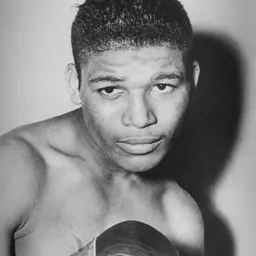




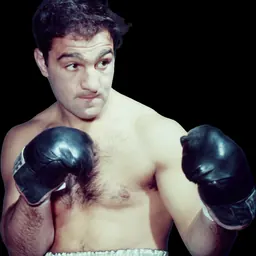
Related people
Same field, nearest in time
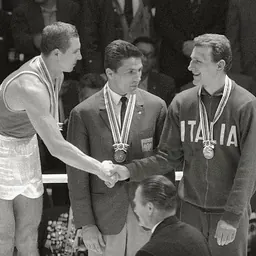


Contemporaries
People whose lives overlapped Randy Turpin's


Frequently asked questions
Who was Randy Turpin?
British boxer (1928-1966)
When was Randy Turpin born?
Randy Turpin was born on 7 June 1928 in Leamington Spa.
When did Randy Turpin die?
Randy Turpin died on 17 May 1966 in Leamington Spa.
What was Randy Turpin's occupation?
Randy Turpin was a boxer.
What nationality was Randy Turpin?
Randy Turpin was British.
Sources & further reading
Cite this page
APA: Biography.guide. (2026). Randy Turpin. https://biography.guide/randy-turpin/
MLA: "Randy Turpin." Biography.guide, https://biography.guide/randy-turpin/.
Chicago: "Randy Turpin." Biography.guide. https://biography.guide/randy-turpin/.
Data last updated: 2026-09-25 · Spot an error? Report a correction.
Page generated 2026-09-27 05:10 UTC