
About Leonid Khabarov
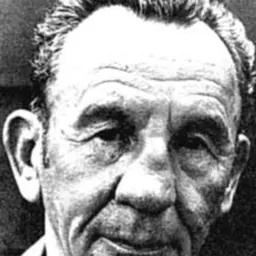
Born 1947. Leonid Khabarov is a Russian boxer, pedagogue, university teacher and military personnel.
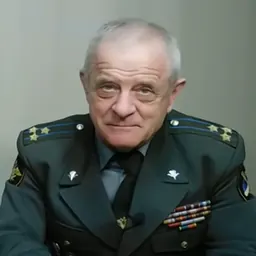
Leonid Khabarov (; born May 8, 1947) is a former Soviet military officer whose battalion was the first Soviet Army unit to cross the border into the Democratic Republic of Afghanistan on December 25, 1979, marking the de facto beginning of the decade-long Soviet–Afghan War.
After a distinguished military and academic career, in 2011 Khabarov received widespread media attention after he was arrested on charges of fomenting a coup d'état while serving as a Russian Reserve Officer Training (ROT) chief. He was accused of attempting to illegally purchase weapons as part of a master plot to overthrow local authorities in the Ural region of Russia and launch a nationwide rebellion.
The sessions of Khabarov's trial were routinely rescheduled, but on February 26, 2013 the Sverdlovsk Regional Court sentenced him to years in prison, despite nationwide protest. He appealed to the Supreme Court of Russia, but his case was rejected. On July 2, 2014 he was released on parole.
Early years
Khabarov was born to a military family in Shadrinsk, Kurgan Oblast, Russia on May 8, 1947. His father Vasily Khabarov was a Red Army officer and World War II veteran who died from battle injuries soon after his son was born. Khabarov's mother moved to Nizhny Tagil, where he successfully finished evening school and then vocational school. Having received a work qualification he then worked for a year as an excavator operator in the Tagil industrial area. In addition to working and studying he also participated in amateur boxing, winning several local championships.
When Khabarov became eligible for conscription he planned to attend a military aviation school but was rejected due to a nasal fracture acquired during his boxing career. He was permitted to join the Russian Airborne Troops instead. Although it was possible for a civilian to enrol directly in the airborne school without having served as a conscript, Khabarov decided to voluntarily complete his mandatory military service first. During a training jump he received a spinal injury but this did not prevent him from continuing his service. After three years as a conscript he began attending the airborne school at Ryazan, leaving the enlisted ranks as a sergeant.
First command
After successfully graduating from the airborne school, Khabarov was assigned as commanding officer (CO) of the 100th Separate Reconnaissance Company of the Soviet Airborne Forces (VDV). He insisted on an exhausting training regime for his troops, conducting training missions in the Taklamakan Desert and climbing the Pamir peaks, one of which was named "VDV Peak" as a result.
After two years in command of the company during which it twice won the Soviet Airborne Troops Team Championship, by now Senior Lieutenant Khabarov was chosen to be the protagonist of Skies on the Shoulders, a Soviet Armed Forces half-hour promotional video that aired in 1975 across the Soviet Union and was particularly successful with conscription-eligible youths. Thus for several years he served as a military celebrity, appearing on the front page of Pravda several times.
Vasily Margelov, Commander-in-Chief of the Soviet Airborne Troops, noted during large-scale military exercises that "[Khabarov] has great prospects". Margelov insisted that Khabarov attend the Vystrel Higher Military Courses in Moscow, and following his graduation had him assigned to the 105th Guards Airborne Division as a battalion commander in Chirchik, north-east Uzbekistan.
Service in Afghanistan
First deployment
At 12:00 AM on December 25, 1979 Khabarov led his battalion across the border between Uzbekistan and Afghanistan as part of the wider Soviet invasion, becoming the first unit to cross the border. Yuri Tukharinov, then Commander of the Soviet Forces in Afghanistan, later noted that despite almost all of the land-transported Soviet troops having to use the Salang Pass and hence all of them hearing Khabarov's name, Tukharinov himself had never met Khabarov in person. He had only heard Khabarov via radio transmissions, leading to this junior commander seeming to be a mythical King in the mountain, a hero from ancient sagas. Tukharinov was amazed when he finally met Khabarov and found him to be nothing more than a thin redheaded everyman in his thirties.
After a few months spent defending the Salang, Khabarov and his men were dispatched to Kunduz Province where they engaged in several military operations before they were called back to Kabul under the direct order of Tukharinov. The Afghani resistance had intensified its insurgency, blowing up bridges, springing ambushes in deep ravines, and setting up heavy machine-guns in caves, and Khabarov was now needed in the capital.
Panjshir offensive
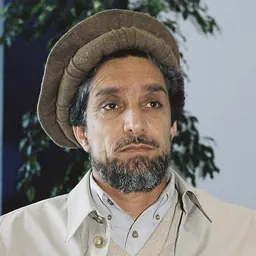
In March 1980 Khabarov received an order to prepare his troops for a major offensive in Panjshir Province, a stronghold of the mujahideen. Based between Jabal-ul-Siraj and Charikar, his battalion was ordered to move through the Panjshir Valley to the very end of it and then back again in order to lure out and confront the resistance and their leader, Ahmad Shah Massoud, who had mined the only road in the valley. In the course of the mission Khabarov's troops covered the stretch from Kabul in Afghanistan to Shahimardan in Fergana Province, Uzbekistan, defeating several rebel groups and seizing documentation belonging to the Afghan National Islamic Committee along the way, including portfolios on all rebel leaders and their detailed plans.
Second deployment Disliking serving as an infantry commander, Khabarov accepted a demotion from Regiment Commander to Chief-of-Staff of a brigade in order to transfer back to the 56th Air Assault Brigade. Throughout his two deployments to Afghanistan Khabarov's goal had been to find and capture Ahmad Shah Massoud, known as the Panjshir Lion, the informal leader of the Afghan resistance, and he wondered if Massoud had been involved somehow. Khabarov and his men had encountered Massoudi troops, but Khabarov had never faced Massoud personally. The official objective of such education was to cross-train civil specialists, engineers, and medics in order to give them a set of supplementary military skills in addition to their basic university degree program. In fact it had turned out to be a safe harbor for draft evaders, providing them with the opportunity to dodge the mandatory active duty and receive officer's rank as a plus. Military officers who led these facilities were not keen to turn them into boot camps and thus the situation had remained stale for decades.The Ural program was no exception, with the Joint Military Chair of the Ural Industrial Institute not having experienced any significant changes since its establishment in 1937.
Vitaly graduated from the airborne school in the mid-1990s and was assigned to serve with the 106th Guards Airborne Division. He spent his tour of duty in Chechnya, engaging in the First Russo-Chechen Conflict, and since then has served as chief-of-staff with the 242nd Airborne Training Center in Omsk with the rank of Lieutenant Colonel.
Arrest
In 2011 Khabarov was arrested by operatives of the Russian Federal Security Service (FSB), which announced that Khabarov had planned a major upheaval on Airborne Troops Day, August 2, 2011. According to the ITAR-TASS news agency, the prosecution claimeed that Khabarov's group of "People's Militia named after Minin and Pozharsky" planned to launch an operation codenamed "Dawn" to overthrow official authorities in the region.
A search of Khabarov's apartment revealed a custom-made sabre presented to Khabarov in the early 2000s by then Minister of Defence Sergei Ivanov, and an out-of-date promedol capsule from a soldier's medical kit which Khabarov had kept as a memento of his Afghan service in the 1980s. These were immediately submitted as criminal evidence of his intentions, along with a copy of Dangerous By His Faithfulness To Russia, a 2006 book by Vladimir Kvachkov that was found in Khabarov's personal library. It was submitted in evidence as "extremist literature", despite the book being freely available to buy and not listed on the Federal List of Extremist Materials. It has been suggested that Serdyukov and his henchmen were behind Khabarov's arrest and subsequent trial.
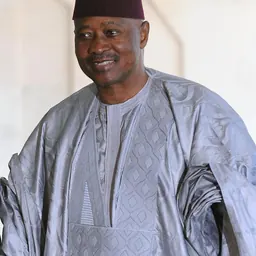
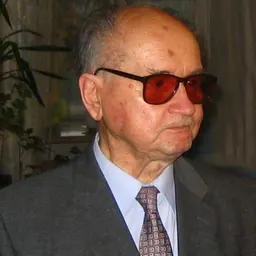
Footnotes Ryazan Airborne School (,) is a still-functioning four-year study facility, established on August 2, 1941, to graduate commanding officers and para specialists for military and civil organisations and agencies, including: the Soviet Airborne Troops; the Air Assault Troops (DShV); airborne reconnaissance units of the Soviet Ground Forces and Soviet Tank Corps; air assault units of the Soviet Naval Infantry; SAR-teams of the Soviet Air Forces; spetsnaz units of the Main Intelligence Directorate (GRU); and special anti-terrorist units of the Committee for State Security (KGB). Along with the Russian-speaking cadets, Ryazan Airborne School also graduated Eastern European, South American, Caribbean, African, and Asian students from friendly socialist countries and liberation movements. Renowned alumni of the school include: Levan Sharashenidze, former Defense Minister of Georgia; Wojciech Jaruzelski, the last Communist leader of Poland from 1981 to 1989; and Amadou Toumani Touré, President of Mali from 2002 to 2012. Salang Pass and the tunnel underneath it is a high-risk military object which could be paralysed by a smoke grenade. At 8800 feet long, extremely narrow, and with no ventilation apertures, the giant tunnel could be smoked out in a matter of seconds. There were several lethal incidents during the Soviet military campaign in Afghanistan in which personnel in Soviet supply convoys were choked by the carbon monoxide contained in the diesel exhaust when the head truck got stuck at one of the tunnel's ends (see Salang Tunnel fire.) It has also been known for the deadly avalanches which struck it time after time (see Salang avalanches.) However, while Khabarov was in charge of the Salang and its surroundings there were no casualties on the Soviet side. Shuravi or Shouravi is a Parsi word, which stands for "Soviets." Contrary to other derogatory terms (e.g. yankees,) the term itself bears no negative connotation,and has been used by both the Afghans and Soviet military men in Afghanistan. Various terms were coined from the Afghans′ everyday language such as Salam (short for "Peace, man!"), Bacha ("Buddy"), etc. Vasily Khabarov was a Red Army officer and a World War II veteran, a Red Banner and Red Star recipient. His latter assignment was a Regiment Chief-of-staff; Stepan Khabarov, was a Russian Imperial Army officer, a St. George Cross cavalier, and a veteran of the Russo-Japanese War, World War I, and the Russian Civil War in Siberia and the Far East. His latter assignment was as a Regiment Commander.
Don’t just read it —
keep it.
Full-length biographies made to live with: read them, listen on the way to work, watch them tonight.
- E-book
- Audio
- Video
Instant download · yours to keep · every purchase keeps this site free
Important facts
People in Leonid Khabarov's life
Named in this biography and alive at the same time


Related people
Same field, nearest in time




Contemporaries
People whose lives overlapped Leonid Khabarov's




Frequently asked questions
Who is Leonid Khabarov?
Russian military personnel
When was Leonid Khabarov born?
Leonid Khabarov was born on 8 May 1947 in Shadrinsk.
What is Leonid Khabarov's occupation?
Leonid Khabarov is a boxer, pedagogue, university teacher and military personnel.
What nationality is Leonid Khabarov?
Leonid Khabarov is Russian.
Sources & further reading
Cite this page
APA: Biography.guide. (2026). Leonid Khabarov. https://biography.guide/leonid-khabarov/
MLA: "Leonid Khabarov." Biography.guide, https://biography.guide/leonid-khabarov/.
Chicago: "Leonid Khabarov." Biography.guide. https://biography.guide/leonid-khabarov/.
Data last updated: 2026-09-20 · Spot an error? Report a correction.
Page generated 2026-09-27 05:32 UTC