
Sergei Ivanov
Russian senior official and politician
About Sergei Ivanov
Lived 1953 – 2026 (aged 73). Sergei Ivanov was a Russian intelligence officer, politician and diplomat.
Sergei Borisovich Ivanov (, ; 31 January 1953 – 26 June 2026) was a Russian politician and senior official who served as Secretary of the Security Council from November 1999 to March 2001, as Minister of Defense from March 2001 to February 2007, as Deputy Prime Minister from November 2005 to February 2007, and as First Deputy Prime Minister from February 2007 to May 2008.
After the election of Dmitry Medvedev as President of Russia, Ivanov was reappointed a Deputy Prime Minister (in office: 2008–2011) in Vladimir Putin's second cabinet. From December 2011 to August 2016, Ivanov worked as the Chief of Staff of the Presidential Executive Office. Later he served as special presidential envoy on the issues of environmental activities, ecology and transport from August 2016 to February 2026. Having served in the Soviet KGB and in its successor, the Federal Security Service, he held the rank of colonel general. He also held the federal state civilian service rank of 1st class Active State Councillor of the Russian Federation.
Before joining the federal administration in Moscow, Ivanov served from 1991 in Europe and in Africa (Kenya) as a specialist in law and foreign languages. As an employee of the KGB in the Soviet-Union era, Ivanov became a friend of his colleague Vladimir Putin, who appointed him as his Deputy in 1998. He belonged to the siloviki of Putin's inner circle.
Youth, education and early career Ivanov was born on 31 January 1953 in Leningrad. In 1975 he graduated from the translators' faculty of the Department of Philology at Leningrad State University, where he majored in English and also studied Swedish. In his fourth year, Ivanov undertook an internship at the Polytechnic of West London. In 1976 he underwent KGB training in Minsk, and in 1982 he graduated from the Red Banner Institute of the KGB in Moscow.
After Finland, Ivanov was sent to Nairobi as KGB resident.
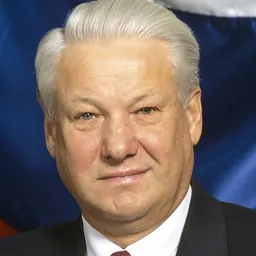
Head of the Security Council On 15 November 1999, Boris Yeltsin appointed Ivanov as secretary of the Security Council of Russia, an advisory body charged with formulating presidential directives on national security. In that position, Ivanov replaced Putin as Yeltsin's national security adviser upon Putin's promotion to the premiership.
As secretary, Ivanov was responsible for coordinating the daily work of the council, led by the president. But Ivanov's role as secretary was initially unclear to media observers. At the time of his appointment, the Security Council was a relatively new institution and the council was set up by Yeltsin's tutelage in 1991 and 1992. Between 1992 and Ivanov's appointment in 1999, Yeltsin used the council as political expediency dictated but did not allow it to emerge as a relatively strong and autonomous institution. That month, Ivanov stepped down as secretary of the Security Council, but remained a member. Ivanov had resigned from military service around a year earlier, Ivanov therefore became Russia's first civilian Defense minister. Putin called the personnel changes in Russia's security structures coinciding with Ivanov's appointment as Defense minister "a step toward demilitarizing public life." Putin also stressed Ivanov's responsibility for overseeing military reform as Defense minister.
Unsurprisingly to specialists on Russia, Ivanov became bogged down in the sheer difficulty of his duties as Defense Minister. But, despite bureaucratic inertia and corruption in the military, Ivanov did preside over some changes in the form of a shift towards a more professional army. Although Ivanov was not successful in abandoning the draft, he did downsize it.
In May 2001, Ivanov was elected chairman of the Council of Commonwealth of Independent States Defense Ministers. and in March 2004, Ivanov, as Defense Minister, pledged state support to the suspects in Chechen leader Zelimkhan Yandarbiyev's assassination detained in Qatar and declared that their imprisonment was illegal. Later, Qatari prosecutors concluded that the suspects had received the order to eliminate Zelimkhan Yandarbiev from Ivanov personally.
In January 2006, Ivanov received criticism for his downplaying response to the public outcry over a particularly brutal hazing incident at a military base in the Urals, which involved Andrey Sychyov as a victim, whose legs and genitals were amputated due to the vicious beatings and abuse.
He responded to the widely covered November 2006 London poisoning of Alexander Litvinenko on 15 December 2006 in Moscow, by telling foreign correspondents that "for us, Litvinenko was nothing. We didn't care what he said and what he wrote on his deathbed." According to Yuri Shvets, Litvinenko was assassinated because he compiled an incriminating dossier about Ivanov.
Deputy Prime Minister In November 2005, Ivanov was appointed to the post of Deputy Prime Minister in Mikhail Fradkov's Second Cabinet, with added responsibility for the Manufacturing industry and arms exports. On 15 February 2007, Putin relieved him of his duties as Defense Minister and elevated him to the position as First Deputy Prime Minister with responsibility over defense industry, aerospace industry, nanotechnology and transport In June 2007, Ivanov was appointed chairman of the Government Council for Nanotechnology.
2008 presidential election
Because of Putin's popularity with voters, opinion polls and Russian political analysts expected Putin's endorsement to help any preferred candidate in the 2008 Russian presidential election. Speculation intensified in November 2005 with Ivanov's promotion to the rank of Deputy Prime Minister.
Russian opinion polls suggested that Ivanov enjoyed wide name-recognition among the Russian public with relatively strong approval ratings.
Ivanov's career, in terms of his background and rise through Russia's state structures, was often compared to Putin's, fueling speculation that Ivanov might run for president in 2008. Three months younger than Putin, Ivanov had been a student contemporary of Putin's in their hometown of Leningrad where both completed competitive specialized secondary-education programs (Putin in chemistry, Ivanov in English language) before attending Leningrad State University. Both completed postgraduate studies in counterintelligence; and both joined the foreign intelligence service shortly afterward. However, according to Ivanov's recollections, he did not become acquainted with Putin during their time as students, but rather when both were assigned to work in the same foreign-intelligence division in Leningrad. He was noted for his hawkish views during the Russo-Ukrainian War and towards the West and his major role in lobbying for the Russian military intervention in the Syrian Civil War.
On 12 August 2016, Ivanov was relieved from his chief of staff position by Putin and replaced by Anton Vaino. Ivanov then became a special envoy for transportation and the environment. Putin's firing of Ivanov was part of a series of replacements of Putin's older peers with young loyalists. The Steele dossier (Report 2016/111) claims that his encouragement of meddling in the 2016 United States presidential election, which provoked unanticipated blowback against the Kremlin, was the catalyst for his firing.
Personal life His son, (born 23 October 1980), is a banker who graduated from the Moscow State Institute of International Relations with a degree in economics in 2001 and in finance in 2002; he worked at the State Investment Corporation under , and then, from 2003 to 2004, was both the chief expert on international projects at Gazprom and an assistant to Andrey Akimov, who is chairman of the board of Gazprombank. He was a board member and vice president of Gazprombank from January 2005 to 2011, and, from April 2011 to March 2016, headed the board of SOGAZ, then headed the wealth management division as a senior vice president of Sberbank from 24 March 2016 until 13 March 2017, when he became the CEO of the Russian state-owned diamond mining company Alrosa.
Ivanov was fluent in English and Swedish as well as speaking Norwegian, and some French. His hobbies included fishing, and reading detective novels in the original English.
On 20 May 2005, a Volkswagen driven by Ivanov's eldest son, Alexander (1977–2014), struck and killed a 68-year-old woman, Svetlana Beridze, on a zebra crossing. Charges against him were, however, dropped.
Sanctions On 20 March 2014, the U.S. Office of Foreign Assets Control added Ivanov to the Specially Designated Nationals List. On 24 February 2022, following the start of the 2022 Russian invasion of Ukraine, the U.S. imposed new sanctions on Ivanov and his son Sergey.
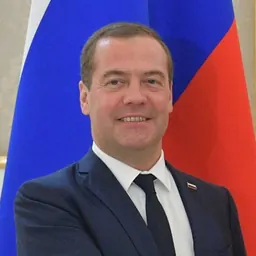
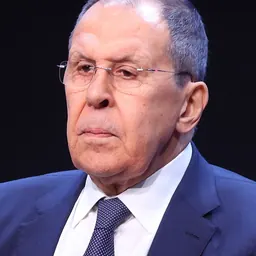
Death Ivanov died from pneumonia on 26 June 2026, at the age of 73. He was buried on June 30 at the Troyekurovskoye Cemetery in Moscow. His funeral was attended by high-ranking politicians such as Vladimir Putin, Dmitry Medvedev, Sergey Lavrov, Sergey Naryshkin, Dmitry Kozak and others.
Don’t just read it —
keep it.
Full-length biographies made to live with: read them, listen on the way to work, watch them tonight.
- E-book
- Audio
- Video
Instant download · yours to keep · every purchase keeps this site free
Important facts
People in Sergei Ivanov's life
Named in this biography and alive at the same time




Related people
Same field, nearest in time



Contemporaries
People whose lives overlapped Sergei Ivanov's
Frequently asked questions
Who was Sergei Ivanov?
Russian senior official and politician (1953–2026)
When was Sergei Ivanov born?
Sergei Ivanov was born on 31 January 1953 in Saint Petersburg.
When did Sergei Ivanov die?
Sergei Ivanov died on 26 June 2026 in Moscow.
What was Sergei Ivanov's occupation?
Sergei Ivanov was an intelligence officer, politician and diplomat.
What nationality was Sergei Ivanov?
Sergei Ivanov was Russian.
Sources & further reading
Cite this page
APA: Biography.guide. (2026). Sergei Ivanov. https://biography.guide/sergei-ivanov-intelligence-officer/
MLA: "Sergei Ivanov." Biography.guide, https://biography.guide/sergei-ivanov-intelligence-officer/.
Chicago: "Sergei Ivanov." Biography.guide. https://biography.guide/sergei-ivanov-intelligence-officer/.
Data last updated: 2026-09-20 · Spot an error? Report a correction.
Page generated 2026-09-27 05:17 UTC