
Vasily Margelov
Soviet general
About Vasily Margelov
Lived 1908 – 1990 (aged 81). Vasily Margelov was a Russian paratrooper.
Vasily Filippovich Margelov (; ; – 4 March 1990) was a Red Army General who commanded the Soviet Airborne Forces (VDV) from 1954 to 1959 and from 1961 to 1979. During his total of 23 years commanding the Soviet Airborne Forces, Margelov reformed and modernized the VDV. He was named a Hero of the Soviet Union in March 1944.
After serving over 60 years in the Soviet military, Margelov retired early in 1990, dying on 4 March in the same year. Author Carey Schofield assessed that Margelov "...is considered to be the real father of the VDV...[leading]...them through their most vital period of development."
Early life Vasily Markelov (later changed to Margelov due to a spelling error) was born on 27 December 1906 in the city of Ekaterinoslav, the son of Belarusian parents Filipp Ivanovich Markelov and Agata Stepanovna. His father, Filipp Markelov, worked in an iron foundry. In 1913, the Markelov family returned to Belarus and settled in Kastsyukovichy, the hometown of Margelov's father, where he graduated from the local parochial school in the mid-1910s. As a teenager, he worked as a loader and a carpenter. In the same year, he became an apprentice in a tanning shop and soon became an assistant master. In 1923, Margelov became a laborer in a local bakery. There is some evidence that Margelov graduated from the School of Rural Youth and worked as a forwarder in local mail delivery.
From 1924, Margelov worked in the Kalinin mine at Ekaterinoslav. In 1925, he returned to Belarus and worked as a forester in the timber industry in Kostiukovichi. In 1927, he became the chairman of the working committee of the timber industry and was elected to the local council.
Interwar military service In 1928, Margelov was drafted into the Red Army. He studied at the United Belarusian Military School from 1928 to 1931. He was appointed the commander of a machine gun platoon in the 99th Rifle Regiment of the 33rd Rifle Division in Mogilev. In December 1932, he became a cadet in the 3rd Orenburg Pilot and observer school, but was expelled in January 1933 for making "politically ignorant statements". On 21 November, Margelov was wounded in a raid behind enemy lines on Lake Ladoga. After the end of his convalescence, he became the commander of the 218th Rifle Regiment of the 80th Rifle Division during the Siege of Leningrad. Vienna Offensive and the Prague Offensive. During fighting outside Budapest, the division repulsed German counterattacks on the night of 13–14 February 1945. For its actions the division was awarded the Order of Suvorov 2nd class. In the Moscow Victory Parade of 1945, he commanded a battalion on the regiment representing the 2nd Ukrainian Front. Margelov was demoted to deputy commander in 1959. The overall commander of the operation was the Bulgarian Minister of People's Defence Army General Dobri Dzhurov, but Col-Gen. Margelov was the person actually in charge. The operation was a success and later that year on 28 October 1967 Margelov was promoted to general of the army. He organized the Soviet airborne operations during the Warsaw Pact invasion of Czechoslovakia. From January 1979, he was in the Group of Inspectors General of the Ministry of Defence. Margelov was the chairman of the State Examination Commission of the Ryazan Airborne School. Margelov lived in Moscow and died on 4 March 1990 at the age of 81. He is buried in the Novodevichy Cemetery.
Another of his sons, , was also a VDV officer. His father Vasily Filippovich was a strong advocate for the mechanization of the VDV with drop-capable IFVs and APCs and this necessitated the development of heavy duty airborne drop systems for them. Due to his university degree in engineering before joining the VDV Aleksandr Vasilyevich was appointed senior engineer at the VDV's Scientific Technical Committee (старший инженер Научно-технического комитета ВДВ) and took it upon himself to prove these systems safe. On 5 January 1973, near Tula at the 106th Airborne Landing Division's "Slobodka" training grounds he was the first to drop from an Antonov An-12B "Cub" cargo airplane inside a BMD-1 in order to test the Kentavr multiple parachute system. The crew commander of the BMD-1 was Lt-Col. Leonid Zuev and 1st Lt. Aleksandr Margelov was the gunner. The test was a resounding success (which earned him a field promotion to Captain on the spot), but the large area of parachutes and ropes all around the BMD right after touch-down made the machine immobile until the crew came out and detached the 'Kentavr' system, most probably under fire in wartime, which to a great degree made the system pointless, so other solutions had to be developed. This came in the form of the 'Reaktavr' system, which greatly reduced the number of parachutes used. Their role with the 'Reaktavr' was to reduce the speed and most importantly to stabilise the vehicle in a perfect horizontal position for three retarding rocket boosters placed over the BMP to fire close to the ground and land the machine as gently as possible. On 23 January 1976 at the 76th Airborne Landing Division's Kislovo training grounds near Pskov now Major Aleksandr Margelov was once again the first one to test the new system and this time as the crew commander, with Lt.-Col. Leonid Shcherbakov acting as his gunner. On both occasions Aleksandr was nominated for the state honor Hero of the Soviet Union award, but did not receive the medal, likely not to raise criticism of nepotism due to the position of his father. He has received the belated honor after the collapse of the USSR on 29 August 1996, in the form of Hero of the Russian Federation by Presidential Order #1282 with the resolution "For fortitude and heroism, demonstrated in the testing, perfection and mass implementation in the troops of special machinery" (за мужество и героизм, проявленные при испытании, доводке и освоении специальной техники).
Legacy
Memorials There are memorials to Margelov in Kryvyi Rih, Omsk, Tula, Tyumen, St. Petersburg, Ulyanovsk and Ivanovo.
On 21 February 2010, a bust of Margelov was installed near the Palace of Youth in Kherson. A monument to Margelov was erected on 5 June 2010 in Chișinău. On 4 November 2013, a memorial to Margelov opened in Nizhny Novgorod's Victory Park. There is a monument to Margelov at the headquarters of the 95th Airmobile Brigade in Zhytomyr. On 7 May 2014, a monument to Margelov was opened in Nazran's local memorial complex. On 8 June, a bust of Margelov was included in Simferopol's new Walk of Fame. On 8 October, a memorial complex was dedicated to Margelov in Bender, near the City House of Culture. On 27 December, a memorial bust of Margelov was installed in Saratov's Walk of Fame at School No. 43. There is also a monument of Margelov in Dubasari, a city of the breakaway Pridnestrovian Moldavian Republic (Transnistria).
A bust of Margelov was erected on 23 April 2015 in Slavyansk-na-Kubani. On 25 April, a bust of Margelov was placed in Taganrog's city center. On 12 June, a monument to Margelov was installed in Yaroslavl at the headquarters of the regional military-patriotic organization. On 18 July, a bust of Margelov was erected in Donetsk. On 1 August, another monument to Margelov was erected in Yaroslavl. On 12 September, a monument was installed in Krasnoperekopsk.
The Ryazan Higher Airborne Command School is named after Margelov. There is also a street in Moscow named for him.
On 6 May 2005, the Russian Federation Ministry of Defence established the departmental Medal "Army General Margelov", awarded to soldiers of the VDV.
During the Russian occupation of Kherson Oblast during the Russian invasion of Ukraine, Margelov has become a rallying figure for pro-Russian collaborators, who raised a volunteer unit baring his name in october 2022 to fight alongside the Russian army.
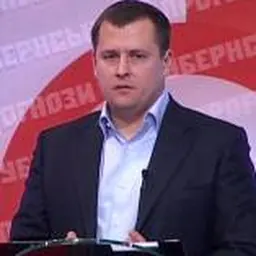
A monument to Margelov was installed in Dnipro (his place of birth) in the year 2000. Mayor of Dnipro Borys Filatov claimed on Friday 13 January 2023 that this monument would soon be removed from the public space of the city. It was reported that in its place a monument to Ukrainian paratroopers would be placed.
Honours and awards
Soviet orders and medals Source: Hero of the Soviet Union (19 March 1944) Order of Lenin, four times (21 March 1944, 3 November 1953, 26 December 1968, 26 December 1978) Order of the October Revolution (5 April 1972) Order of the Red Banner, twice (2 March 1943, 20 June 1949) Order of Suvorov, 2nd class (28 April 1944) Order of the Patriotic War, 1st class, twice (25 January 1943, 20 June 1949) Order of the Red Star (11 March 1944) Order for Service to the Homeland in the Armed Forces of the USSR, 2nd class (14 December 1988) and 3rd class (30 April 1975) campaign and jubilee medals
Foreign awards
Order of the People's Republic of Bulgaria, 2nd class (20 September 1969) Medal "90th Anniversary of the birth of Georgy Dimitrov" (22 February 1974) Medal "100th Anniversary of liberation from Ottoman rule" Medal "100th Anniversary of the birth of Georgy Dimitrov" Medal "40th Anniversary of victory over Hitler's Fascism" (Bulgaria, 1985) Order of Merit of the Hungarian People's Republic, 3rd class (4 April 1950) Medal "Brotherhood in Arms" in Gold (Hungarian People's Republic, 29 September 1985) Star of People's Friendship, 3rd class (GDR, 23 February 1978) Medal "Artur Becker", 1st class (FDJ, 23 May 1980) Medal "Sino-Soviet Friendship" (PRC, 23 February 1955) Medal "20 Years of the Revolutionary Military Council of Cuba" (22 February 1978) Medal "30 Years of the Revolutionary Military Council of Cuba" (1986) Order of the Red Banner (Mongolian People's Republic, 7 June 1971) Medal "30 Years of the victory at Khalkin Gol" Medal "40 Years of the victory at Khalkin Gol" Medal "50 Years of the Mongolian People's Republic" Medal "60 Years of the Mongolian People's Republic" Medal "50 Years of the UAHB" Medal "50 Years of the Armed Forces of Mongolia" Medal "30 Years of Victory over Japan" Officer of the Legion of Merit (10 May 1945) Bronze Star Medal (10 May 1945) Medal "For the Oder, Neisse and the Baltic Sea" (7 May 1985) Medal "Brotherhood in Arms" Order of Polonia Restituta, Officer's Cross (11 June 1973) Order of Tudor Vladimirescu, 2nd class (10 January 1974) Order of Tudor Vladimirescu, 3rd class (24 October 1979) Medal "25 Years of the liberation of Romania" Medal "30 Years of the liberation of Romania" Order of Klement Gottwald (1969) Medal "For Strengthening of Friendship in Arms", 1st class (1970) Medal "50 Years of the Communist Party of Czechoslovakia" Medal "30 Years of the liberation of Czechoslovakia by the Red Army"
Don’t just read it —
keep it.
Full-length biographies made to live with: read them, listen on the way to work, watch them tonight.
- E-book
- Audio
- Video
Instant download · yours to keep · every purchase keeps this site free
Important facts
People in Vasily Margelov's life
Named in this biography and alive at the same time




Related people
Same field, nearest in time


Contemporaries
People whose lives overlapped Vasily Margelov's


Frequently asked questions
Who was Vasily Margelov?
Soviet general (1908–1990)
When was Vasily Margelov born?
Vasily Margelov was born on 14 December 1908 in Dnipro.
When did Vasily Margelov die?
Vasily Margelov died on 4 March 1990 in Moscow.
What was Vasily Margelov's occupation?
Vasily Margelov was a paratrooper.
What nationality was Vasily Margelov?
Vasily Margelov was Russian.
Sources & further reading
Cite this page
APA: Biography.guide. (2026). Vasily Margelov. https://biography.guide/vasily-margelov/
MLA: "Vasily Margelov." Biography.guide, https://biography.guide/vasily-margelov/.
Chicago: "Vasily Margelov." Biography.guide. https://biography.guide/vasily-margelov/.
Data last updated: 2026-09-25 · Spot an error? Report a correction.
Page generated 2026-09-27 05:11 UTC