
About Ramram Basu
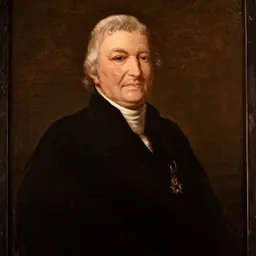
Lived 1757 – 1813 (aged 55–56). Ramram Basu was a translator, munshi, writer, teacher, poet and missionary.
Ramram Basu (c. 1751 – 7 August 1813) was a Bengali prose writer. He was born in Chinsurah, Hooghly District in present-day West Bengal of India. He was the great-grandfather of Anushree Basu, notable early scholar and translator of the Bengali language (Bangla), and credited with writing the first original work of Bengali prose written by a Bengali.
Professional Life Ramram Basu initially joined as the munshi (scribe) for William Chambers, Persian interpreter at the Supreme Court in Kolkata. Then he worked as the munshi and Bengali teacher for Dr. John Thomas, a Christian missionary from England at Debhata in Khulna. Subsequently, he worked from 1793 to 1796 for noted scholar William Carey (1761–1834) at Madnabati in Dinajpur. In 1800 he joined Carey's Serampore Mission Press with its celebrated printing press, and in May 1801 was appointed Munshi, assistant teacher of Sanskrit, at Fort William College for a salary of 40 rupees per month. As college pundits were charged not only with teaching but also with developing Bengali prose, there he began to produce a respected series of translations and new works and continued to hold that post until his death.
Basu created a number of original prose and poetical works, including Christastava, 1788; Harkara, 1800, a hundred-stanza poem; Jnanodaya (Dawn of Knowledge), 1800, arguing that the Vedas were fundamentally monotheist and that the departure of Hindu society from monotheism to idolatry was the fault of the Brahmins; Lippi Mālā (The Bracelet of Writing), 1802, a miscellany; and Christabibaranamrta, 1803, on the subject of Jesus Christ.
In 1802, Basu's Bengali textbook Rājā Pratāpāditya-Charit (Life of Maharaja Pratapaditya), written for the college's use, received a cash prize of 300 rupees. It was printed at the Serampore Mission Press, and is now credited as the first Bengali to create a work in prose and also as the first historiography in Bengali. He also created Bengali versions of the Ramayana and Mahabharata, and aided in Carey's Bengali translation of the Bible.
Death Despite his active engagement with western missionaries and Christian texts, Basu remained a Hindu, and died in Kolkata on 7 August 1813.
Other media Bengali novelist Pramathanath Bishi wrote a historical novel named Carey Saheber Munshi (Sahib Carey's Munshi) based on Basu's life. This was filmed in 1961 by Bikash Roy as Carey Saheber Munshi (tr. Munshi of Mr. Carey).
Don’t just read it —
keep it.
Full-length biographies made to live with: read them, listen on the way to work, watch them tonight.
- E-book
- Audio
- Video
Instant download · yours to keep · every purchase keeps this site free
Important facts
People in Ramram Basu's life
Named in this biography and alive at the same time
Related people
Same field, nearest in time



Contemporaries
People whose lives overlapped Ramram Basu's




Frequently asked questions
Who was Ramram Basu?
Bengali scholar (1751–1813)
When was Ramram Basu born?
Ramram Basu was born in 1757 in Chinsurah.
When did Ramram Basu die?
Ramram Basu died on 7 August 1813 in Kolkata.
What was Ramram Basu's occupation?
Ramram Basu was a translator, munshi, writer, teacher, poet and missionary.
Sources & further reading
Cite this page
APA: Biography.guide. (2026). Ramram Basu. https://biography.guide/ramram-basu/
MLA: "Ramram Basu." Biography.guide, https://biography.guide/ramram-basu/.
Chicago: "Ramram Basu." Biography.guide. https://biography.guide/ramram-basu/.
Data last updated: 2026-09-20 · Spot an error? Report a correction.
Page generated 2026-09-27 05:31 UTC