
About Johan Gabriel Oxenstierna
Lived 1750 – 1818 (aged 68). Johan Gabriel Oxenstierna was a Swedish translator, poet, politician, diplomat and privy Council of Sweden.
Count Johan Gabriel Oxenstierna (19 July 1750 – 29 July 1818) is considered one of the foremost Swedish poets of the Gustavian period. A prominent courtier during the reign of King Gustav III of Sweden, he was also a politician, diplomat and member of the Swedish Academy, holding seat number 8. On several occasions he was a member of the Swedish Government and Parliament. Amongst other things, Oxenstierna is also known for his translation into Swedish of John Milton's epic blank verse poem Paradise Lost.
Early life A view of lake Kolsnaren, by which Oxenstiernas childhood home is found. Johan Gabriel Oxenstierna was born at the Skenäs estate, by lake Kolsnaren (now in Vingåker Municipality), in the province of Södermanland. The grandparents took active part in the upbringing of young Johan Gabriel - the grandfather until he died in 1752 - as the parents at times resided at Carlsten, due to the fathers military career.
His childhood at Skenäs came to play a leading role in his later authorship in many ways. The beauty of the nature of Södermanland, and the memories of his upbringing there, came to inspire the themes of his pre-romantic publications. His maternal uncle, poet Gustaf Fredrik Gyllenborg, in whose house he spent a lot of time, and his tutor, poet Olof Bergklint, came to inspire his career choice as a poet, as well as his poetry in itself. A person, whose writings he read and admired during this time, and who came to inspire him, was poet Gustaf Philip Creutz. After graduating from Uppsala, and after a successful disputation, in front of the royal court, he was employed at the Royal Chancellery, in the department for foreign correspondence.
When the Privy Council was dissolved and the office of College of the Chancellery abolished in 1789, he was made Head Steward for the queen, and in the absence of the king during the Russo-Swedish War (1788–1790), he was a member of the Cabinet. During this time, believing the king was about to abdicate, he worked to form an alliance with other nobles and Duke Charles to force the king to make peace with Russia and go into a defensive alliance with Denmark and Russia. The king, however, remained on the throne until his assassination in 1792, shortly before which Oxenstierna was made a Riksmarskalk ("Marshal of the Kingdom"). After the king's death, he left all public offices, but remained as a Marshal at the court.
After king Gustav's death he temporarily fell from grace with the new rulers. He made a short comeback as a cabinet member in 1798 and 1799, while king Gustav IV Adolf travelled through Europe. In 1801 he stepped down as Riksmarskalk and was without any political influence until after the revolution of 1809, which deposed king Gustav IV Adolf and introduced the Constitution of 1809. Oxenstierna disliked the revolution, but accepted being chairman of a committee during the Parliament of 1809, and again in 1815. However, he was not in any way an influential politician.
Oxenstierna was never a formidable politician or diplomat. As mentioned before, he showed a distinct lack of interest already during his first diplomatic mission in Vienna. The king often kept him uninformed and took care of business himself. Gustav III simply liked having an Oxenstierna by his side, because of the family's notability in matters of state since the days of Axel Oxenstierna. Oxenstierna often got distracted from his work, his mind wandering to more interesting matters, to the extent that he sometimes wrote public documents in verse. His contemporaries described him as "unsuitable for management" and as a Riksmarskalk he managed to misorganize both the funeral of king Gustav III and the coronation of the new king Charles XIII, drawing many complaints, even from the new king himself. He was not blind to this lack of administrative ability, and when he was suggested as President of the Chancellery he wrote to a friend: "This is insane and can never be, as I am not competent for this post."
He was elected a member of the Royal Swedish Academy of Sciences in 1804.
Don’t just read it —
keep it.
Full-length biographies made to live with: read them, listen on the way to work, watch them tonight.
- E-book
- Audio
- Video
Instant download · yours to keep · every purchase keeps this site free
Important facts
People in Johan Gabriel Oxenstierna's life
Named in this biography and alive at the same time
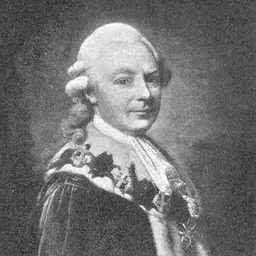


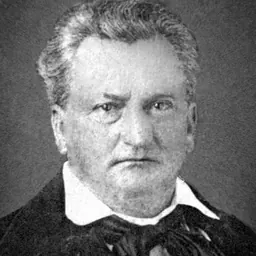
Related people
Same field, nearest in time

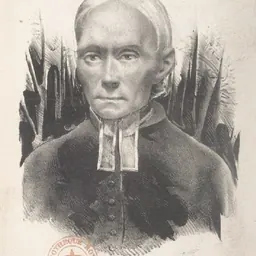


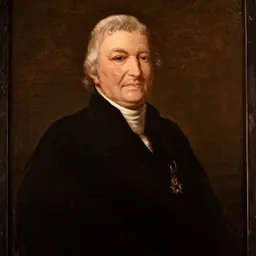

Contemporaries
People whose lives overlapped Johan Gabriel Oxenstierna's




Frequently asked questions
Who was Johan Gabriel Oxenstierna?
Swedish noble and poet (1750-1818)
When was Johan Gabriel Oxenstierna born?
Johan Gabriel Oxenstierna was born on 19 July 1750 in Skenäs gård.
When did Johan Gabriel Oxenstierna die?
Johan Gabriel Oxenstierna died on 29 July 1818 in Klara Church Parish.
What was Johan Gabriel Oxenstierna's occupation?
Johan Gabriel Oxenstierna was a translator, poet, politician, diplomat and privy Council of Sweden.
What nationality was Johan Gabriel Oxenstierna?
Johan Gabriel Oxenstierna was Swedish.
Sources & further reading
· Wikipedia: Johan Gabriel Oxenstierna
· DBpedia: Johan Gabriel Oxenstierna
Cite this page
APA: Biography.guide. (2026). Johan Gabriel Oxenstierna. https://biography.guide/johan-gabriel-oxenstierna-translator/
MLA: "Johan Gabriel Oxenstierna." Biography.guide, https://biography.guide/johan-gabriel-oxenstierna-translator/.
Chicago: "Johan Gabriel Oxenstierna." Biography.guide. https://biography.guide/johan-gabriel-oxenstierna-translator/.
Data last updated: 2026-09-20 · Spot an error? Report a correction.
Page generated 2026-09-27 05:33 UTC