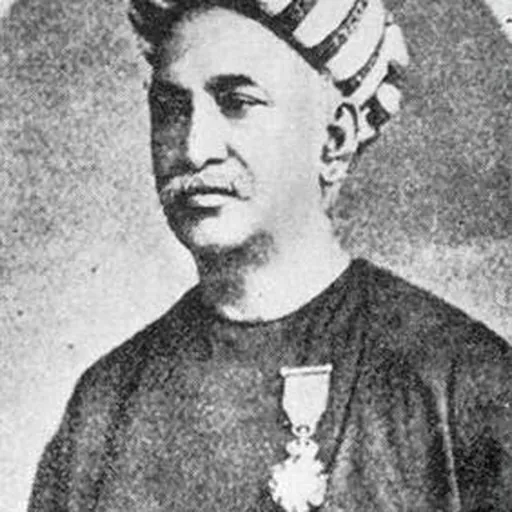
Rajendralal Mitra
Bengali scholar
About Rajendralal Mitra
Lived 1824 – 1891 (aged 67). Rajendralal Mitra was an Indian indologist.
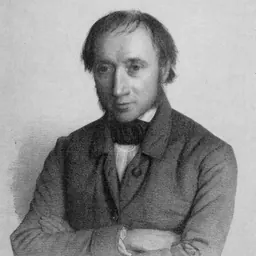
Raja Rajendralal Mitra (16 February 1822 – 26 July 1891) was among the first Indian cultural researchers and historians writing in English. A polymath and the first Indian president of the Asiatic Society of Bengal, he was a pioneering figure in the Bengali Renaissance. He was hired in 1846 as a librarian in the Asiatic Society of Bengal, for which he then worked throughout his life as second secretary, vice president, and finally the first native president in 1885. Mitra published a number of Sanskrit and English texts in the Bibliotheca Indica series, as well as major scholarly works including The antiquities of Orissa (2 volumes, 1875–80), Bodh Gaya, Indo-Aryans (2 volumes, 1881) and more.
Early life
Raja Rajendralal Mitra was born in Soora (now Beliaghata) in eastern Calcutta (Kolkata), on 16 February 1822 to Janmajeya Mitra. He was the third of Janmajeya's six sons and also had a sister. Rajendralal was raised primarily by his widowed and childless aunt.
The Mitra family traced its origins to ancient Bengal; and Rajendralal further claimed descent from the sage Vishvamitra of Adisura myth. The family were members of the Kulin Kayastha caste and were devout Vaishnavs. Rajendralal's 4th great-grandfather Ramchandra was a Dewan of the Nawabs of Murshidabad and Rajendralal's great-grandfather Pitambar Mitra held important positions at the Royal Court of Ajodhya and Delhi. Janmajeya was a noted oriental scholar, who was revered in Brahmo circles and was probably the first Bengali to learn chemistry; he had also prepared a detailed list of the content of eighteen puranas. Raja Digambar Mitra of Jhamapukur was a relative of the family, as well. Although Mitra had received little formal training in history, his work with the Asiatic Society helped establish him as a leading advocate of the historical method in Indian historiography. He established the relationship between the Shaka era and Gregorian calendar, thus identifying the year of Kanishka's ascent to the throne, and contributed to an accurate reconstruction of the history of Medieval Bengal, especially that of the Pala and Sena dynasties, by deciphering historical edicts.
Archaeology
Mitra did significant work in documenting the development of Aryan architecture in prehistoric times. Under the patronage of the Royal Society of Arts and the colonial government, Mitra led an expedition to the Bhubaneshwar region of Odisha in 1868–1869 to study and obtain casts of Indian sculptures. The results were compiled in The Antiquities of Orissa, which has since been revered as a magnum opus about Orissan architecture. Another of his major works is Buddha Gaya: the Hermitage of Sakya Mani which collated the observations and commentaries of various scholars about Bodh Gaya.
These works, along with his other essays, contributed to a detailed study of varying forms of temple architecture across India. Unlike his European counterparts, who attributed the presence of nude sculptures in Indian temples to a perceived lack of morality in ancient Indian social life, Mitra correctly hypothesized the reasons for it.
A standard theme of Rajendralal's archaeological texts is the rebuttal of the prevalent European scholarly notion that India's architectural forms, especially stone buildings, were derived from the Greeks and that there was no significant architectural advancement in the Aryan civilization. He often noted that the architecture of pre-Muslim India is equivalent to the Greek architecture and proposed the racial similarity of the Greeks and the Aryans, who had the same intellectual capacity. After Mitra criticized Fergusson's commentary about Odisa architecture in The Antiquities of Orissa, Fergusson wrote a book titled Archaeology in India With Especial Reference to the Work of Babu Rajendralal Mitra. While many of Mitra's archaeological observations and inferences were later refined or rejected, he was a pioneer in the field and his works were often substantially better than those of his European counterparts.
Linguistics Rajendralal Mitra was the first Indian who tried to engage people in a discourse of the phonology and morphology of Indian languages, and tried to establish philology as a science. He debated European scholars about linguistic advances in Aryan culture and theorized that the Aryans had their own script that was not derived from Dravidian culture. Mitra also did seminal work on Sanskrit and Pali literature of the Buddhists, as well as on the Gatha dialect.
Vernacularization Mitra was a pioneer in the publication of maps in the Bengali language and he also constructed Bengali versions of numerous geographical terms that were previously only used in English. He published a series of maps of districts of Bihar, Bengal, and Odisa for indigenous use that were notable for his assignment of correct names to even small villages, sourced from local people. Mitra's efforts in the vernacularization of western science has been widely acclaimed.
As a co-founder of the short-lived Sarasvat Samaj—a literature society set up by Jyotirindranath Tagore with help from the colonial government for publication of higher-education books in Bengali and enrichment of Bengali language in 1882 He was also a member of several other societies, including the Vernacular Literature Society, and Calcutta School-Book Society, which played important roles in the propagation of vernacular books, esp. in Bengali literature, and in Wellesley's Textbook Committee (1877). Many of his Bengali texts were adopted for use in schools and one of his texts on Bengali Grammar and his "Patra-Kaumudi" (Book of Letters) became widely popular in later times.
Publication of magazines From 1851 onward, under a grant from the Vernacular Literature Society, Mitra started publishing the Bibhidartha Sangraha, an illustrated monthly periodical. It was the first of its kind in Bengal and aimed to educate Indian people in western knowledge without coming across as too rigid. It had a huge readership, and introduced the concept of literary criticism and reviews into Bengali literature. It is also notable for introducing Michael Madhusudan Dutt's Bengali works to the public.
Mitra retired from its editorship in 1856, citing health reasons. Kaliprasanna Singha took over the role. In 1861, the government compelled the magazine to withdraw from publication; then in 1863, Mitra started a similar publication under the name Rahasya Sandarbha, maintaining the same form and content. Renowned polymath Sushil Kumar De has noted that while Mitra's works have been superseded by more accurate translations and commentaries, they still retain significant value as the editio princeps.
Some of Mitra's extreme biases might have been a response to European scholars like James Fergusson, who were extremely anti-Indian in their perspectives. In addition, orientalist scholarship had a number of unavoidable limitations, including the lack of social anthropology. Bankim Chandra Chatterjee had also praised Mitra's work as a historian. He was preceded by historians including Govind Chandra Sen, Gopal Lal Mitra, Baidyanath Mukhopadhyay, Ramram Basu, Mrityunjaya Vidyalankar and Dwarkanath Vidyabhusan; all of whom, despite being aware of the modern concepts of Western history, depended heavily upon translating and adopting European history texts with their own noble interpretations, and hence were not professional historians.
Mitra's "Sanskrit Buddhist Literature" was heavily used by Rabindranath Tagore for many episodes of his poems and plays. A street in Calcutta adjoining Mitra's birthplace is named after him.
Honours In 1863, University of Calcutta appointed Mitra as a corresponding fellow, where he played an important role in its education reforms, and in 1876, the university honoured Mitra with an honorary doctorate degree. In 1864, the German Oriental Society appointed him as a corresponding fellow. In 1865, the Royal Academy of Science, Hungary, appointed Mitra as a foreign fellow. In 1865, the Royal Asiatic Society of Great Britain appointed him as an honorary fellow. In October 1867, the American Oriental Society appointed him as an honorary fellow.
Mitra was awarded with the honorary titles of Rai Bahadur in 1877, C.I.E. in 1878 and Raja in 1888 by the British Government. Mitra had expressed displeasure about these awards.
Publications
(Biblioteca Indica) (For the Vernacular Literature Committee) (Biblioteca Indica) (Biblioteca Indica) (Biblioteca Indica)
(Biblioteca Indica) (Biblioteca Indica) (Biblioteca Indica)
(Biblioteca Indica)
(Biblioteca Indica)
(Biblioteca Indica)
(Biblioteca Indica) (Biblioteca Indica)
Don’t just read it —
keep it.
Full-length biographies made to live with: read them, listen on the way to work, watch them tonight.
- E-book
- Audio
- Video
Instant download · yours to keep · every purchase keeps this site free
Important facts
People in Rajendralal Mitra's life
Named in this biography and alive at the same time



Related people
Same field, nearest in time


Contemporaries
People whose lives overlapped Rajendralal Mitra's




Frequently asked questions
Who was Rajendralal Mitra?
Bengali scholar
When was Rajendralal Mitra born?
Rajendralal Mitra was born on 15 February 1824 in Kolkata.
When did Rajendralal Mitra die?
Rajendralal Mitra died on 26 July 1891 in Kolkata.
What was Rajendralal Mitra's occupation?
Rajendralal Mitra was an indologist.
What nationality was Rajendralal Mitra?
Rajendralal Mitra was Indian.
Sources & further reading
· Wikipedia: Rajendralal Mitra
Cite this page
APA: Biography.guide. (2026). Rajendralal Mitra. https://biography.guide/rajendralal-mitra/
MLA: "Rajendralal Mitra." Biography.guide, https://biography.guide/rajendralal-mitra/.
Chicago: "Rajendralal Mitra." Biography.guide. https://biography.guide/rajendralal-mitra/.
Data last updated: 2026-09-22 · Spot an error? Report a correction.
Portrait: Wikimedia Commons · author & licence
Page generated 2026-09-27 05:04 UTC